Wormwood Identification Guide
Identify common wormwood (Artemisia absinthium) by its silvery, silky, finely divided leaves, aromatic scent, and nodding yellow flower heads.
Read the full Wormwood encyclopedia entry →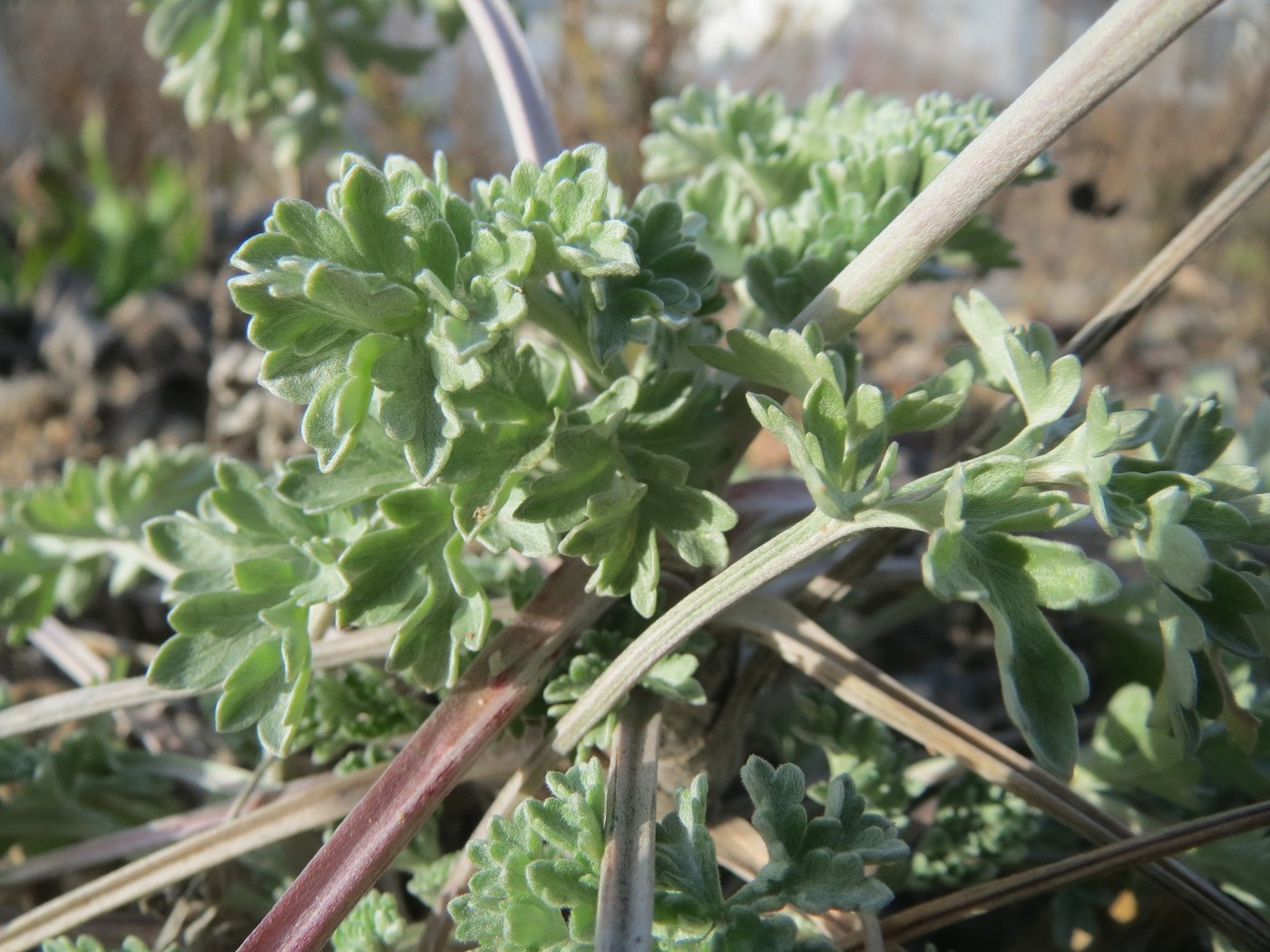
Key Identifying Features
Wormwood (Artemisia absinthium) is a perennial of the daisy family famous for its silvery-gray, silky foliage and intensely bitter, sage-like aroma. The whole plant has a soft, hairy, almost felted appearance that catches light, making it stand out in a border or on dry ground.
- Bushy perennial 2-4 ft (60-120 cm) tall
- Silky white-gray hairs cover leaves and stems
- Strongly aromatic when crushed
Leaves & Stems
Leaves are the best identifier. They are two to three times pinnately divided into blunt, rounded lobes, giving a finely cut, lacy outline. Both surfaces are covered in fine silky hairs, but the upper side is often grayer-green and the underside more silvery-white. Lower leaves are long-stalked; upper leaves become smaller and less divided. Stems are ridged, silvery, and woody at the base. Rub the foliage and you get the signature bitter, sage-like scent.
Flowers & Fruit
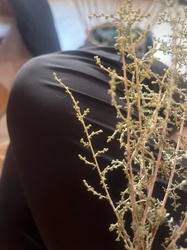
From mid- to late summer, wormwood produces branching, leafy panicles of tiny flower heads. Each head is a small, drooping, rounded ball about 1/8 in (3-4 mm) across, dull yellow, and lacks showy ray petals - they are all tubular disk florets. The nodding posture of the flower heads is a useful field clue. Seeds are minute, smooth achenes without a pappus.
How to Tell It Apart from Look-Alikes
- Mugwort (Artemisia vulgaris): Similar habit but leaves are green above and white only beneath, with pointed lobes, and the plant is far less silvery overall.
- Western mugwort / white sage (A. ludoviciana): More uniformly silver but with narrower, less divided, often toothed leaves.
- Yarrow (Achillea): Has flat white flower clusters and feathery green leaves, not silver, and lacks the bitter scent.
- The combination of all-over silvery silkiness, finely divided blunt-lobed leaves, and intensely bitter aroma confirms wormwood.
Where You'll Find It
Native to Europe and naturalized widely in North America, wormwood grows on dry, disturbed ground, roadsides, pastures, waste areas, and gravelly slopes. It favors full sun and poor, well-drained soil and is also a common herb-garden plant.
Quick ID Checklist
- Silvery-gray silky leaves and stems
- Leaves 2-3x pinnate with blunt, rounded lobes
- Intensely bitter aroma when crushed
- Small nodding yellow ball-shaped flower heads in summer
- Bushy perennial 2-4 ft tall on dry, sunny ground
Frequently asked questions
What is the easiest way to identify wormwood?
Look for the all-over silvery, silky hairiness combined with finely divided, blunt-lobed leaves and a strongly bitter aroma when you crush the foliage.
How is wormwood different from mugwort?
Wormwood is silvery on both leaf surfaces with rounded lobe tips, while mugwort is green on top and white only underneath, with pointed lobes and a much greener overall appearance.
Does wormwood have showy flowers?
No. Its flowers are tiny, dull-yellow, nodding ball-shaped heads with no ray petals, clustered in branching sprays in late summer.
Where does wormwood grow?
It grows on dry, disturbed ground such as roadsides, pastures, waste areas, and gravelly slopes, favoring full sun and poor, well-drained soil, and is also grown in gardens.
Wormwood identified by the community
Recent Wormwood specimens identified with Plant Identifier.