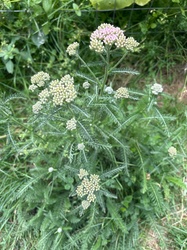
Yarrow Identification Guide
Identify yarrow by its flat-topped clusters of tiny flowers and feathery, finely divided fern-like leaves with an aromatic scent.
Read the full Yarrow encyclopedia entry →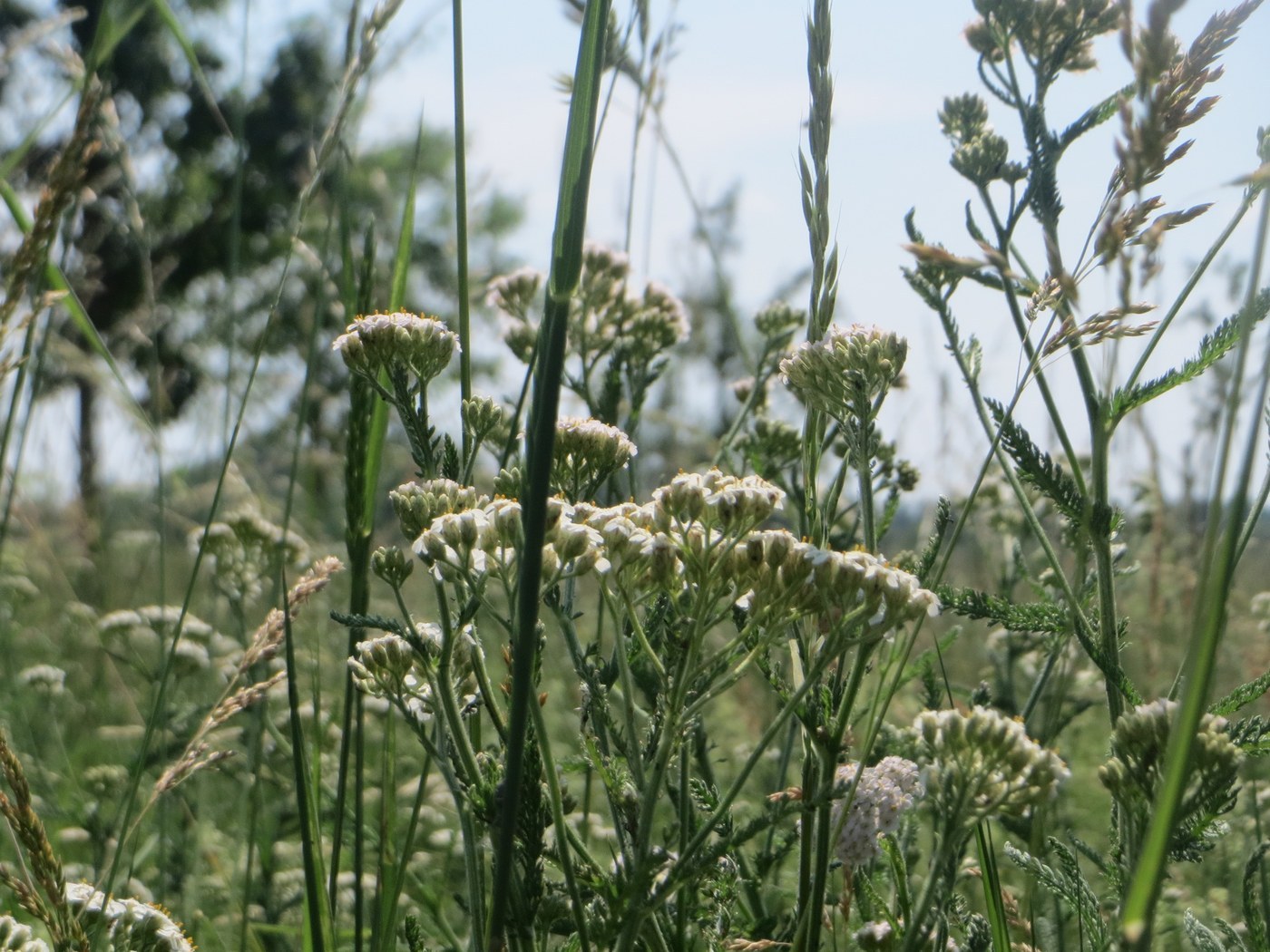
Key Identifying Features
Yarrow (Achillea millefolium) is recognized by two strong cues: flat-topped clusters of many tiny daisy-like flowers and very finely divided, feathery foliage. The species name millefolium — "thousand leaves" — refers to the soft, fern-like leaves. Crush any part and it releases a distinctive herbal, slightly sweet, pungent aroma.
- Flat or slightly domed flower clusters (corymbs)
- Flowers tiny, each a mini composite with a few outer rays
- Feathery, finely dissected leaves
- Strong aromatic scent when crushed
Leaves & Stems
Leaves are the clincher: they are 2–3 times pinnately divided into countless thread-like segments, giving a soft, fern- or carrot-top appearance. They are arranged alternately along the stem and form a basal cluster as well; lower leaves can be 10–20 cm long, becoming smaller upward. Leaves are grey-green to deep green and slightly hairy. Stems are stiff, upright, angular, and finely woolly, usually 30–90 cm tall, often growing from spreading rhizomes that form colonies.
Flowers & Fruit
Each "flower" in the cluster is actually a small composite head with usually five short white (or pink) ray florets surrounding a cluster of cream-yellow disc florets. Dozens to hundreds of these heads pack into a flat-topped corymb 5–15 cm across. Wild yarrow is typically white; garden cultivars come in yellow, gold, pink, red, and orange. Bloom runs early summer through autumn. Fruit is a tiny, flat, seedlike achene without fluffy pappus.
How to Tell It Apart from Look-Alikes
- Queen Anne's lace / wild carrot (Daucus): Also flat-topped and white, but its leaves are broader-segmented and its flower clusters are umbels (umbrella-like spokes) often with a single dark central floret; yarrow's cluster is a corymb of true daisy heads and the foliage is far finer.
- Hemlock (Conium): Has purple-blotched smooth stems and a rank smell, versus yarrow's hairy stem and herbal aroma.
- Tansy: Has button-like rayless yellow flowers and coarser leaves.
The fern-fine leaves + flat daisy-head cluster + aromatic scent confirm yarrow.
Where You'll Find It
Yarrow is a tough, widespread perennial of meadows, roadsides, pastures, lawns, and waste ground across the Northern Hemisphere. It tolerates poor, dry soil and full sun, spreading by rhizome into broad patches. It's also a popular drought-tolerant border and pollinator plant in gardens.
Quick ID Checklist
- Flat-topped cluster of many tiny flowers
- Each flower a small composite with ~5 short rays
- Feathery, finely divided fern-like leaves
- Stiff, hairy, upright stems
- Aromatic herbal scent when crushed
- Common in meadows and roadsides
Frequently asked questions
How do I tell yarrow from Queen Anne's lace?
Look at leaves and flower structure. Yarrow has extremely fine, feathery leaves and a flat cluster of tiny daisy heads; Queen Anne's lace has broader fern leaves and an umbrella-spoke flower umbel, often with one dark central floret.
What does yarrow smell like?
Crushed yarrow has a strong, sweet-herbal, pungent scent. This aroma helps separate it from look-alikes such as the rank-smelling hemlock.
Are colored yarrows the same plant as the white wild kind?
Yes — yellow, pink, red, and gold yarrows are cultivated forms and hybrids of Achillea. They share the same flat clusters and feathery leaves; only wild Achillea millefolium is naturally white or pale pink.
Why does my lawn have patches of feathery yarrow?
Yarrow spreads by underground rhizomes to form colonies and tolerates mowing and poor soil, so it commonly invades lawns and pastures as low feathery rosettes.
Yarrow identified by the community
Recent Yarrow specimens identified with Plant Identifier.