
Yellow Birch Identification Guide
Identify yellow birch by its shiny yellowish-bronze peeling bark, wintergreen-scented twigs, and doubly toothed leaves. Covers bark, twigs, leaves, catkins, look-alikes, and habitat.
Read the full Yellow Birch encyclopedia entry →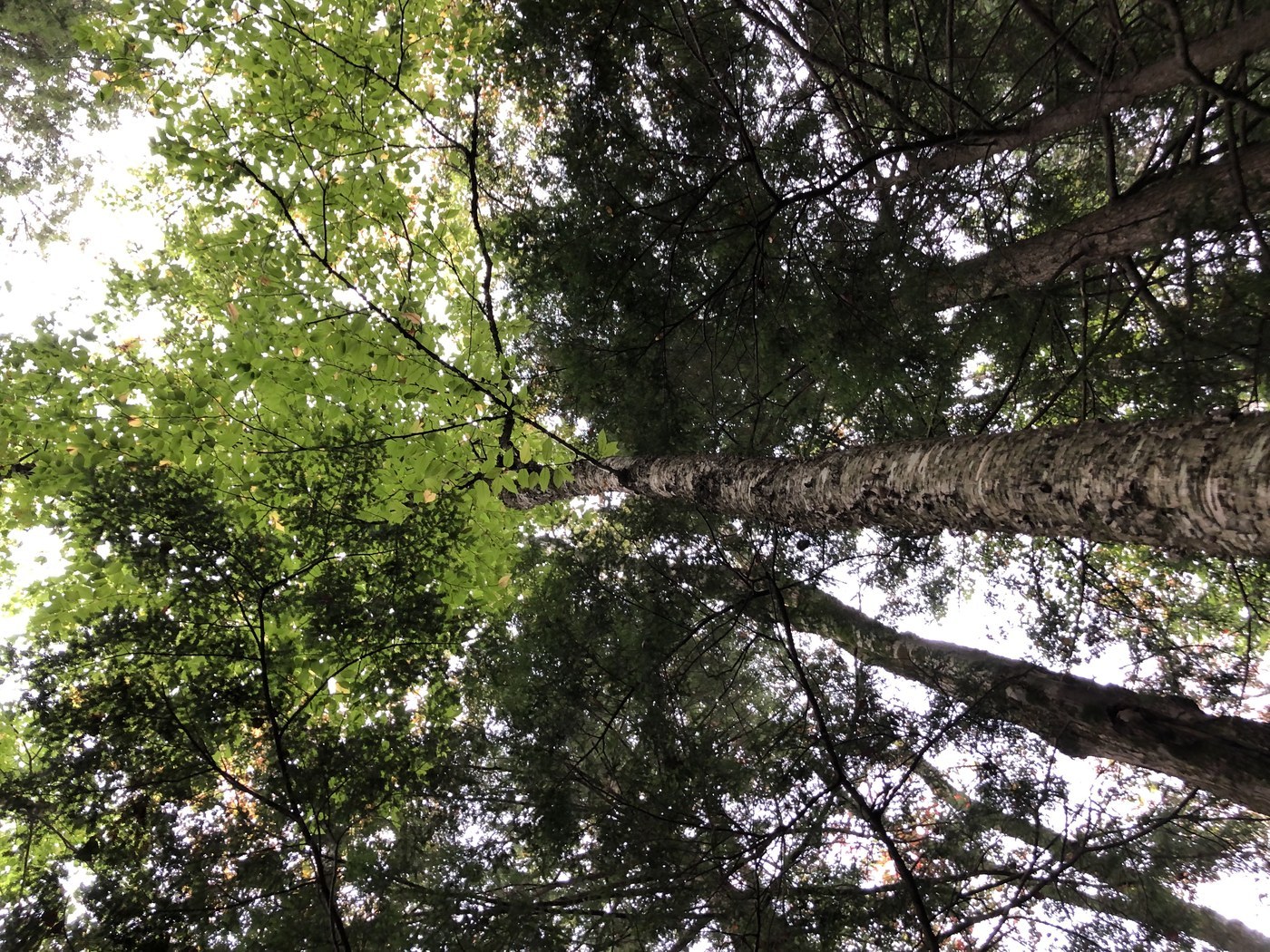
Key Identifying Features
Yellow birch (Betula alleghaniensis) is the largest native birch of eastern North America and a signature tree of cool northern hardwood forests. It is recognized by its shiny, yellowish-bronze to silvery bark that peels in thin, curly horizontal strips and by twigs that smell of wintergreen when scratched. It commonly reaches 60-80 feet.
Bark
- Young to middle-aged bark is lustrous golden-bronze to amber-gray, peeling into thin papery curls and ragged horizontal ribbons that often stay attached.
- Horizontal lenticels (dark dashes) mark the surface.
- On old trunks the bark darkens, thickens, and breaks into reddish-brown plates, losing the shine.
Twigs & Smell
- A defining test: scratch or chew a young twig and it smells and tastes of wintergreen (oil of wintergreen), thanks to methyl salicylate.
- Twigs are slender and greenish-brown; buds are pointed and slightly hairy.
Leaves & Stems
- Leaves are oval with a pointed tip and rounded base, 3-5 inches long, with doubly serrate (toothed-upon-toothed) margins.
- There are typically 9-11 pairs of straight, parallel veins.
- The upper surface is dull dark green; fall color is a clear golden yellow.
Flowers & Fruit
- Spring brings drooping male catkins and shorter upright female catkins.
- The fruit is an erect, cone-like catkin (strobile) that breaks apart to release tiny winged nutlets; its bracts are hairy.
How to Tell It Apart from Look-Alikes
- Sweet/black birch (Betula lenta) also smells of wintergreen but has dark, non-peeling, cherry-like bark with horizontal lenticels — yellow birch peels and is golden.
- Paper birch (Betula papyrifera) has chalky white peeling bark and no wintergreen scent.
- Gray birch (Betula populifolia) has dull grayish-white non-peeling bark and triangular leaves with long-tapered tips.
Where You'll Find It
Yellow birch grows in cool, moist northern hardwood and mixed conifer forests from the Appalachians and Great Lakes through New England and eastern Canada. It often germinates on mossy logs and rocks, leaving mature trees perched on stilted roots. Look for it alongside sugar maple, beech, and hemlock.
Quick ID Checklist
- Golden-bronze bark peeling in thin curly horizontal strips
- Twigs smell of wintergreen when scratched
- Doubly serrate oval leaves with 9-11 vein pairs
- Erect cone-like fruiting catkins with hairy bracts
- Cool, moist northern forests; often on stilted roots
Shiny peeling amber bark plus a wintergreen twig in a cool northern wood means yellow birch.
Frequently asked questions
How do I tell yellow birch from sweet (black) birch?
Both smell of wintergreen, but yellow birch has shiny golden-bronze bark that peels in curly strips, while sweet birch has dark, tight, cherry-like bark that does not peel.
Why do yellow birch twigs smell minty?
The twigs and inner bark contain methyl salicylate, the same compound as oil of wintergreen, released when you scratch or chew a young twig.
Is yellow birch the same as paper birch?
No; paper birch has chalky white peeling bark and no wintergreen scent, while yellow birch bark is golden-bronze and its twigs smell minty.
Why do some yellow birches grow on stilt-like roots?
Seeds often germinate on mossy fallen logs or stumps; as the nurse log rots away, the tree's roots are left arching above the ground.