
How to Care for Yellow Nutsedge
Growing guide to Cyperus esculentus: a vigorous, moisture-loving sedge that thrives in full sun and wet, fertile soil.
Read the full Yellow Nutsedge encyclopedia entry →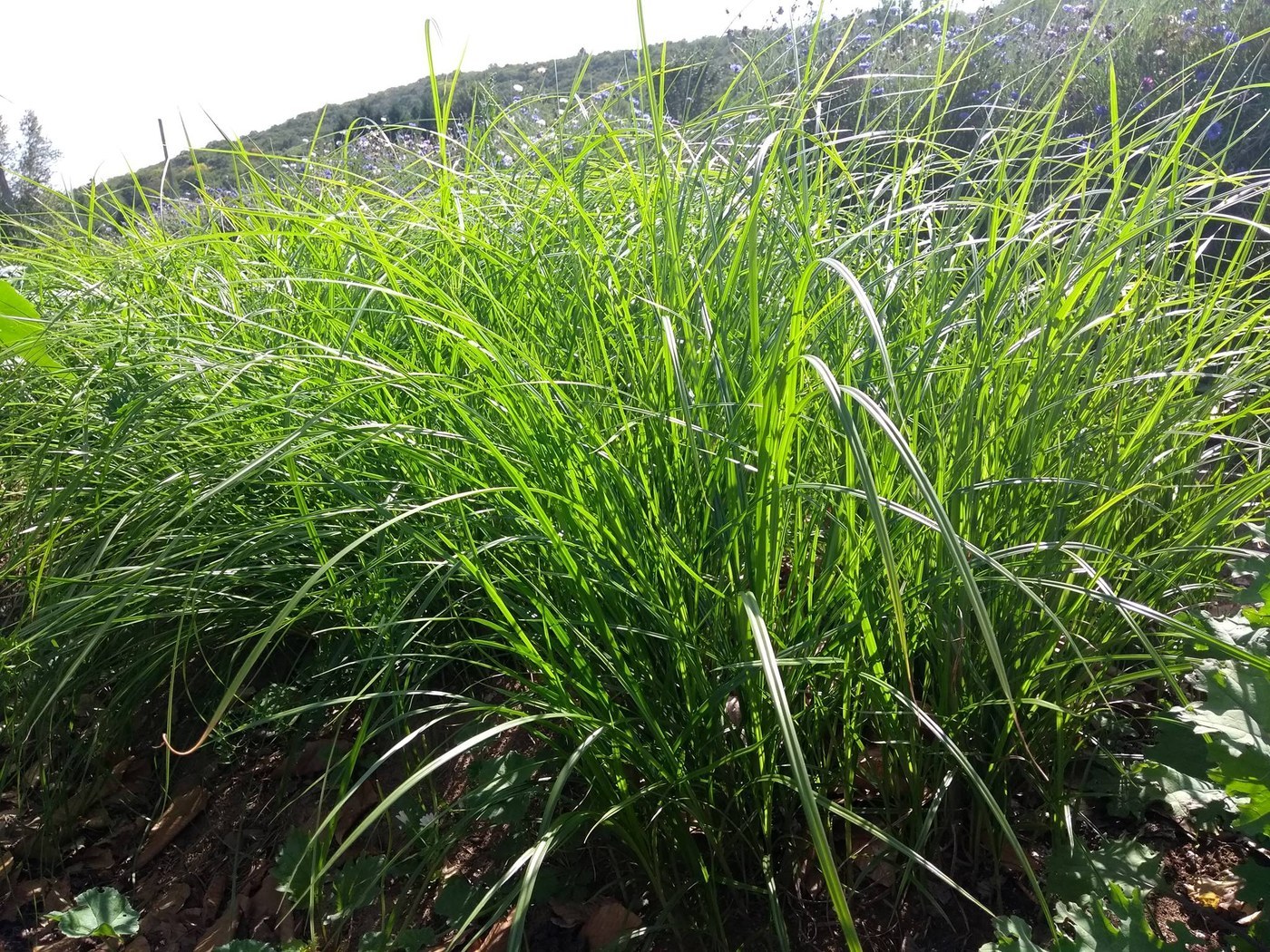
Yellow nutsedge (Cyperus esculentus) is a fast-spreading grass-like sedge with glossy, three-ranked yellow-green blades and a triangular stem. It is exceptionally vigorous and moisture-loving, making it very easy to establish but equally quick to colonize, so growers usually confine it deliberately.
Light
Yellow nutsedge performs best in full sun, where it forms dense, upright clumps and produces its distinctive golden-brown flower heads. It tolerates light shade but grows more open and less vigorous there. For the healthiest, most productive stand, give it the brightest position available.
Water
This sedge prefers consistently moist to wet soil and is one of the few ornamental-scale plants that shrugs off soggy ground. It thrives at pond and ditch margins and in low, poorly drained spots that would drown many plants. Keep the soil damp at all times; while established plants survive short dry spells by retreating to their underground tubers, growth is lush and continuous only where moisture is abundant.
Soil & Potting
Yellow nutsedge is unfussy about soil and grows in everything from sand to heavy clay, but it is most vigorous in fertile, moisture-retentive ground. Because it spreads aggressively by underground rhizomes and small tubers (nutlets), grow it in a sunken container or a bottomless bucket set in the ground to contain the roots, or in a standalone pot. A basic loamy potting mix kept wet suits container culture well.
Humidity & Temperature
A warm-season grower, yellow nutsedge is most active in the heat of late spring through summer and goes dormant with cold, dying back to its tubers over winter and re-emerging when soil warms. It handles high humidity effortlessly. In cold-winter regions the underground tubers overwinter in the soil and resprout, so growth is reliably perennial where the ground does not freeze deeply.
Feeding
In fertile soil this sedge needs little feeding. For lusher container growth, a light application of a balanced general fertilizer in spring and early summer boosts blade production. Avoid heavy feeding, which only accelerates its already fast spread.
Propagation
Yellow nutsedge propagates readily by division and by its small underground tubers. Lift a clump, separate rooted sections or individual tubers, and replant them in moist soil; each nutlet can start a new plant. This ease of vegetative spread is exactly why containment matters.
Repotting / Pruning
Divide and refresh container-grown clumps every year or two when they become congested, discarding excess tubers to keep the planting in bounds. Cut back tired or frost-killed foliage in late autumn or early spring. Removing spent flower heads before they mature helps limit unwanted seeding.
Common Problems & Pests
Yellow nutsedge is remarkably trouble-free and rarely bothered by pests or disease, part of what makes it so weedy in gardens. The main management challenge is its own vigor: rhizomes and tubers escape containment quickly and are hard to eradicate once established. Grow it only in contained beds or pots, dig out strays promptly, and never let discarded tubers reach open garden soil.
Seasonal Care Tips
Expect new shoots as soil warms in spring; growth peaks through the hot, moist months of summer when flower heads appear. Keep the soil wet throughout the growing season. In autumn the tops yellow and die back; cut them down and let the tubers rest dormant over winter, ready to resprout the following spring.
Frequently asked questions
Why does yellow nutsedge spread so aggressively?
It reproduces from underground rhizomes and numerous small tubers (nutlets), each capable of starting a new plant. Even a small fragment left in the soil can regrow, so it colonizes quickly.
How do I keep yellow nutsedge contained?
Grow it in a pot or a bottomless bucket sunk in the ground to block the spreading roots, remove any shoots that escape, and never discard tubers into open garden soil.
Does yellow nutsedge like wet soil?
Very much. It thrives in constantly moist to wet ground, including pond edges and low, poorly drained spots, and grows lushest where water is plentiful and sun is full.
Is yellow nutsedge a grass?
No, it is a sedge. Though grass-like in appearance, it has a solid triangular stem and three-ranked leaves, features that distinguish sedges from true grasses.