
How to Care for Yew
A classic evergreen for hedges and topiary, English yew tolerates sun to deep shade and is easy to grow given excellent drainage.
Read the full Yew encyclopedia entry →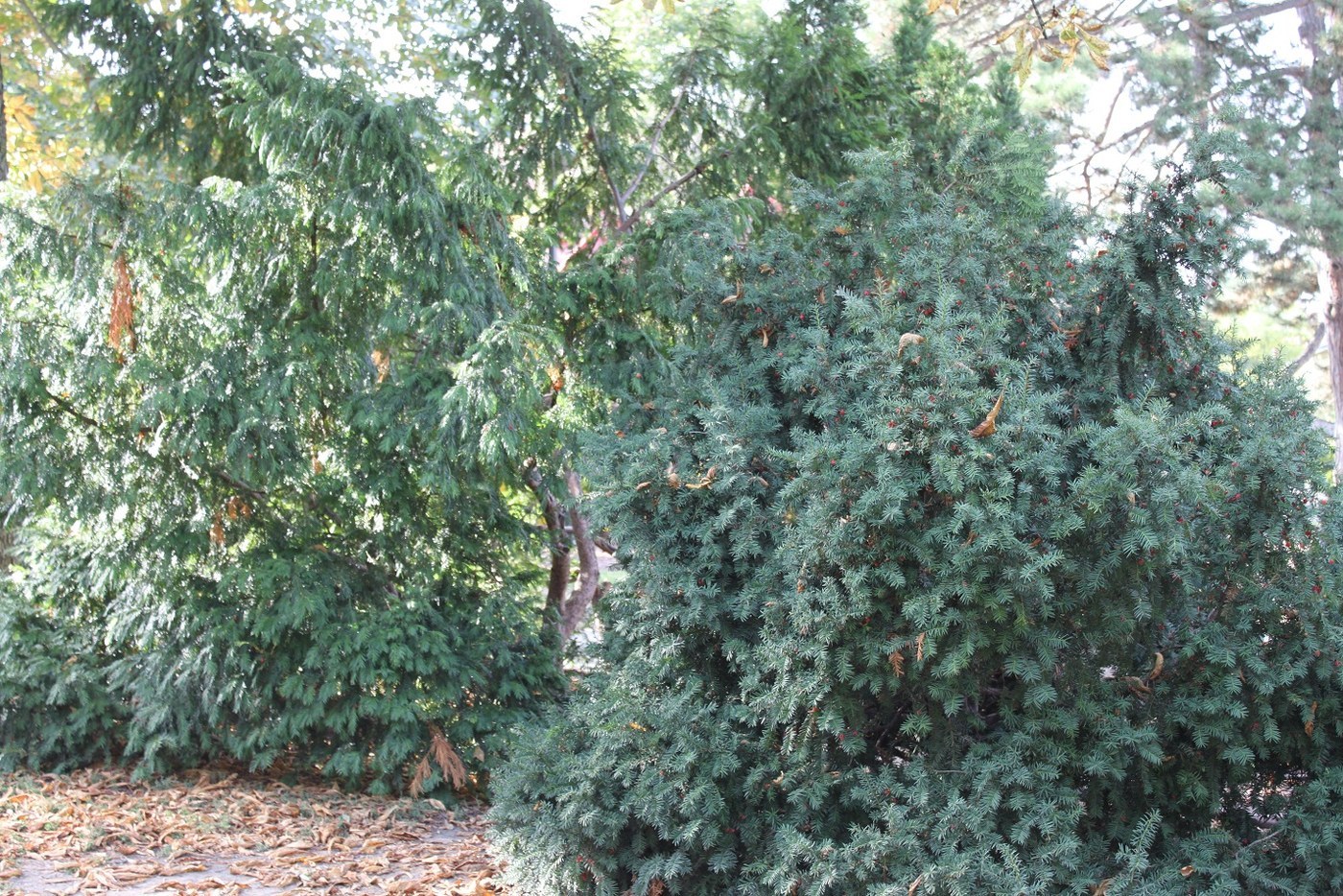
Yew (Taxus baccata), the English or common yew, is a slow-growing, long-lived evergreen conifer beloved for dark green needles, dense form, and remarkable tolerance of shade and shearing. It is one of the easiest and most forgiving conifers to grow, provided its single non-negotiable demand, excellent drainage, is met.
Light
Few woody plants are as adaptable to light as yew: it grows well in everything from full sun to full, deep shade. This flexibility makes it invaluable for shaded foundations, north walls, and woodland edges where other evergreens fail. In full sun it stays dense and compact; in deep shade it grows a little more openly but remains healthy. Even light exposure produces the most uniform hedges.
Water
Yew needs medium, moderate moisture and, above all, excellent drainage. Water newly planted specimens regularly through their first year or two to establish deep roots, then reduce frequency. Established yews are quite drought tolerant. The one thing they will not survive is wet feet: soil that stays soggy causes fatal root rot. Always let the soil drain freely and avoid low, waterlogged spots.
Soil & Potting
Plant in well-drained soil of almost any type, from sandy to loamy to chalky. Yew tolerates a wide pH range, including alkaline chalk soils. What it cannot abide is heavy, compacted, or permanently wet ground. On clay or low sites, plant on a raised mound or amend generously with grit and organic matter to improve drainage. Good drainage is the single most important factor in success.
Humidity & Temperature
Hardy through roughly USDA zones 6 to 7 (and cold-tolerant into zone 5 with shelter), English yew handles a wide range of temperate climates. It withstands cold winters, wind, and coastal exposure once established. Ambient humidity is not a concern. Provide some shelter from harsh, drying winter winds in the coldest zones to prevent needle browning.
Feeding
Yew is not a heavy feeder. A single application of a balanced granular or slow-release fertilizer in early spring supports steady growth, and an annual mulch of compost is often all an established plant needs. Avoid heavy feeding, which pushes soft growth. Yellowing needles more often indicate poor drainage than a nutrient shortage.
Propagation
Yew propagates most reliably from semi-hardwood cuttings taken in late summer to autumn. Take heel cuttings of the current season's growth, dip in rooting hormone, and set in a gritty, free-draining medium; rooting is slow but dependable over several months. Seed propagation is possible but requires lengthy cold stratification and germinates erratically over one to two years.
Repotting / Pruning
Yew is one of the few conifers that tolerates hard pruning, even cutting back into old bare wood, from which it readily resprouts. This makes it the classic choice for formal hedges, topiary, and tight shapes. Shear hedges once or twice in the growing season, typically in early summer and again in late summer. Renovation pruning is best done in early spring. Container-grown yews can be repotted in spring every two to three years.
Common Problems & Pests
Root rot from poor drainage is by far the most common cause of decline, showing as yellowing, browning, and dieback; improving drainage is the only cure. Vine weevil grubs can damage roots of containerized plants, and scale insects occasionally appear on stressed specimens. Needle browning may follow winter wind or waterlogging. Overall, yew is remarkably problem-free when drainage is right.
Seasonal Care Tips
Plant or transplant in autumn or early spring while the soil is workable. Shear hedges and topiary in early to midsummer once the flush of new growth firms up, with an optional light tidy in late summer. Take cuttings in late summer. Mulch in spring to conserve moisture and feed lightly. In winter the evergreen foliage holds its color; shelter young plants in exposed sites from desiccating winds.
Frequently asked questions
Can yew grow in full shade?
Yes. Yew is one of the most shade-tolerant conifers and grows well from full sun all the way to deep shade, which makes it ideal for shaded foundations, north-facing walls, and woodland edges.
Why is my yew turning yellow or brown?
The usual culprit is poor drainage and waterlogged soil, which rots the roots. Yew demands excellent drainage; improve the site or plant on a raised mound, and avoid low, soggy spots.
Can I cut a yew hedge back hard?
Yes. Unlike most conifers, yew resprouts readily even from old bare wood, so it tolerates hard renovation pruning. Do major cutbacks in early spring and shear formal hedges in early to late summer.
How fast does yew grow?
Yew is slow-growing and long-lived, typically adding only a few inches to a foot per year. That slow, dense habit is exactly what makes it such a durable, easily shaped hedge and topiary plant.