Yew
Taxus baccata
A long-lived evergreen conifer with dark needle foliage and red, berry-like arils. Extremely shade-tolerant and shearable, yews are classic hedging and topiary plants.
- Light
- Full sun to full shade
- Water
- Medium; needs excellent drainage
- Difficulty
- Easy
Got a plant like this?
Identify any plant from a photo, free.
Overview
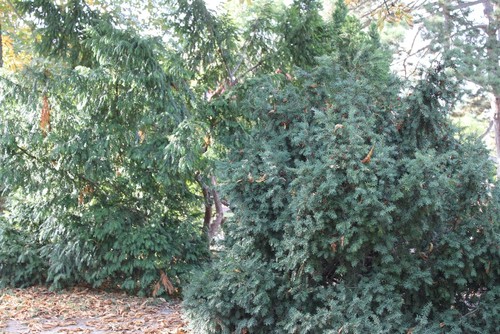
Yews are slow-growing, long-lived evergreen conifers in the genus Taxus. English yew (Taxus baccata) and hybrids are widely used in gardens for their dense, dark green foliage and unmatched tolerance of shade and shearing.
Unlike most conifers, yews bear soft red, cup-shaped arils rather than woody cones, and they resprout readily from old wood, making them ideal for formal hedges, topiary, and foundation plantings. Some specimens live for centuries to over a thousand years.
How to identify it
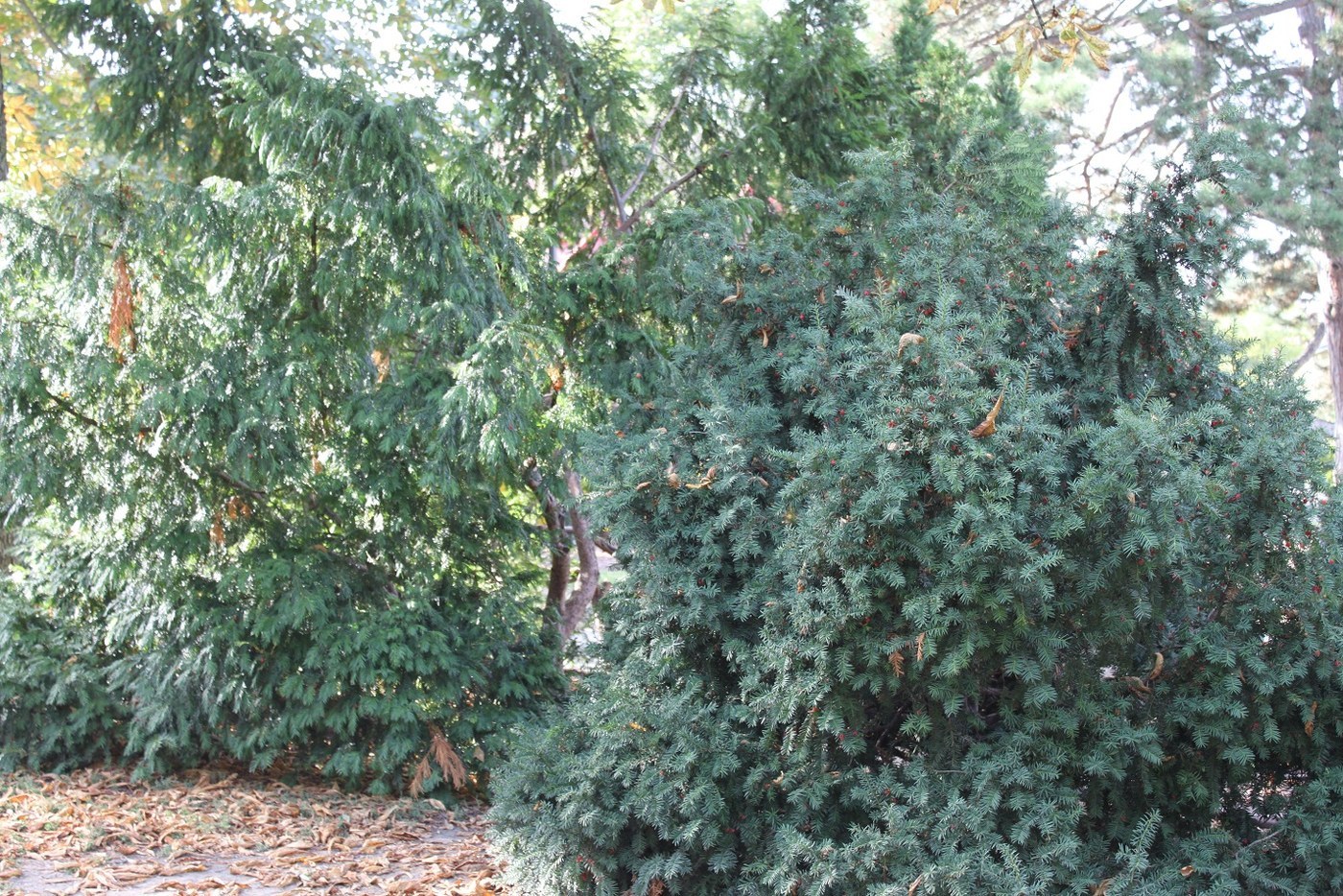
- Foliage: Flat, soft, dark green needles arranged in two rows along the stem, paler beneath; evergreen
- Fruit: Female plants bear fleshy, bright red, open-ended berry-like arils, each surrounding a single hard seed
- Bark: Thin, reddish-brown, flaking in scales
- Habit: Dense, dark, variable: spreading shrubs, upright columns, or small trees, depending on species and cultivar
- Growth: Slow but long-lived, tolerating heavy shearing and resprouting from bare wood
Care & growing
Light: Exceptionally adaptable, thriving in full sun to deep shade.
Water: Needs consistent moisture but, above all, sharp drainage; yews quickly decline in waterlogged soil.
Soil: Well-drained, neutral to alkaline soils are ideal; avoid heavy wet ground.
Temperature: Hardy roughly USDA zones 4-7 depending on species.
Feeding: Light spring feeding supports dense growth.
Pruning: Shears beautifully and, unusually for a conifer, resprouts from old wood, allowing hard renovation.
Propagation: From semi-hardwood cuttings or seed (slow and requiring stratification).
Habitat & origin
English yew is native to Europe, North Africa, and southwestern Asia, where it grows in woodlands, on chalk and limestone, and in ancient churchyards, some trees being many centuries old. Related species are native to North America and Asia.
Yews are planted worldwide in temperate gardens for formal hedging, topiary, and shade plantings.
Frequently asked questions
Can I cut a yew back hard?
Yes. Unlike most conifers, yews resprout reliably from old, bare wood, so they tolerate heavy renovation pruning.
Do yews grow in shade?
Yes, they are among the most shade-tolerant evergreens, thriving anywhere from full sun to deep shade as long as drainage is good.
What causes yews to die?
The most common cause is poorly drained, waterlogged soil, which leads to root rot. Yews demand sharp drainage.
How can I recognize a yew?
Look for flat, soft, dark green needles in two rows, reddish flaking bark, and bright red open-ended arils on female plants instead of woody cones.
Yew guides
In-depth guides for identifying, growing, and caring for Yew.