
Yoshino Cherry Identification Guide
Recognize the Yoshino cherry (Prunus × yedoensis) by its clouds of pale pink-to-white single blossoms, horizontally lenticelled bark, and graceful spreading form.
Read the full Yoshino Cherry encyclopedia entry →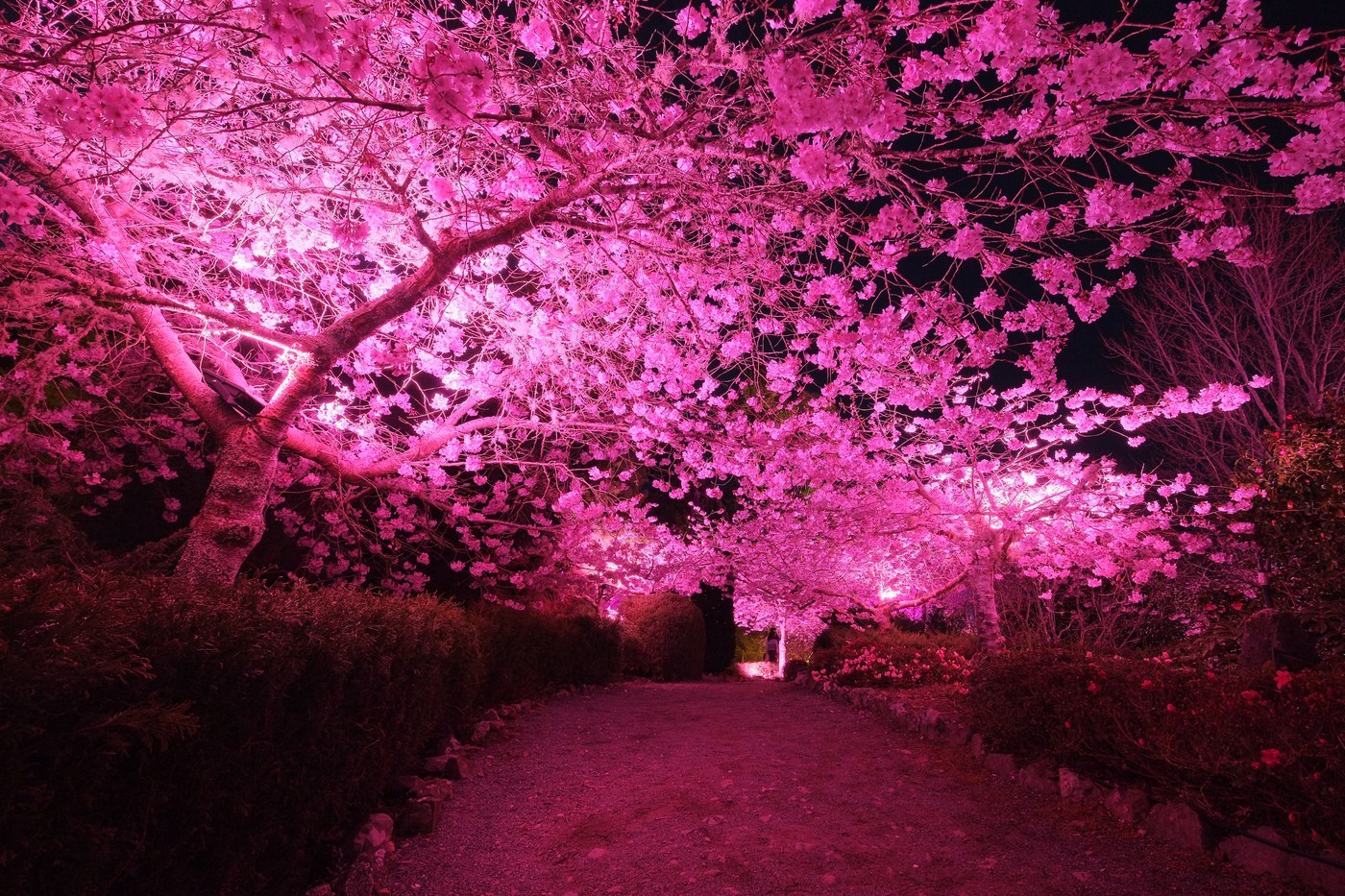
Key Identifying Features
The Yoshino cherry (Prunus × yedoensis) is the iconic flowering cherry of Washington D.C.'s Tidal Basin and Japan's hanami festivals. It is prized for masses of delicate, single, pale pink-to-white blossoms that open before or with the leaves, creating a soft cloud-like canopy.
- Size & form: 20–40 ft tall with a broad, spreading, gently arching crown, often wider than tall.
- Bark: Smooth, gray to reddish-brown, marked with prominent horizontal lenticels (corky breathing bands)—the classic cherry-bark signature.
Leaves & Stems
Leaves are simple, alternate, oval to obovate, 2.5–5 inches long, with sharply serrated (often double-toothed) margins and a pointed tip. New leaves emerge bronze-green and mature to dark green, turning yellow to orange in fall. Look at the leaf base or petiole for small glands (nectaries)—a feature of many Prunus cherries.
Flowers & Fruit
- Flowers (early spring): Borne in clusters, each blossom is single (five petals), about 1–1.5 inches across, pale pink fading to nearly white, with a faint almond fragrance. They appear in great profusion just before or as the leaves unfold—the defining spectacle.
- Fruit: Small, pea-sized black drupes (single-stoned, like tiny cherries) in early summer; mostly taken by birds.
How to Tell It Apart from Look-Alikes
- Kwanzan cherry (P. 'Kanzan'): Has double, deep-pink, pom-pom flowers with 20–30 petals and a stiffer upright vase shape—easily separated from Yoshino's single pale blooms.
- Crabapple (Malus): Produces apple-like pomes and scaly bark, not single-stoned drupes and lenticelled bark.
- Weeping cherry: Often a Yoshino relative but with strongly pendulous branches.
- Plum/peach: Different bloom timing, fruit, and leaf shape.
- Diagnostic: single pale pink-white blossoms + horizontally banded bark + small black cherries.
Where You'll Find It
A Japanese hybrid, the Yoshino cherry is planted worldwide as a premier spring ornamental in parks, streets, and gardens across temperate regions (USDA 5–8). It prefers full sun and moist, well-drained soil. Large plantings are the centerpiece of cherry-blossom festivals.
Quick ID Checklist
- Medium tree, broad spreading/arching crown
- Smooth bark with horizontal lenticel bands
- Single, 5-petaled, pale pink-to-white fragrant blossoms in early spring
- Toothed oval leaves, glands near leaf base
- Tiny black single-stoned cherries in summer
Frequently asked questions
What color are Yoshino cherry blossoms?
They open pale pink and quickly fade to nearly white, giving large plantings a soft white-pink cloud effect. Each flower is single with five petals, not a dense double pom-pom.
How do I tell a Yoshino cherry from a Kwanzan cherry?
Yoshino has single, pale pink-to-white flowers and a broad spreading crown. Kwanzan has double, deep-pink flowers packed with 20-30 petals and a stiffer, upright vase shape.
How can I recognize the tree when it isn't flowering?
Look at the bark: smooth gray to reddish-brown marked with distinct horizontal corky lenticel bands, plus alternate, sharply toothed oval leaves often with tiny glands near the leaf base.
How big does a Yoshino cherry get?
It typically reaches 20 to 40 feet tall with a broad, spreading, gently arching crown that is often wider than the tree is tall.