
Yucca Identification Guide
Identify yuccas by their rosettes of stiff, sword-shaped, sharp-tipped leaves, woody trunks, and tall spikes of white bell flowers.
Read the full Yucca encyclopedia entry →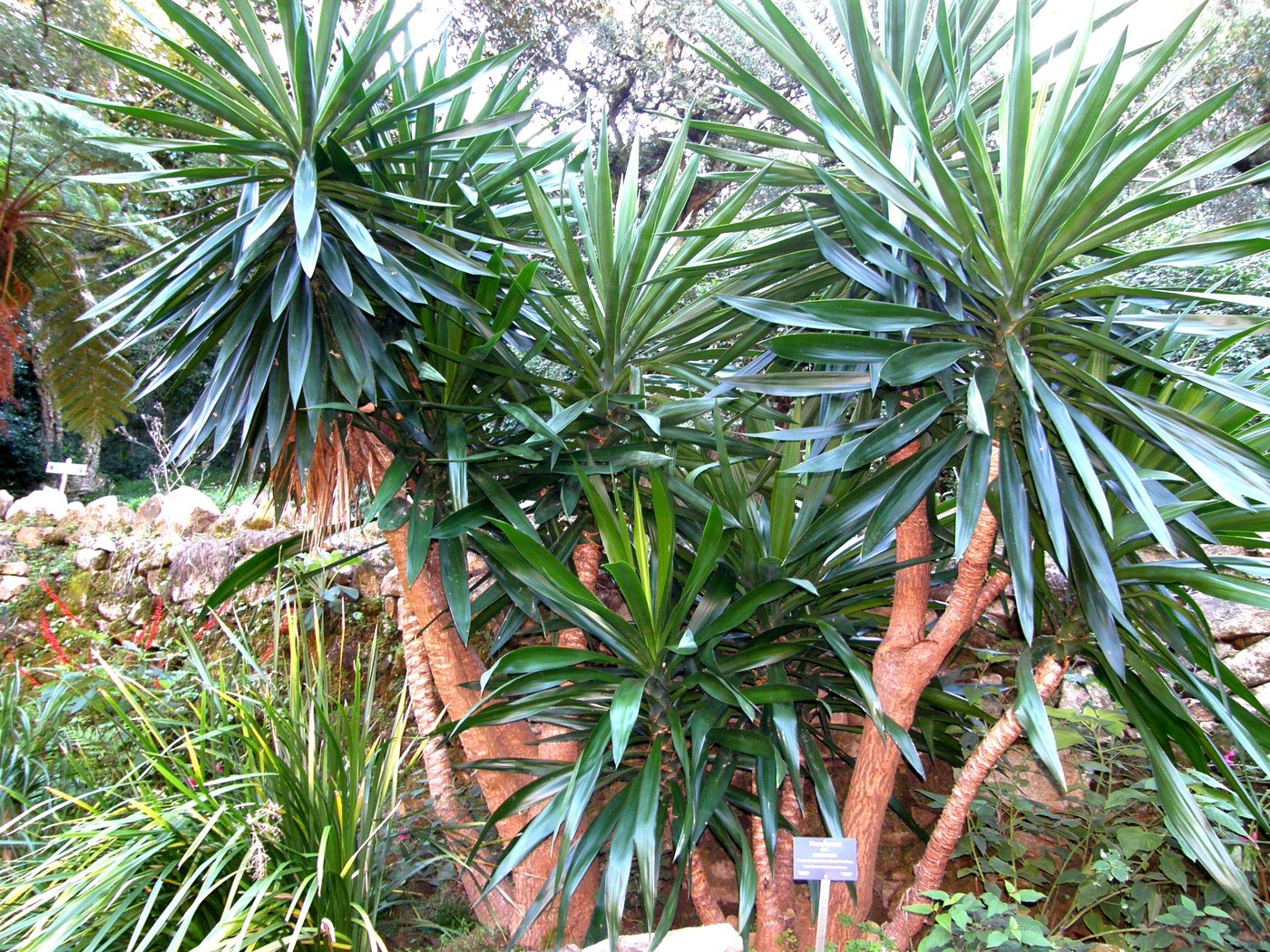
Key Identifying Features
Yuccas (genus Yucca) are evergreen shrubs and trees of the Americas, recognized by rosettes of rigid, sword-shaped leaves ending in a sharp spine, often atop a woody cane or trunk, and crowned in season by a tall spike of creamy-white bell-shaped flowers.
- Stiff, sword/lance-shaped leaves in a dense rosette
- Leaf tips usually end in a sharp, hard spine ("Spanish bayonet")
- Many species have fibrous threads curling off the leaf margins
- Tall panicle of white, waxy, bell-shaped flowers
Leaves & Stems
Leaves are thick, fibrous, and very stiff, ranging from blue-green to deep green, sometimes with yellow-margined variegation (e.g. Yucca gloriosa 'Variegata' or the houseplant Yucca elephantipes). Margins may be smooth, finely toothed, or fray into white curly fibers, an important ID clue for many species. The pointed, often dangerously sharp tip is characteristic.
Stems vary: low species form near-stemless ground rosettes, while tree types (spineless yucca, Joshua tree, soaptree) develop thick, woody, often branching trunks marked with old leaf bases. The indoor "yucca cane" is a section of trunk with a leaf rosette on top.
Flowers & Fruit
Flowering yuccas send up a tall central stalk bearing many pendulous, creamy-white (sometimes cream-purple-tinged) bell-shaped flowers. Each flower has six waxy tepals. Yuccas have a famous mutualism with yucca moths, their specific pollinators. Fruit is either a dry capsule or, in some species, a fleshy pod. The dramatic white flower spike is a strong identifier.
How to Tell It Apart from Look-Alikes
- Agave also forms stiff rosettes but leaves are usually broader, thicker, and edged with hooked teeth and a terminal spine, and most agaves flower only once then die; yuccas flower repeatedly and have narrower leaves and white bell flowers.
- Cordyline/Dracaena have softer, more flexible leaves without the rigid spine tip and lack the white bell-flower spike.
- Phormium (flax) has strap leaves but no sharp terminal spine and different flowers.
- Rigid sword leaves with a spine tip + white bell-flower panicle point to Yucca.
Where You'll Find It
Native to hot, dry regions of the Americas (deserts, plains, coastal dunes of the US, Mexico, Caribbean). Grown worldwide in xeriscape gardens, as architectural landscape plants, and indoors as the spineless yucca cane. Thrives in full sun and sharp drainage.
Quick ID Checklist
- Rosette of stiff, sword-shaped leaves
- Sharp spine at leaf tip (most species)
- Curly fibers along leaf margins (many species)
- Woody trunk or cane in tree types
- Tall spike of white bell-shaped flowers
Frequently asked questions
How do I tell a yucca from an agave?
Yuccas have narrower, sword-like leaves and produce tall spikes of white bell flowers repeatedly, while agaves usually have broader, thicker leaves with hooked marginal teeth and flower only once before dying.
What are the white threads peeling off the leaves?
Many yuccas naturally shed curly white fibers from their leaf margins. These threads are a normal, useful identification feature, not damage.
Why doesn't my indoor yucca have sharp tips?
The common houseplant is the spineless yucca (Yucca elephantipes/guatemalensis), which has soft leaf tips. Most outdoor desert species, by contrast, end in a hard, sharp spine.
When does a yucca flower?
Most yuccas bloom in late spring or summer, sending up a tall central stalk of creamy-white bell-shaped flowers pollinated specifically by yucca moths.