
How to Care for Zebra Cactus
Grow Haworthiopsis attenuata, the striking white-banded Zebra Cactus, with easy indoor care, bright indirect light, and lean, fast-draining soil.
Read the full Zebra Cactus encyclopedia entry →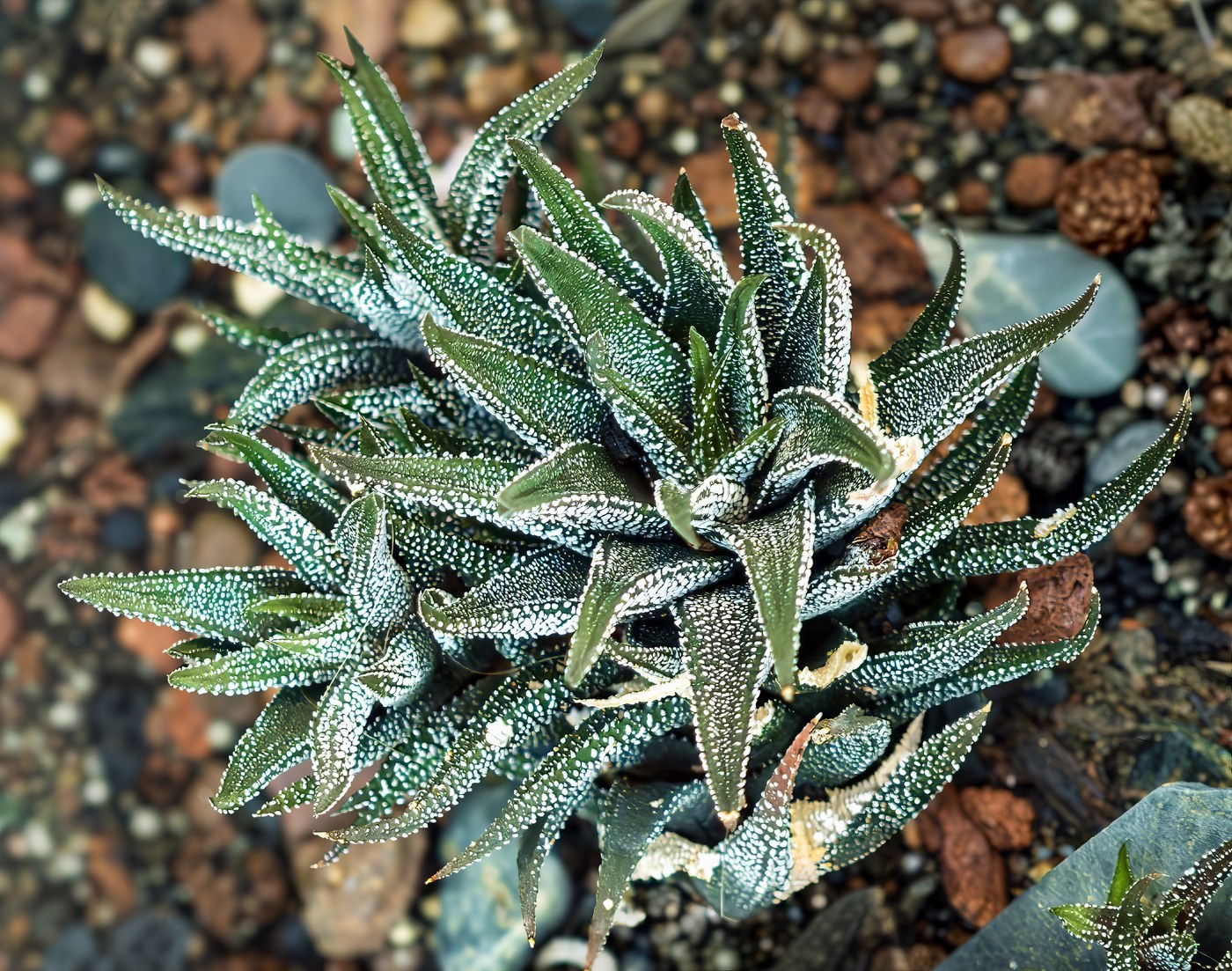
The Zebra Cactus (Haworthiopsis attenuata) is a compact, slow-growing succulent prized for its stiff, upright rosette of dark green leaves crossed by raised white tubercle bands. Despite the common name it is not a true cactus, and it makes one of the most forgiving windowsill succulents you can grow.
Light
Give it bright indirect light, such as an east-facing window or a spot a few feet back from a bright south or west window. It tolerates lower light better than most succulents but will stretch and lose its tight rosette form if kept too dim. Direct midday summer sun can scorch the leaves, turning them reddish, bronze, or brown; a little gentle morning sun brings out the best coloration and keeps the plant compact.
Water
Water sparingly and let the soil dry out completely between waterings. Soak the mix thoroughly, let excess drain away, then wait until the medium is bone dry before watering again, roughly every two to three weeks in the growing season. In winter, cut back further to once a month or less. Overwatering is the single most common cause of failure; the base and roots rot quickly if left standing in moisture. Water at the soil line rather than into the crown to avoid trapped water in the rosette.
Soil & Potting
Use a gritty, fast-draining cactus and succulent mix, or amend regular potting soil with plenty of coarse sand, perlite, or pumice, aiming for roughly half mineral grit. Always use a pot with drainage holes; unglazed terracotta is ideal because it wicks away excess moisture. Choose a container only slightly larger than the root ball, as this species prefers to be a little snug.
Humidity & Temperature
Average household humidity suits it perfectly, and it tolerates the dry air of heated rooms without complaint. Ideal temperatures run from about 65 to 80 degrees F. Protect it from frost and keep it above roughly 50 degrees F in winter. Avoid cold drafts and sudden temperature swings near doors and windows.
Feeding
Feed lightly. A diluted, balanced or low-nitrogen succulent fertilizer applied once in spring and once in summer is plenty. Over-fertilizing produces soft, weak growth and can burn the roots, so err on the side of less. Do not feed during fall and winter dormancy.
Propagation
The easiest method is division of offsets, or pups, which form around the base of a mature plant. Gently separate a pup with a few roots attached, let the cut surface callus for a day or two, then pot it in dry succulent mix and water lightly after about a week. Leaf cuttings are possible but slow and less reliable than offset division.
Repotting / Pruning
Repot only every two to three years, or when offsets crowd the pot, ideally in spring. Refresh the soil, remove any shriveled or rotted roots, and let the plant settle for several days before resuming watering. Little pruning is needed; simply pull away dried outer leaves at the base to keep the rosette tidy.
Common Problems & Pests
Mushy, translucent, or blackening leaves signal overwatering and root rot; let the soil dry out and repot into fresh gritty mix if the base is affected. Shriveled, curling leaves indicate underwatering. Faded or bleached leaves mean too much direct sun, while a stretched, loose rosette points to insufficient light. Watch for mealybugs nestled in the crown and between leaves, and for scale; wipe them off with a cotton swab dipped in diluted isopropyl alcohol. Fungus gnats appear if the soil stays too wet.
Seasonal Care Tips
Growth is most active in spring and fall. Water a little more freely then and provide the brightest indirect light of the year. In the heat of high summer the plant may rest, so ease off water. In winter, keep it cool, bright, and nearly dry to encourage a healthy dormancy and a strong flush of new growth the following spring.
Frequently asked questions
How often should I water a Zebra Cactus?
Water only when the soil has dried out completely, usually every two to three weeks in the growing season and about once a month in winter. Always let the mix go fully dry to avoid rot.
Why are my Zebra Cactus leaves turning red or brown?
Reddish or bronze leaves usually mean too much direct sun. Move the plant to a spot with bright indirect light. Brown, mushy areas instead point to overwatering.
Is the Zebra Cactus a real cactus?
No. Despite the name it is a succulent in the Haworthiopsis genus, related to aloes. It has no spines and appreciates slightly gentler light than true desert cacti.
How do I propagate a Zebra Cactus?
Separate the small offset pups that grow at the base, let the cut surfaces callus for a day or two, then pot them in dry succulent mix and water lightly after about a week.