Zebra Plant Identification Guide
How to recognize the Zebra Plant (Aphelandra squarrosa) by its boldly white-veined dark leaves and dramatic yellow bract spikes.
Read the full Zebra Plant encyclopedia entry →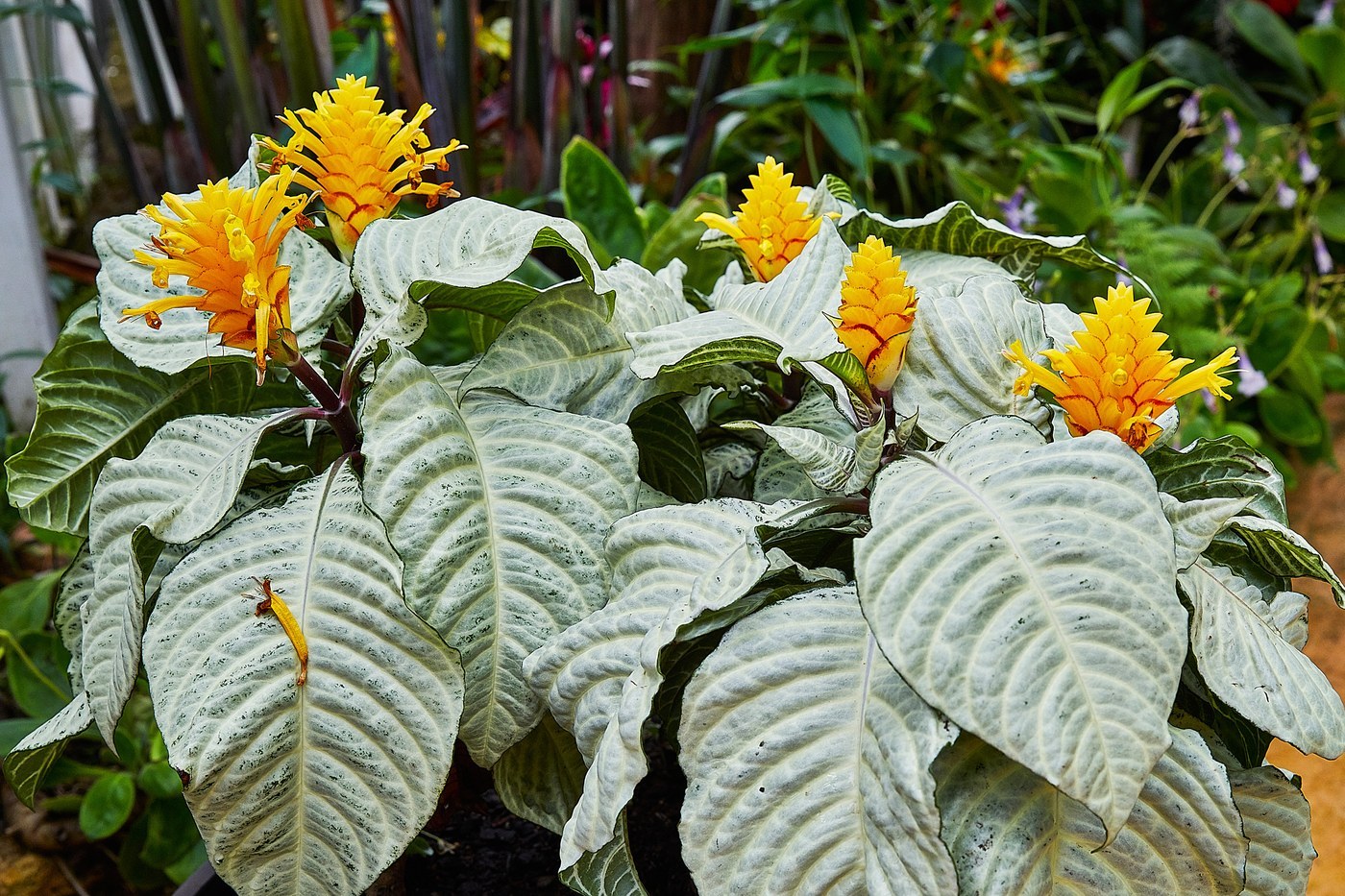
Key Identifying Features
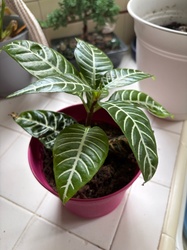
The Zebra Plant (Aphelandra squarrosa) is instantly recognizable for the trait that gives it its name: glossy, deep-green leaves striped with bold ivory-white veins that fan out in a distinct herringbone pattern. It is a compact tropical shrub from Brazil, usually grown indoors, reaching about 30-60 cm (1-2 ft) tall.
- Leaves are large, opposite, and arranged in neat pairs down an upright stem
- Pronounced white midrib and lateral veins contrast sharply against the dark blade
- When it blooms, it produces a striking cone of waxy yellow bracts
Leaves & Stems
The leaves are the main ID clue. Each blade is elliptical to oval, 15-30 cm (6-12 in) long, with a smooth (entire) margin and a pointed tip. The surface is shiny and slightly puckered, with the network of cream-to-white veins being the most diagnostic feature. The underside is paler green. Leaves grow in opposite pairs at right angles to the pair above and below.
Stems are upright, somewhat woody at the base, and green when young. Plants tend to get leggy with age, dropping lower leaves and exposing the stem.
Flowers & Fruit
When mature, the Zebra Plant sends up a terminal flower spike that is one of its showiest traits:
- A four-sided cone of overlapping bright golden-yellow bracts, 10-15 cm tall
- Short-lived tubular yellow flowers poke out from between the bracts
- The colorful bracts persist for several weeks even after the true flowers fade
Fruit is rarely seen on indoor specimens.
How to Tell It Apart from Look-Alikes
- Prayer plants (Maranta/Calathea): also have patterned leaves but show pink/red veining or feathered bands, fold up at night, and never make a yellow bract cone.
- Nerve plant (Fittonia): has a far denser, finer web of white or pink veins on much smaller, rounded leaves and trails along the soil.
- Aphelandra's hallmark is the combination of large dark leaves + crisp parallel white veins + a yellow pyramidal flower spike — no common houseplant matches all three.
Where You'll Find It
The Zebra Plant is almost exclusively a houseplant or greenhouse specimen in temperate regions. In its native Brazilian Atlantic rainforest, it grows on the humid, shaded forest floor. Indoors it is sold as a tabletop foliage plant and prized for its dramatic leaf markings; it demands warmth and high humidity.
Quick ID Checklist
- Dark glossy leaves with bold white herringbone veins
- Leaves large (to 30 cm), opposite, in crossing pairs
- Upright, slightly woody stem
- Cone-shaped yellow bract flower spike when in bloom
- Compact indoor shrub, 30-60 cm tall
If your plant ticks the white-veins-plus-yellow-cone boxes, you are almost certainly looking at Aphelandra squarrosa.
Frequently asked questions
What makes the Zebra Plant's leaves so distinctive?
The deep green blades are crossed by sharply contrasting ivory-white veins in a herringbone pattern, a look that resembles zebra striping and is the plant's most reliable ID feature.
Does a Zebra Plant always have yellow flowers?
No. The dramatic yellow bract cone only appears on mature, well-grown plants, usually in late summer or autumn. Even without it, the white-veined leaves are enough to identify the species.
How is it different from a Calathea or prayer plant?
Calatheas and Marantas fold their leaves at night and often show pink or feathered markings, and they never produce the four-sided yellow bract spike that the Zebra Plant does.
Why does my Zebra Plant look leggy and bare at the bottom?
This is normal with age. The species naturally drops its lower leaves and exposes a woody stem, which is why mature specimens look taller and sparser than young nursery plants.
Zebra Plant identified by the community
Recent Zebra Plant specimens identified with Plant Identifier.