
ZZ Raven Identification Guide
Identify the ZZ Raven by its dramatic near-black mature foliage that emerges bright lime-green, its glossy paired leaflets, and its thick upright stems rising from a rhizome.
Read the full ZZ Raven encyclopedia entry →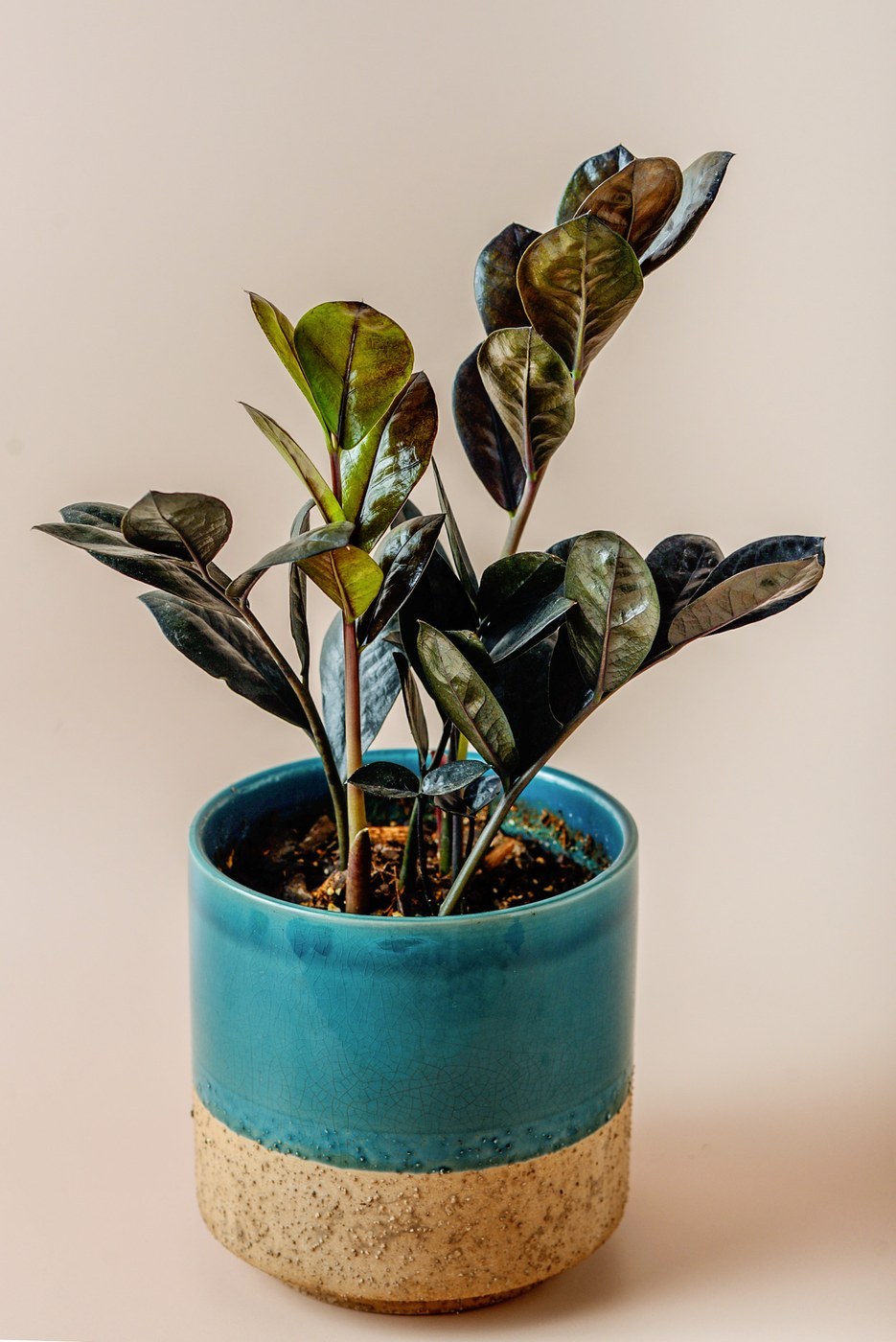
Key Identifying Features
ZZ Raven (Zamioculcas zamiifolia 'Raven') is a dark-leaved cultivar of the popular ZZ plant. Its signature is dramatic, near-black foliage on mature leaves that emerges bright chartreuse-green before darkening, all on the same waxy, upright, feather-like stems of a standard ZZ.
- Glossy, deep purple-black mature leaflets
- Bright lime-green new growth that darkens over weeks
- Stiff, upright stems lined with paired leaflets (pinnate)
- Thick, waxy, succulent-like texture
Leaves & Stems
What looks like a single "branch" is actually one compound leaf: a thick, upright rachis (stalk) lined on both sides with smooth, oval, glossy leaflets arranged in opposing pairs, tapering to a point. On Raven, mature leaflets turn a striking dark, almost black, eggplant tone, while the freshly emerging stalks and leaflets are vivid yellow-green, creating a two-tone contrast across the plant.
Stems are fleshy and slightly bulbous at the base, arising from a fat underground rhizome that stores water (giving ZZ plants their drought tolerance). The whole plant has a stiff, architectural, upright fountain shape.
Flowers & Fruit
Like other ZZ plants, it may rarely produce a small, hooded aroid spadix-and-spathe bloom low among the stems, but it is grown for foliage and blooms are inconspicuous. Identify by leaf color and form, not flowers.
How to Tell It Apart from Look-Alikes
- Standard ZZ plant: identical structure but leaflets stay glossy emerald green; the dark mature color is what defines Raven.
- Other dark houseplants (e.g., black Colocasia, Oxalis triangularis): lack the ZZ's stiff pinnate stalk of many small paired waxy leaflets.
- Cycads / sago palm: also pinnate, but stiff and spiny with a woody trunk, not soft waxy leaflets from a rhizome.
- Faux-black foliage: check new growth, only Raven shows the bright green-to-black color shift, confirming the cultivar.
The two-tone lime new growth + black mature leaves on a classic ZZ frame is the unmistakable Raven signature.
Where You'll Find It
The species is native to eastern Africa (Kenya to South Africa), adapted to seasonal drought. 'Raven' is a patented cultivar grown as an indoor plant for low to bright indirect light and infrequent watering, prized for its near-black drama and toughness.
Quick ID Checklist
- Mature leaflets are glossy near-black/eggplant
- New stalks emerge bright lime-green
- Stems are upright, thick, with paired waxy leaflets
- Grows from a fat water-storing rhizome
- Stiff, architectural fountain habit
If you see a ZZ-shaped plant flushing electric green at the tips and fading to black, it's a ZZ Raven.
Frequently asked questions
Why is my ZZ Raven green instead of black?
New growth on Raven always emerges bright lime-green and only darkens to its signature near-black over several weeks as the leaflets mature. A plant full of fresh growth will look two-toned, which is completely normal.
Does ZZ Raven need more light to stay dark?
It keeps its dark color in a range of conditions, but bright indirect light helps mature leaves develop the deepest near-black tone and supports steady growth. Very low light slows growth and can keep more leaves green.
How is Raven different from a normal ZZ plant?
Structurally they are identical, both have upright stalks lined with glossy paired leaflets from a rhizome. The difference is color: standard ZZ stays emerald green, while Raven's mature foliage turns dramatic purple-black.
What is the easiest way to identify a ZZ Raven?
Look for one thick upright compound leaf whose rachis is lined with smooth, oval, glossy leaflets in opposing pairs, all rising from a fat underground rhizome in a stiff fountain shape. That structure plus the lime-to-black color shift confirms the cultivar.