
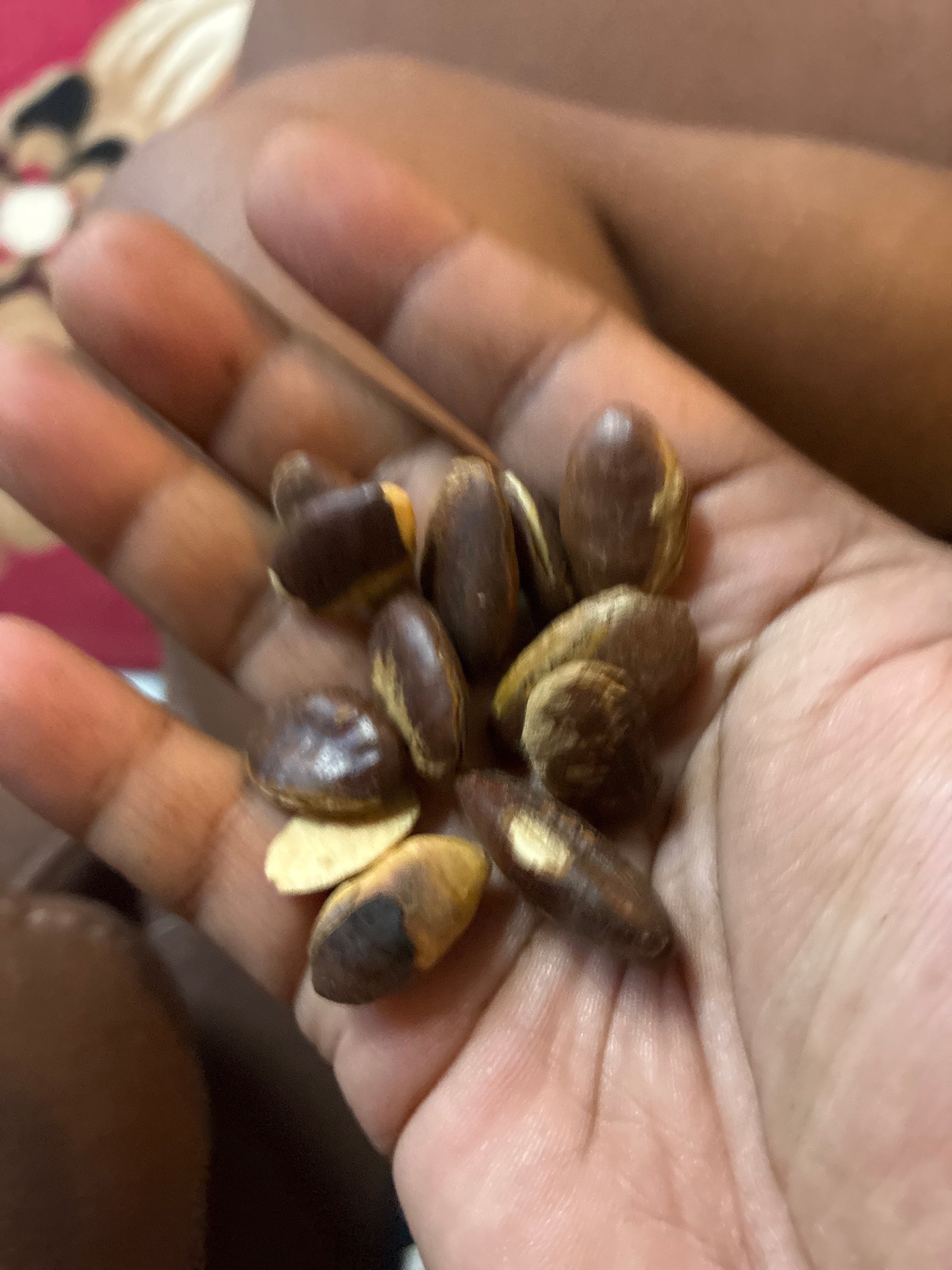
African Bush Mango
Irvingia gabonensis
A large, evergreen canopy tree that produces yellowish, fleshy fruits containing a single large, fiber-covered seed or nut. The bark is grey and relatively smooth, while the leaves are elliptic and shiny dark green.
- Light
- Full sun to partial shade; mature trees require 6-8 hours of direct light daily.
- Water
- High; prefers frequent rainfall and consistently moist soil but cannot tolerate standing water or waterlogged roots.
- Growth
- Perennial evergreen tree; can reach heights of 15 to 40 meters with a dense, rounded crown.
Care instructions
Requires a tropical, humid environment with consistent warmth. Seedlings need filtered light and high moisture, while mature trees thrive in full sun and well-drained, nutrient-rich soil. Regular mulching helps maintain humidity.
Growing details
Sunlight
Full sun to partial shade; mature trees require 6-8 hours of direct light daily.
Watering
High; prefers frequent rainfall and consistently moist soil but cannot tolerate standing water or waterlogged roots.
Soil
Deep, well-draining, fertile loams or alluvial soils with a pH between 5.0 and 7.0.
Hardiness zone
USDA Zone 11-12; strictly tropical/sub-tropical.
Growth habit
Perennial evergreen tree; can reach heights of 15 to 40 meters with a dense, rounded crown.
Bloom season
Small, yellow-white flowers grouped in clusters, typically blooming during the rainy season.
Propagation
Mainly by seed; can also be propagated through grafting or air layering for faster establishment and consistent traits.
Common pests & issues
Leaf-eating insects, aphids, and fungal diseases like root rot in poorly drained soils.
Similar species
Irvingia wombulu (often called Bitter Wild Mango), which is distinguished by having bitter fruit and seeds that are processed differently, though the trees look almost identical.