
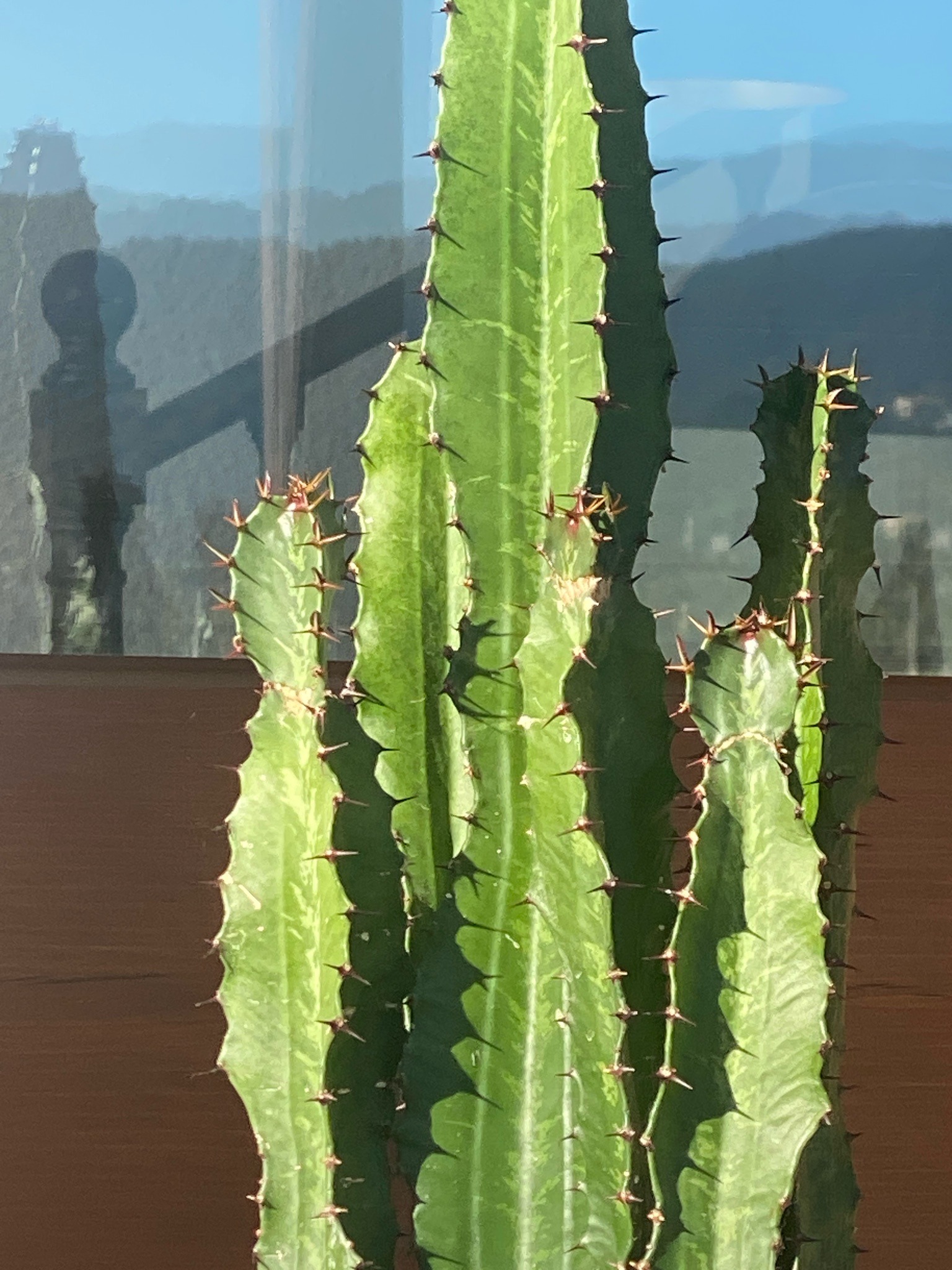
African Milk Tree
Euphorbia trigona
An upright, succulent shrub with triangular or square green stems featuring distinct lighter green marbling. It produces small teardrop-shaped leaves along the ridges and paired, sharp brown spines.
- Light
- Full sun to very bright indirect light, requiring at least six hours of bright light daily.
- Water
- Water deeply only when the potting mix is completely dry. Reduce watering significantly during the cooler winter months. Overwatering is the most common cause of root decline.
- Growth
- An upright, perennial succulent shrub that branches freely, growing to a mature height of 4 to 8 feet indoors or taller in outdoor tropical settings with a moderate growth rate.
Care instructions
Provide bright, direct sunlight for optimal growth. Allow the soil to dry out completely between thorough waterings to prevent root rot. Plant in a fast-draining potting mix designed for succulents and feed sparingly with a balanced, diluted fertilizer during the growing season.
Growing details
Sunlight
Full sun to very bright indirect light, requiring at least six hours of bright light daily.
Watering
Water deeply only when the potting mix is completely dry. Reduce watering significantly during the cooler winter months. Overwatering is the most common cause of root decline.
Soil
Requires exceptionally well-draining sandy or gritty potting soil with a neutral to slightly acidic pH range of 6.0 to 7.0.
Hardiness zone
USDA zones 10 through 11, highly sensitive to frost and freezing temperatures.
Growth habit
An upright, perennial succulent shrub that branches freely, growing to a mature height of 4 to 8 feet indoors or taller in outdoor tropical settings with a moderate growth rate.
Bloom season
Rarely flowers when grown indoors. When cultivated outdoors in ideal conditions, it may produce small, inconspicuous cyathia during the summer months.
Propagation
Propagated easily via stem cuttings taken during the spring or summer. Allow the cut end to callus over for several days before placing it in dry, gritty soil to root.
Common pests & issues
Prone to root rot if overwatered or kept in poorly draining soil. Mealybugs and scale insects may occasionally affect the stems and can be treated with targeted horticultural oils.
Similar species
Often mistaken for various columnar cactus species due to its ribbed stems and spines, but it is distinguished by the presence of alternate small leaves along the ribs and milky sap.