
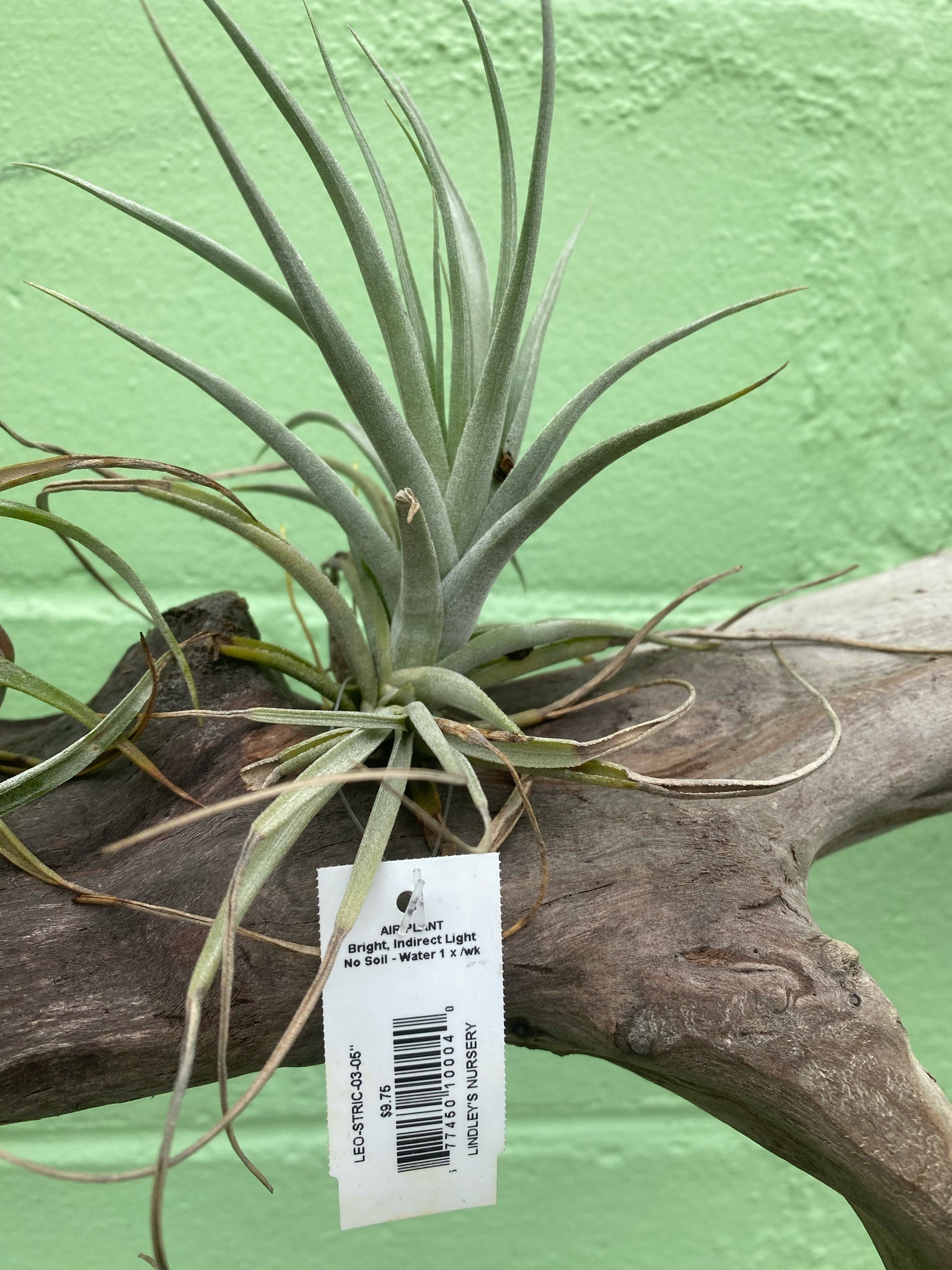
Air Plant
Tillandsia stricta
Tillandsia stricta is an epiphyte featuring a rosette of stiff, silvery-green leaves covered in microscopic trichomes that absorb moisture and nutrients directly from the air.
- Light
- Bright indirect light for several hours daily; avoid harsh direct afternoon sun which can scorch the leaves
- Water
- Submerge the entire plant in water weekly for 20-30 minutes, then shake off excess and dry upside down to prevent rot; misting alone is usually insufficient
- Growth
- Perennial epiphyte forming a dense rosette, typically reaching 4 to 8 inches in height and width with a slow to moderate growth rate
Care instructions
Provide bright indirect light, submerge in water for 20 to 30 minutes once a week followed by thorough shaking to remove excess water, and mount on bark or driftwood without any soil.
Growing details
Sunlight
Bright indirect light for several hours daily; avoid harsh direct afternoon sun which can scorch the leaves
Watering
Submerge the entire plant in water weekly for 20-30 minutes, then shake off excess and dry upside down to prevent rot; misting alone is usually insufficient
Soil
Grows epiphytically without soil attached to a mount such as driftwood, bark, or stone with excellent air circulation around the base
Hardiness zone
USDA hardiness zones 9 through 11; grown primarily indoors or in protected frost-free outdoor environments
Growth habit
Perennial epiphyte forming a dense rosette, typically reaching 4 to 8 inches in height and width with a slow to moderate growth rate
Bloom season
Blooms in spring or summer, producing a striking pink or red central bract with purple or blue tubular flowers
Propagation
Propagated by removing offsets or pups that form around the base of the parent plant once they reach about one-third the size of the mother plant
Common pests & issues
Prone to rot if water becomes trapped in the center of the rosette after soaking; dry leaf tips can result from insufficient humidity or underwatering
Similar species
Tillandsia ionantha, which is generally smaller with vibrant blushing red foliage when blooming, and Tillandsia xerographica, which is much larger with wider, tightly curled leaves