
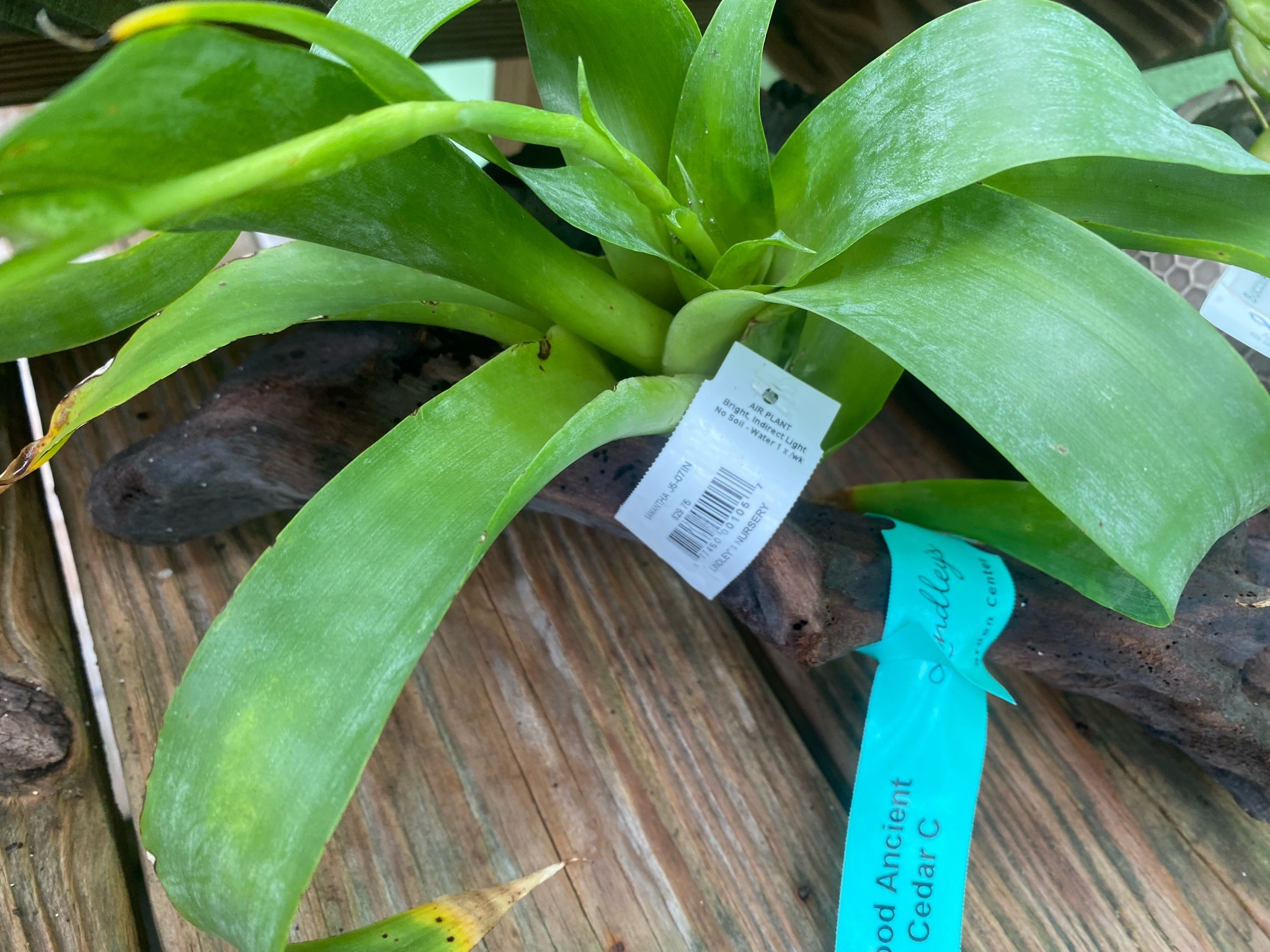
Air Plant
Tillandsia
Epiphytic perennials featuring rosettes of strap-shaped, leathery green leaves that absorb moisture and nutrients directly from the air through specialized scales called trichomes.
- Light
- Bright, indirect light for 6 to 8 hours daily; protect from harsh direct afternoon sun.
- Water
- Mist thoroughly 2 to 3 times a week or submerge the entire plant in water for 20 to 30 minutes once a week, followed by shaking off excess water and upside-down drying.
- Growth
- Slow-growing, evergreen epiphyte with a rosette growth form, reaching a mature height and spread of 4 to 12 inches depending on the species.
Care instructions
Provide bright, indirect sunlight, mount on wood or bark without soil, and mist or submerge in water weekly, ensuring good air circulation afterward to prevent rot.
Growing details
Sunlight
Bright, indirect light for 6 to 8 hours daily; protect from harsh direct afternoon sun.
Watering
Mist thoroughly 2 to 3 times a week or submerge the entire plant in water for 20 to 30 minutes once a week, followed by shaking off excess water and upside-down drying.
Soil
Not applicable as these are epiphytic plants grown without soil; mounted on wood, cork, or decorative wire.
Hardiness zone
USDA Hardiness Zones 9 to 11 when grown outdoors; typically grown as a houseplant in cooler regions.
Growth habit
Slow-growing, evergreen epiphyte with a rosette growth form, reaching a mature height and spread of 4 to 12 inches depending on the species.
Bloom season
Blooms once in its lifetime, producing colorful central bracts and tubular flowers in shades of pink, purple, red, or yellow, usually in spring or summer.
Propagation
Propagated by separating offsets or 'pups' that emerge from the base of the mother plant after flowering once they reach one-third the size of the parent.
Common pests & issues
Prone to rot from standing water trapped in the center of the rosette; prevented by shaking the plant upside down after watering and ensuring adequate airflow.
Similar species
Other bromeliads and certain epiphytic orchids; distinguished by the presence of silvery or green trichomes on the leaves and growing entirely without soil.