
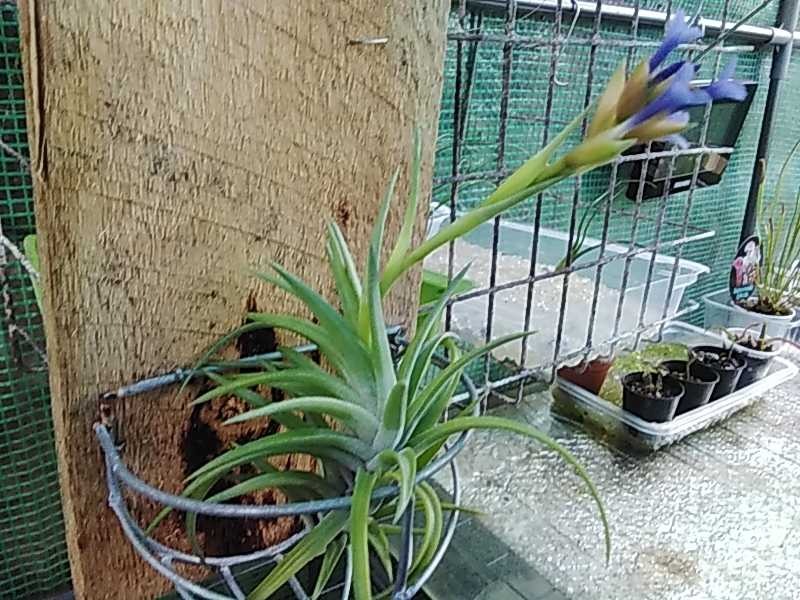
Air Plant
Tillandsia aeranthos
An epiphytic perennial with silvery-green, stiff, tapering leaves that grow in a rosette. It is known for producing a tall flower spike with pinkish bracts and vibrant violet-blue flowers.
- Light
- Bright, indirect light. Avoid direct midday sun which can scorch the leaves. Ideal for east or west-facing windows.
- Water
- Mist frequently or soak weekly for 20 minutes. Shake off excess water to prevent crown rot. Increase frequency in dry, hot environments.
- Growth
- Epiphytic perennial; forms clumps over time. Mature size is usually 6-9 inches tall and wide.
Care instructions
Provide bright, indirect light and maintain high humidity. Water by misting 2-3 times a week or soaking in water for 20-30 minutes once a week. Ensure it dries completely within 4 hours. Use a bromeliad fertilizer at quarter strength monthly.
Growing details
Sunlight
Bright, indirect light. Avoid direct midday sun which can scorch the leaves. Ideal for east or west-facing windows.
Watering
Mist frequently or soak weekly for 20 minutes. Shake off excess water to prevent crown rot. Increase frequency in dry, hot environments.
Soil
Non-terrestrial; does not require soil. Can be mounted on wood, cork, or stones. Prefers excellent air circulation.
Hardiness zone
9-11 (USDA). It is frost-sensitive and should be kept above 50°F (10°C).
Growth habit
Epiphytic perennial; forms clumps over time. Mature size is usually 6-9 inches tall and wide.
Bloom season
Spring and Summer; features a pink-to-red floral spike with small, three-petaled blue or violet flowers.
Propagation
Propagated by 'pups' (offsets) that grow at the base of the mother plant after flowering. These can be separated when they reach 1/3 the size of the parent.
Common pests & issues
Rot (if left wet or in standing water), dehydration (curled or brown leaf tips), and scale insects or mealybugs.
Similar species
Tillandsia bergeri (similar in appearance but has paler flowers and is more cold-hardy) and Tillandsia stricta.