
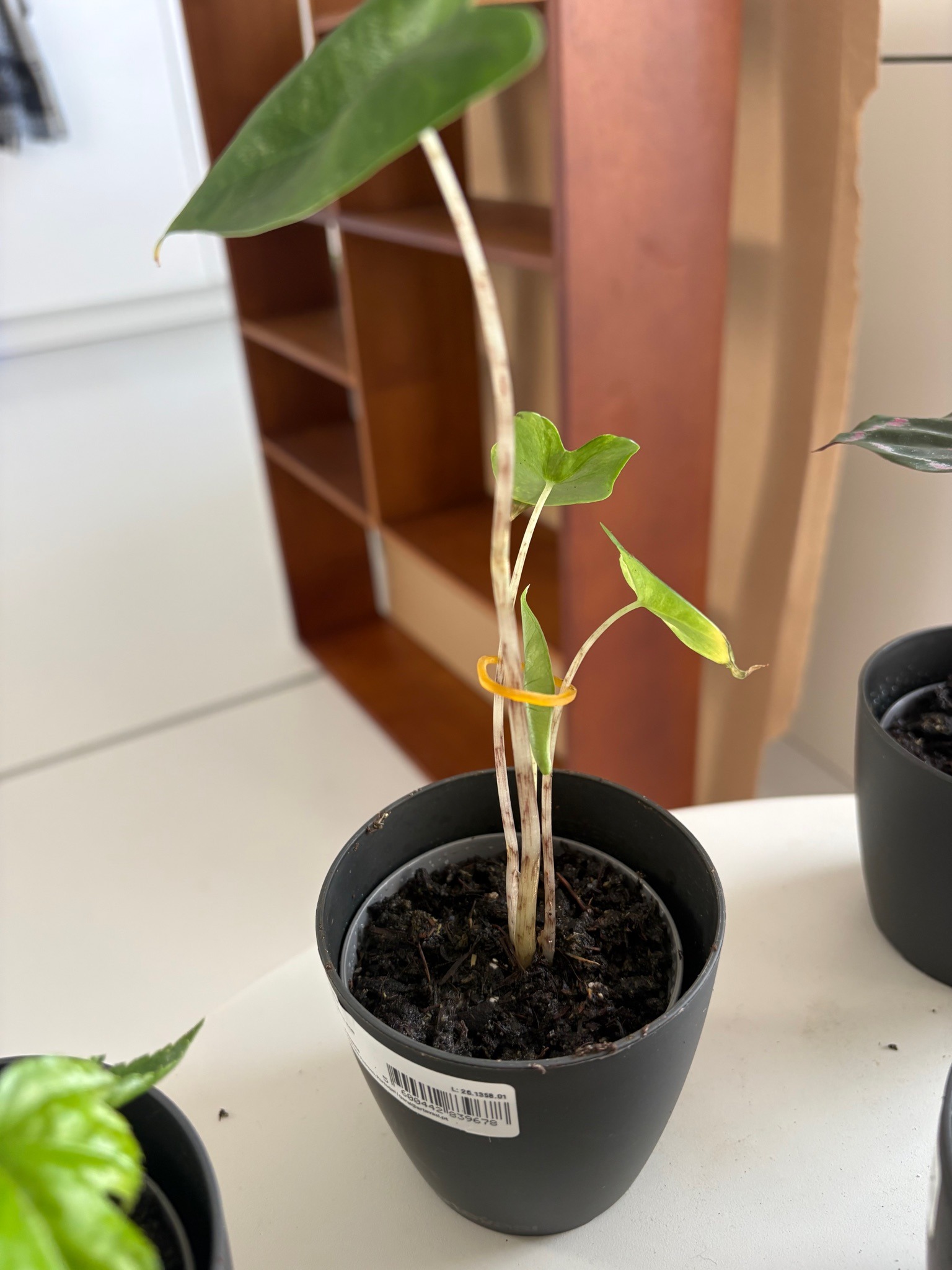
Alocasia Zebrina
Alocasia zebrina
Alocasia zebrina is a striking tropical perennial known for its glossy, arrow-shaped green leaves and distinctly patterned, zebra-like stems featuring dark brown or black stripes against a light green background.
- Light
- Bright, indirect light for 6 to 8 hours per day; protect from direct, harsh sunlight to prevent leaf scorching.
- Water
- Water when the top inch of soil feels dry to the touch. Allow excess water to drain completely. Reduce watering frequency slightly during the winter months.
- Growth
- Evergreen perennial growing in an upright, clump-forming habit, reaching mature indoor heights of 2 to 3 feet with a similar spread.
Care instructions
Provide bright, indirect sunlight, maintain consistently moist but well-draining soil without letting it sit in standing water, and keep in a warm environment with high ambient humidity. Feed with a balanced liquid fertilizer during the spring and summer growing season.
Growing details
Sunlight
Bright, indirect light for 6 to 8 hours per day; protect from direct, harsh sunlight to prevent leaf scorching.
Watering
Water when the top inch of soil feels dry to the touch. Allow excess water to drain completely. Reduce watering frequency slightly during the winter months.
Soil
Rich, organic, well-draining soil mix such as a combination of peat, perlite, and orchid bark. Optimal pH range is 5.5 to 6.5.
Hardiness zone
USDA hardiness zones 10 to 11. Grown primarily as a houseplant in cooler temperate regions.
Growth habit
Evergreen perennial growing in an upright, clump-forming habit, reaching mature indoor heights of 2 to 3 feet with a similar spread.
Bloom season
Rarely blooms indoors. When mature in the wild or ideal greenhouse conditions, it produces a small greenish-white spadix enclosed in a pale spathe.
Propagation
Propagated primarily through the division of underground rhizomes or separation of offsets during the spring repotting season.
Common pests & issues
Susceptible to spider mites, mealybugs, and scale insects. Overwatering can lead to root rot, while low humidity may cause crisp leaf edges.
Similar species
Alocasia 'Tiger' and Alocasia zebrina 'Rhinoceros', which can be distinguished by subtle variations in stem patterning, leaf thickness, and overall petiole coloration.