
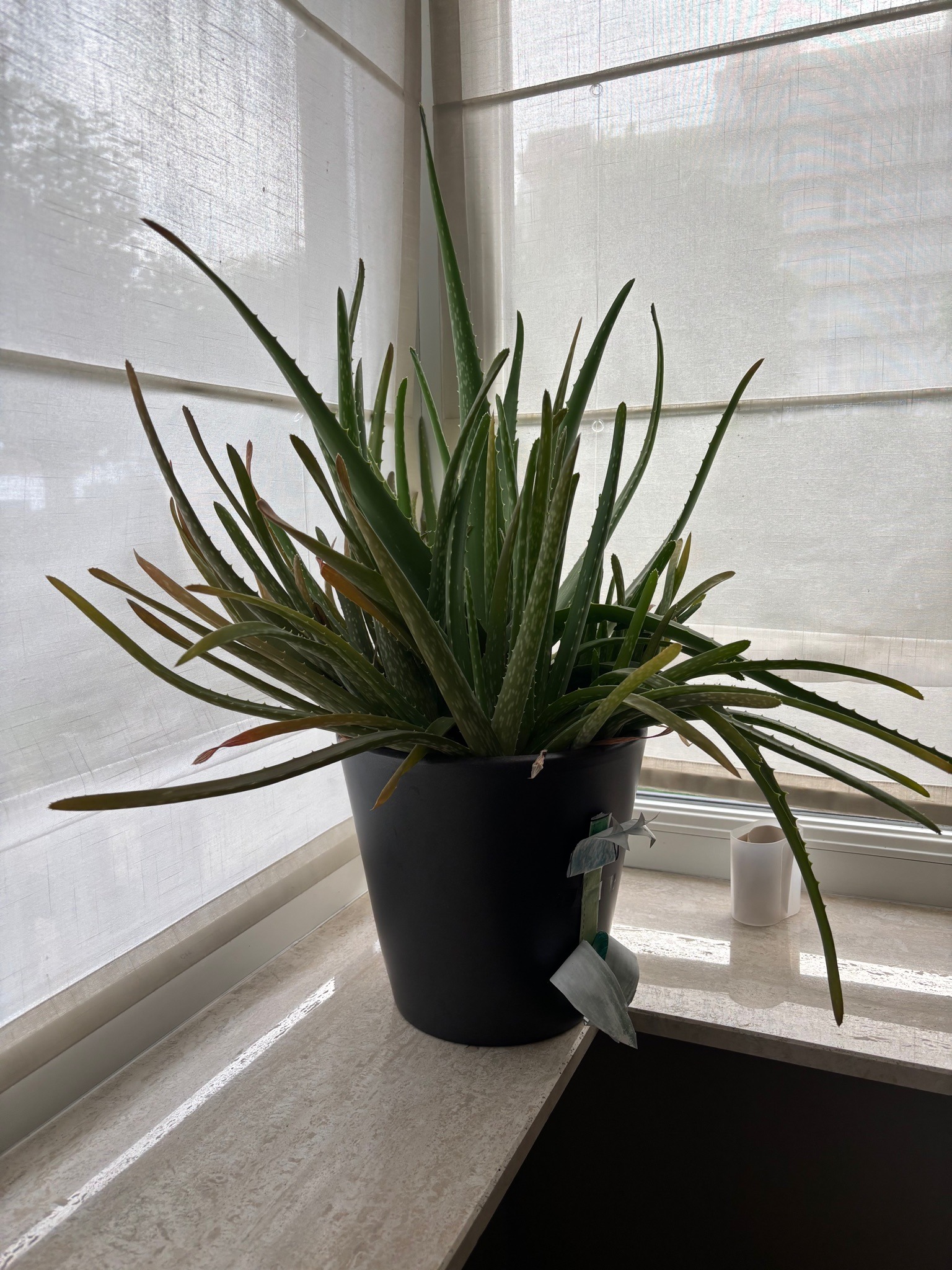
Aloe vera
Aloe vera
A stemless or very short-stemmed succulent plant featuring thick, greenish, fleshy leaves arranged in a rosette, often showing faint white spots and tiny teeth along the margins.
- Light
- Full sun to bright indirect light, requiring about 6 hours of bright light daily.
- Water
- Water thoroughly every 2 to 3 weeks, allowing the soil to dry out completely between waterings. High drought tolerance; avoid keeping the roots in standing water.
- Growth
- Perennial succulent with a rosette growth form, reaching a mature height of 1 to 2 feet and a similar spread, with a moderate growth rate.
Care instructions
Provide bright, indirect sunlight or several hours of direct sun daily. Water deeply only when the potting mix is completely dry to the touch, ensuring excellent drainage. Feed sparingly with a diluted, balanced liquid fertilizer during the spring and summer months.
Growing details
Sunlight
Full sun to bright indirect light, requiring about 6 hours of bright light daily.
Watering
Water thoroughly every 2 to 3 weeks, allowing the soil to dry out completely between waterings. High drought tolerance; avoid keeping the roots in standing water.
Soil
Fast-draining sandy loam or specialized cactus and succulent potting mix with a slightly acidic to neutral pH range of 6.0 to 7.0.
Hardiness zone
USDA zones 9 to 11, strictly kept indoors or as a patio plant in cooler climates due to low frost tolerance.
Growth habit
Perennial succulent with a rosette growth form, reaching a mature height of 1 to 2 feet and a similar spread, with a moderate growth rate.
Bloom season
Spring to summer, producing tall spikes of tubular yellow or orange flowers in optimal conditions.
Propagation
Propagated easily by separating small offsets or 'pups' that grow around the base of the parent plant and replanting them in well-draining soil.
Common pests & issues
Susceptible to root rot if overwatered or kept in poorly draining soil. Common pests include mealybugs and scale insects.
Similar species
Gasteria and Haworthia species, which can be distinguished by their distinct leaf arrangements, softer textures, and lack of marginal serrations on many varieties.