
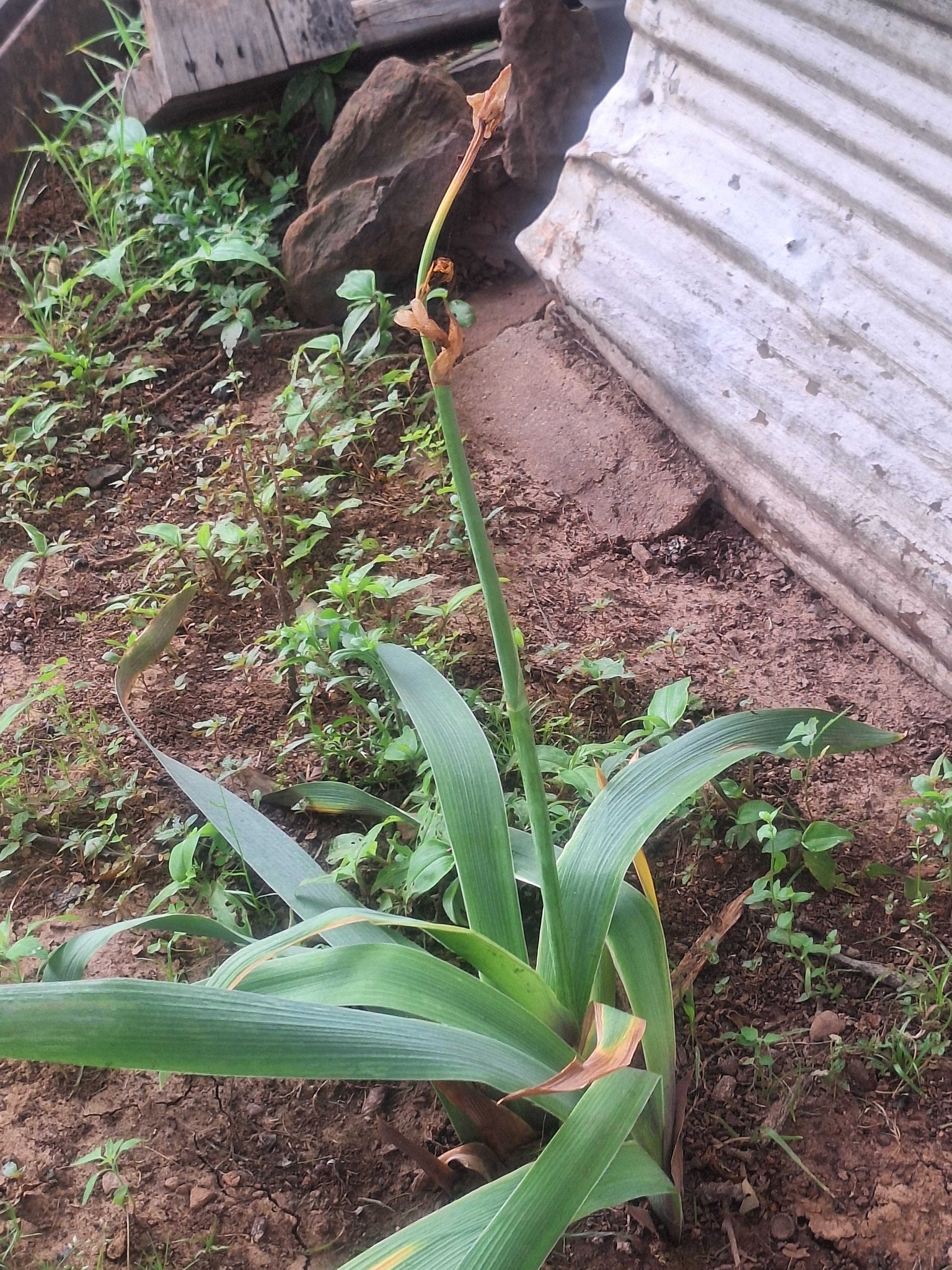
Amaryllis
Hippeastrum
A bulbous perennial with strap-like, glaucous green leaves and a tall, hollow flower stalk (scape) that bears large, trumpet-shaped flowers.
- Light
- Full sun to partial shade; at least 6 hours of bright, indirect sunlight daily for best blooming.
- Water
- Water when the top inch of soil feels dry. Reduce watering significantly after the leaves die back to allow the bulb to rest. Overwatering causes bulb rot.
- Growth
- Perennial bulb; height of 1-2 feet. Leaves usually emerge after or during the flowering stage.
Care instructions
Provide bright indirect light or partial sun. Keep the soil moist but never waterlogged during the growing season and allow for a dry dormancy period. Use a well-draining potting mix and fertilize monthly when growing.
Growing details
Sunlight
Full sun to partial shade; at least 6 hours of bright, indirect sunlight daily for best blooming.
Watering
Water when the top inch of soil feels dry. Reduce watering significantly after the leaves die back to allow the bulb to rest. Overwatering causes bulb rot.
Soil
Rich, well-draining loamy soil with a neutral to slightly acidic pH (6.0-6.8).
Hardiness zone
USDA zones 8-11; must be brought indoors or lifted in colder climates.
Growth habit
Perennial bulb; height of 1-2 feet. Leaves usually emerge after or during the flowering stage.
Bloom season
Late winter to early summer depending on the species; flowers are large, trumpet-shaped, and come in red, white, pink, or striped patterns.
Propagation
Propagated via bulb offsets ('bulblets'), seeds, or bulb scaling. Division is most common.
Common pests & issues
Red blotch (fungal), bulb rot from overwatering, mealybugs, and spider mites.
Similar species
Clivia miniata (has darker, thicker leaves and lacks a hollow stem) and Crinum lilies (larger, often with wavy-edged leaves).