
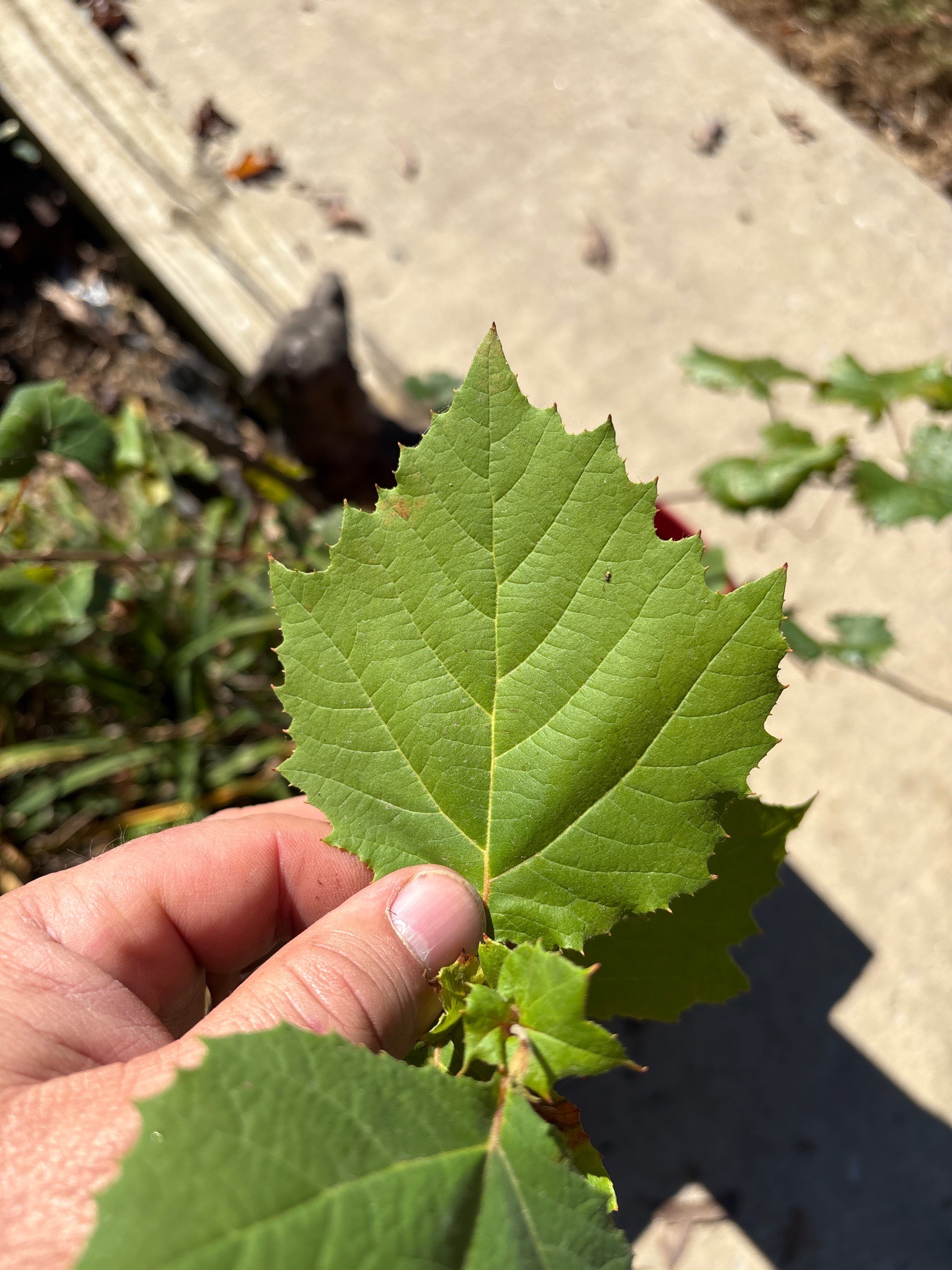
American Basswood
Tilia americana
A large deciduous tree featuring broadly cordate or heart-shaped leaves with serrated margins, asymmetrical leaf bases, and prominent venation.
- Light
- Full sun to partial shade, requiring at least 6 hours of direct sunlight daily.
- Water
- Moderate to high watering needs. Prefers evenly moist soil and benefits from regular watering during dry spells. Drought tolerance is low to moderate once established.
- Growth
- Large deciduous perennial tree with an upright, oval to rounded canopy, reaching mature heights of 60 to 80 feet and a spread of 40 to 60 feet with a medium to fast growth rate.
Care instructions
Provide full sun to partial shade with consistently moist, well-draining soil. Apply a balanced fertilizer in early spring and maintain mulch around the base to retain soil moisture.
Growing details
Sunlight
Full sun to partial shade, requiring at least 6 hours of direct sunlight daily.
Watering
Moderate to high watering needs. Prefers evenly moist soil and benefits from regular watering during dry spells. Drought tolerance is low to moderate once established.
Soil
Rich, moist, well-draining loam or clay-loam soils with a slightly acidic to neutral pH range of 6.0 to 7.0.
Hardiness zone
USDA Hardiness Zones 3 through 8.
Growth habit
Large deciduous perennial tree with an upright, oval to rounded canopy, reaching mature heights of 60 to 80 feet and a spread of 40 to 60 feet with a medium to fast growth rate.
Bloom season
Flowers in early to mid-summer, producing small, fragrant, yellowish-white pendulous clusters attached to a leafy bract.
Propagation
Propagated primarily through hardwood or softwood cuttings, grafting, or by sowing fresh stratified seeds in autumn.
Common pests & issues
Susceptible to Japanese beetles, aphids, powdery mildew, and verticillium wilt. Managed through proper watering, pruning of affected branches, and targeted pest control.
Similar species
Littleleaf Linden (Tilia cordata), which has smaller leaves with pubescent tufts beneath, and White Basswood (Tilia heterophylla), which features white-hairy leaf undersides.