
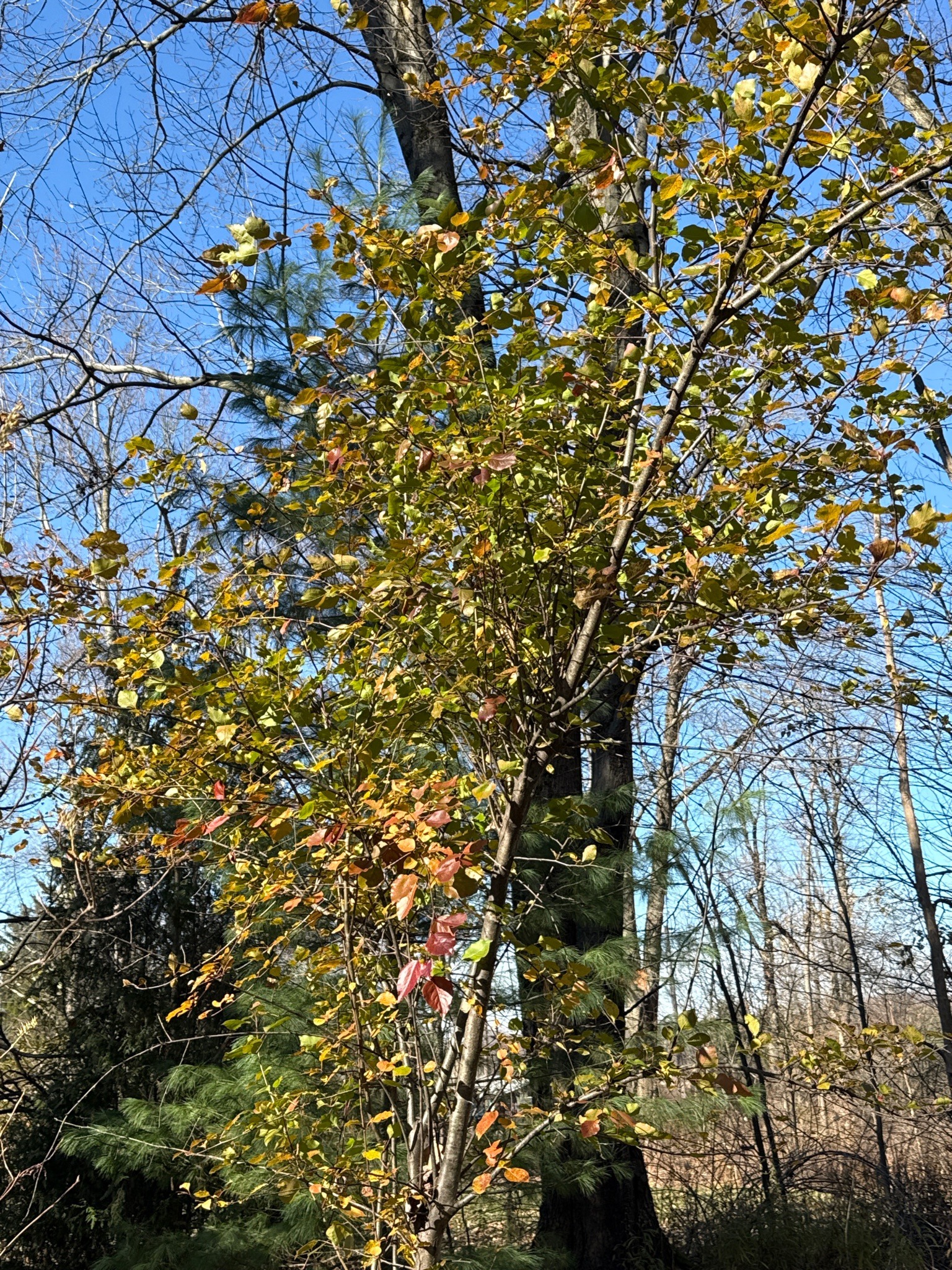
American Beech
Fagus grandifolia
A large deciduous tree characterized by smooth, light gray bark, dark green oval leaves with sharply toothed margins, and zigzag twigs. In autumn, the leaves turn a distinctive golden bronze.
- Light
- Full sun to partial shade, requiring at least 4 to 6 hours of direct sunlight daily.
- Water
- Prefers consistently moist, well-drained soil. Young trees require regular watering to establish a strong root system, while established trees have moderate drought tolerance but perform best with regular moisture.
- Growth
- A large deciduous perennial tree growing with a dense, rounded crown, reaching heights of 50 to 80 feet with a similar spread, and exhibiting a slow to moderate growth rate.
Care instructions
Plant in full sun to partial shade in moist, well-draining, organically rich soil. Water deeply during prolonged dry spells to maintain consistent moisture. Mulch around the base to keep roots cool and retain moisture, and apply a balanced slow-release fertilizer in early spring if growth is sluggish.
Growing details
Sunlight
Full sun to partial shade, requiring at least 4 to 6 hours of direct sunlight daily.
Watering
Prefers consistently moist, well-drained soil. Young trees require regular watering to establish a strong root system, while established trees have moderate drought tolerance but perform best with regular moisture.
Soil
Deep, rich, moist, and well-drained loamy soils with a slightly acidic to neutral pH range of 5.0 to 6.8.
Hardiness zone
USDA Hardiness Zones 3 through 9.
Growth habit
A large deciduous perennial tree growing with a dense, rounded crown, reaching heights of 50 to 80 feet with a similar spread, and exhibiting a slow to moderate growth rate.
Bloom season
Spring; flowers are inconspicuous and monoecious, with yellowish-green male catkins and smaller female flowers appearing as new leaves unfold.
Propagation
Propagated primarily by seeds sown in autumn after cold stratification, or through root suckers and grafting for specific horticultural selections.
Common pests & issues
Susceptible to beech bark disease, beech leaf disease, powdery mildew, and insect pests such as aphids and beech scale insects. Maintain good air circulation and monitor for early signs of infestation.
Similar species
European Beech (Fagus sylvatica), which has darker, shinier leaves and is native to Europe, and Hornbeam (Carpinus caroliniana), which features muscle-like rippled bark rather than smooth gray bark.