
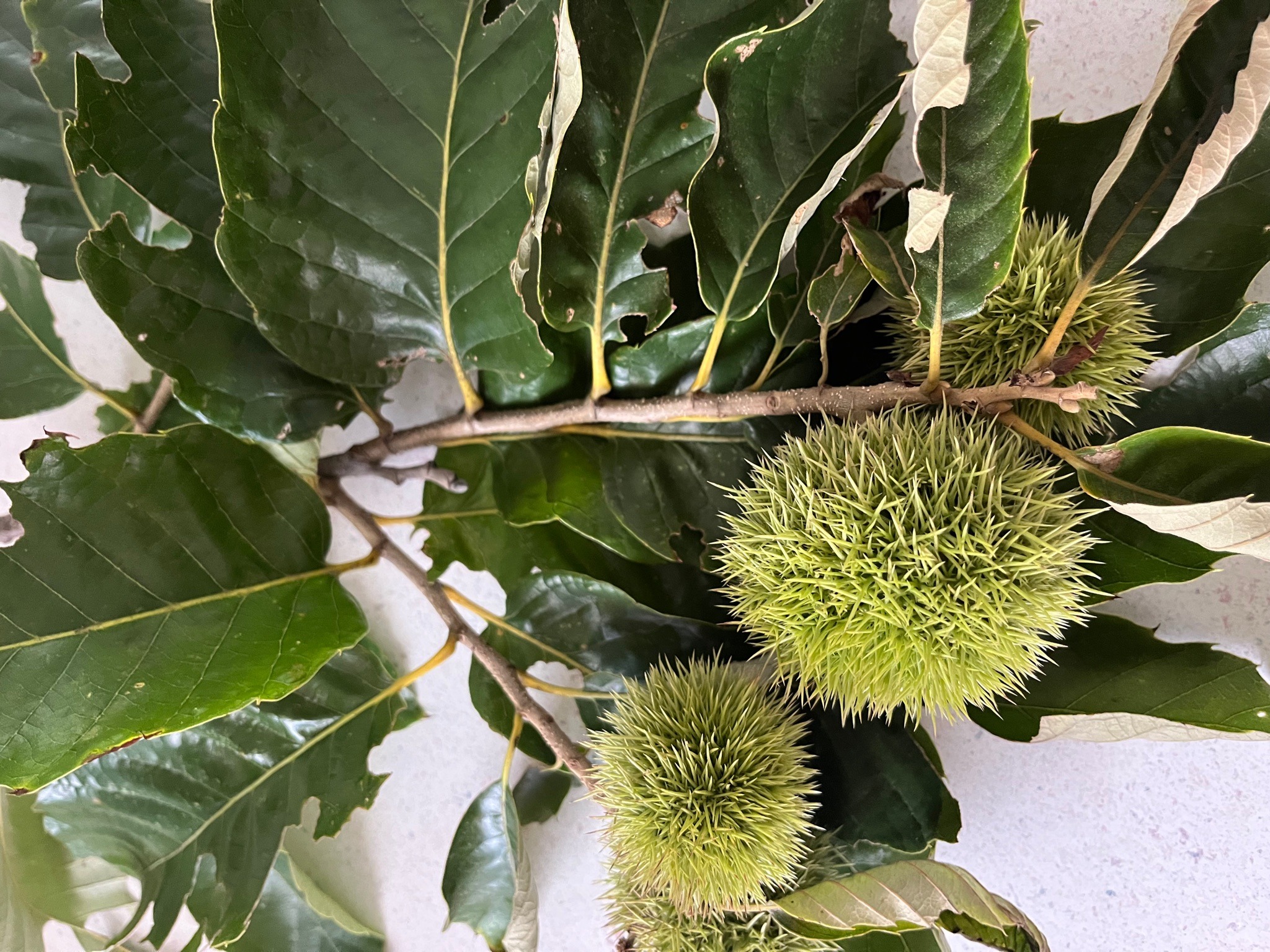
American Chestnut
Castanea dentata
A large deciduous tree featuring sharply toothed, oblong-lanceolate leaves and distinctive spiny husks enclosing seeds.
- Light
- Full sun, requiring at least 6 to 8 hours of direct sunlight daily.
- Water
- Moderate watering needs. Water deeply when the top few inches of soil become dry. Drought-tolerant once established.
- Growth
- Perennial deciduous tree with a fast growth rate, capable of reaching mature heights of 60 to 100 feet with a wide, spreading canopy.
Care instructions
Provide full sun exposure, well-draining loamy soil with acidic to neutral pH, and regular moisture during dry spells.
Growing details
Sunlight
Full sun, requiring at least 6 to 8 hours of direct sunlight daily.
Watering
Moderate watering needs. Water deeply when the top few inches of soil become dry. Drought-tolerant once established.
Soil
Prefers rich, deep, well-drained loamy or sandy soils with a pH ranging from 4.5 to 6.5.
Hardiness zone
USDA zones 4 through 8.
Growth habit
Perennial deciduous tree with a fast growth rate, capable of reaching mature heights of 60 to 100 feet with a wide, spreading canopy.
Bloom season
Blooms in early to mid-summer, producing long, cream-colored catkins with a distinct aroma.
Propagation
Propagated primarily through stratified seeds planted in autumn, or through grafting onto disease-resistant rootstocks.
Common pests & issues
Susceptible to fungal pathogens such as chestnut blight, and occasionally troubled by insect pests like chestnut gall wasps.
Similar species
Chinese Chestnut (Castanea mollissima), which can be distinguished by its shorter stature, downy twig undersides, and broader, less sharply toothed leaves.