
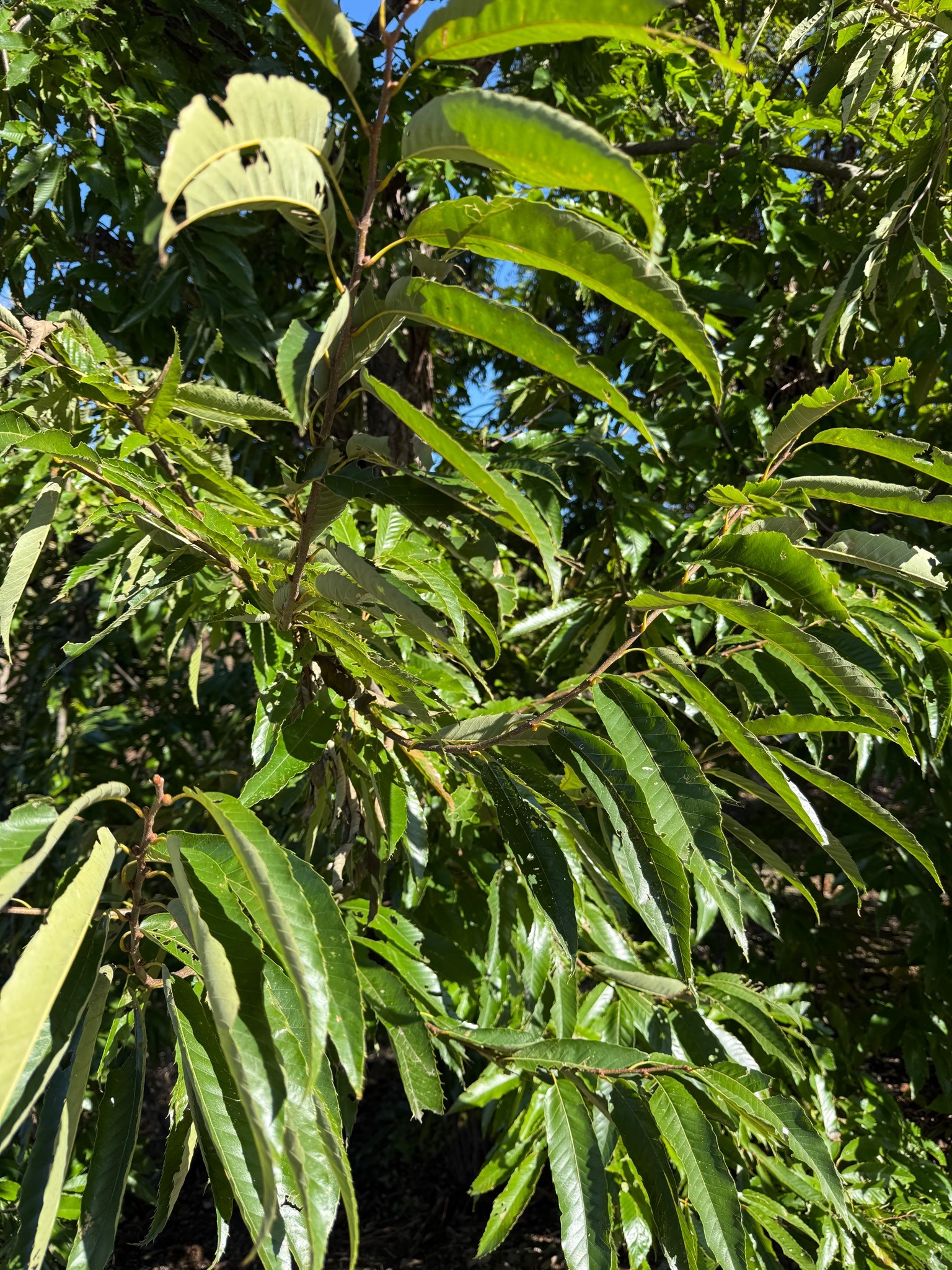
American Chestnut
Castanea dentata
A large deciduous tree featuring alternate, simple, oblong-lanceolate leaves with sharply serrated margins and prominent parallel veins ending in bristle-like teeth.
- Light
- Full sun, requiring at least 6 hours of direct sunlight daily.
- Water
- Moderate watering when young; mature trees have good drought tolerance once established. Avoid waterlogged soils.
- Growth
- Large deciduous perennial tree with a fast growth rate, historically reaching mature heights of 60 to 100 feet or more with a broad, spreading crown.
Care instructions
Provide full sun and well-draining, slightly acidic soil. Water regularly during dry spells while the tree is young, establishing deep roots. Fertilization is generally not necessary in rich soils.
Growing details
Sunlight
Full sun, requiring at least 6 hours of direct sunlight daily.
Watering
Moderate watering when young; mature trees have good drought tolerance once established. Avoid waterlogged soils.
Soil
Prefers deep, loamy, well-draining soils with an acidic to neutral pH range of 4.5 to 6.5.
Hardiness zone
USDA Hardiness Zones 4 to 8.
Growth habit
Large deciduous perennial tree with a fast growth rate, historically reaching mature heights of 60 to 100 feet or more with a broad, spreading crown.
Bloom season
Late spring to early summer, featuring long, pale yellow to cream-colored catkins.
Propagation
Propagated primarily from seeds sown in autumn or through specialized grafting techniques on resistant rootstocks.
Common pests & issues
Susceptible to chestnut blight, a fungal disease affecting the bark, as well as root rot in poorly drained soils.
Similar species
Chinese Chestnut (Castanea mollissima), which can be distinguished by shorter, broader leaves with pubescent undersides and smaller growth habit.