
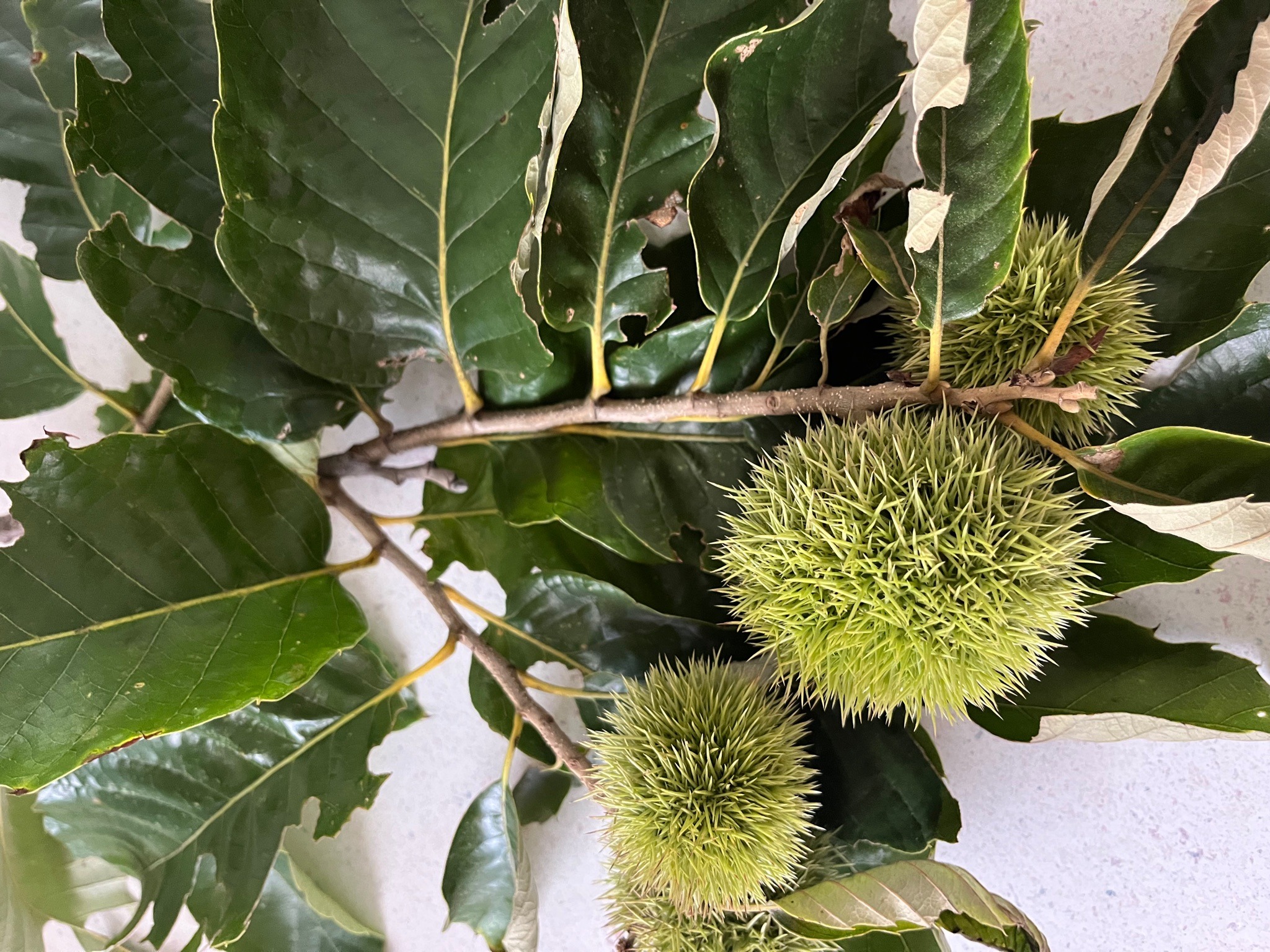
American Chestnut
Castanea dentata
A large deciduous tree featuring sharply toothed, lance-shaped leaves and distinctive spiky green burs enclosing developing seeds.
- Light
- Full sun, requiring 6 to 8 hours of direct sunlight daily
- Water
- Moderate water needs, preferring consistently moist soil that drains well; drought tolerant once established
- Growth
- Perennial large deciduous tree with a fast growth rate, potentially reaching mature heights of 60 to 100 feet with a broad, spreading canopy
Care instructions
Plant in full sun with well-draining soil. Water deeply during establishment and apply a balanced fertilizer in early spring.
Growing details
Sunlight
Full sun, requiring 6 to 8 hours of direct sunlight daily
Watering
Moderate water needs, preferring consistently moist soil that drains well; drought tolerant once established
Soil
Well-draining, slightly acidic to neutral loam or sandy soil with a pH between 4.5 and 6.5
Hardiness zone
USDA zones 4 through 8
Growth habit
Perennial large deciduous tree with a fast growth rate, potentially reaching mature heights of 60 to 100 feet with a broad, spreading canopy
Bloom season
Early to mid-summer, producing long, cream-colored catkins with a distinct fragrance
Propagation
Propagated primarily through seed stratification or grafting techniques performed in late winter
Common pests & issues
Susceptible to chestnut blight fungal disease and root rot in poorly draining soils; monitor for leaf-chewing insects
Similar species
Chinese Chestnut (Castanea mollissima) and European Chestnut (Castanea sativa); distinguished by leaf shape, pubescence on the underside of leaves, and marginal tooth structure