
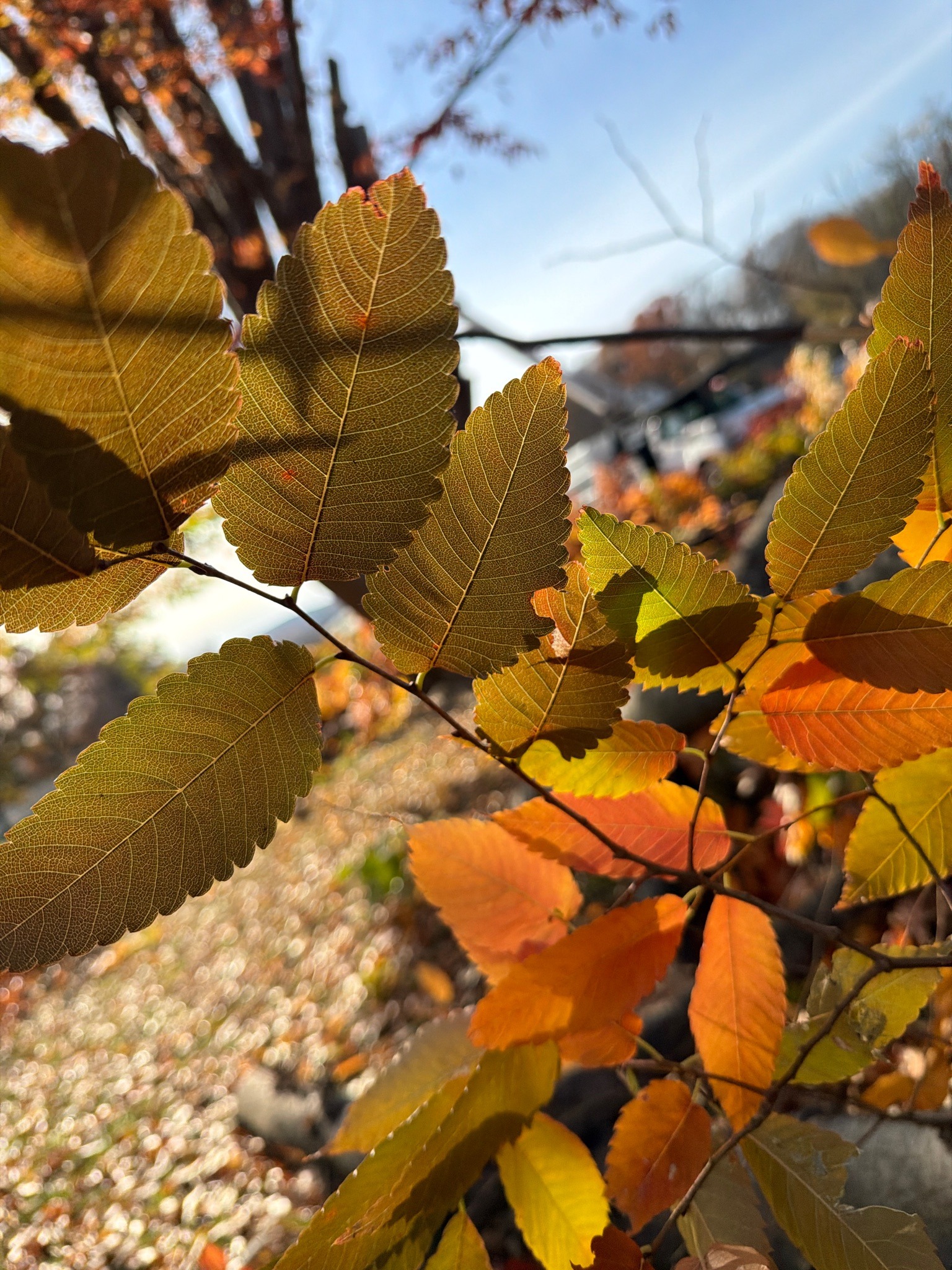
American Elm
Ulmus americana
A large deciduous tree featuring alternate, oblong-ovate leaves with doubly serrated margins, asymmetrical bases, and prominent parallel veins. The foliage turns a brilliant yellow in the autumn.
- Light
- Full sun to partial shade, requiring at least 6 hours of direct sunlight daily
- Water
- Prefers consistently moist soil; moderately drought tolerant once established. Water deeply during prolonged dry spells to prevent premature leaf drop.
- Growth
- Deciduous perennial tree with a characteristic vase-shaped canopy, growing 60 to 80 feet tall with a wide spread, exhibiting a fast to moderate growth rate.
Care instructions
Plant in full sun to partial shade in moist, well-draining soil. Water regularly during establishment and provide moderate moisture during dry periods. Apply a balanced fertilizer in early spring if soil nutrients are low.
Growing details
Sunlight
Full sun to partial shade, requiring at least 6 hours of direct sunlight daily
Watering
Prefers consistently moist soil; moderately drought tolerant once established. Water deeply during prolonged dry spells to prevent premature leaf drop.
Soil
Adaptable to a wide range of soil types including clay, loam, and sand, provided they have good drainage. Prefers a neutral to slightly acidic pH range of 6.0 to 7.5.
Hardiness zone
USDA Zones 3 through 9
Growth habit
Deciduous perennial tree with a characteristic vase-shaped canopy, growing 60 to 80 feet tall with a wide spread, exhibiting a fast to moderate growth rate.
Bloom season
Early spring before the emergence of new leaves, producing small, inconspicuous greenish-red flowers arranged in clusters
Propagation
Propagated primarily by seeds sown immediately after ripening, or through softwood cuttings and grafting in specialized settings
Common pests & issues
Susceptible to Dutch elm disease, elm leaf beetles, and black spot fungus. Preventative measures include maintaining tree vigor and monitoring for insect vectors.
Similar species
Slippery Elm (Ulmus rubra), which can be distinguished by its rougher, larger upper leaf surfaces and larger bud scales.