
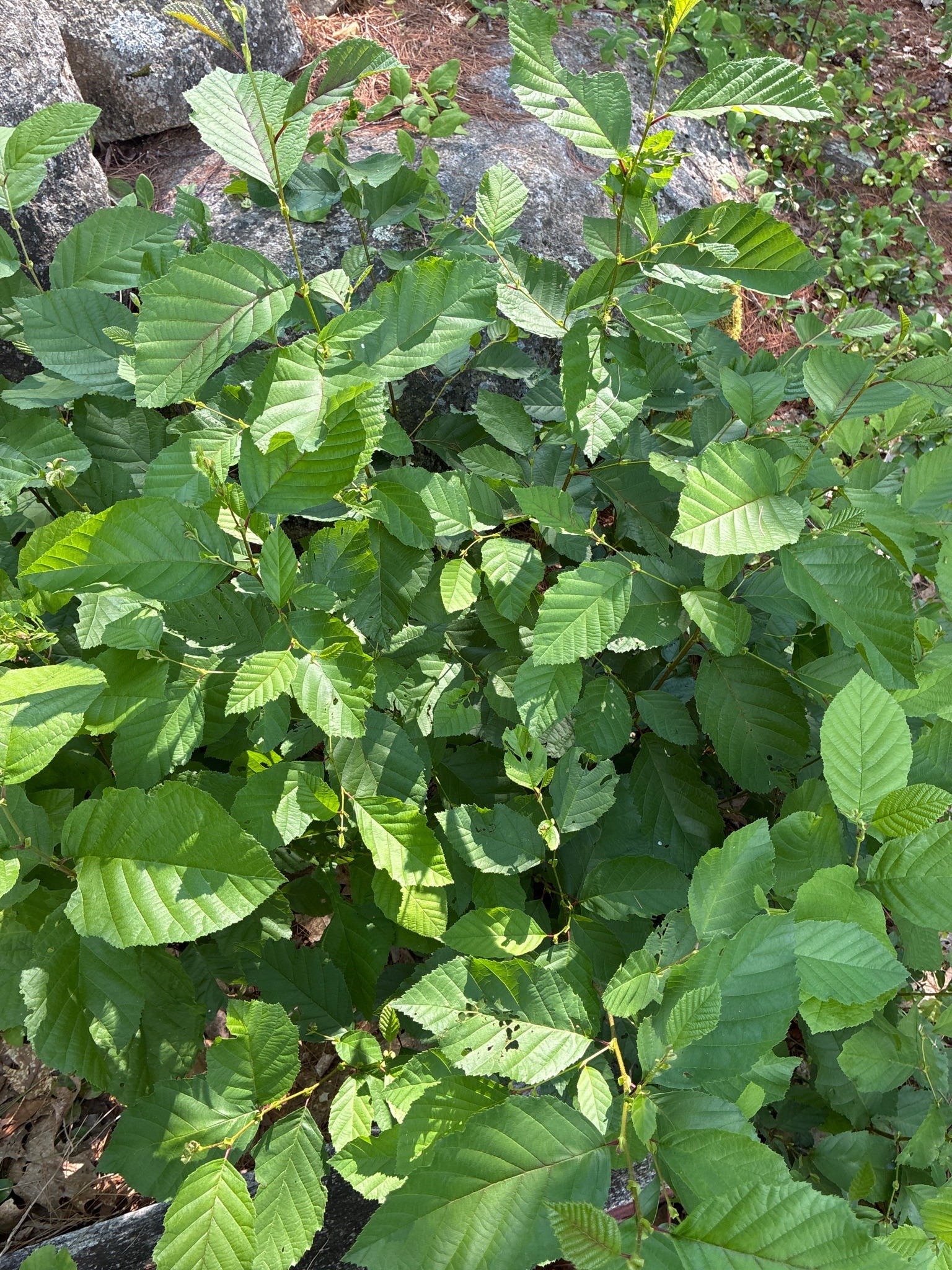
American Hazelnut
Corylus americana
A multi-stemmed deciduous shrub featuring dark green, coarsely double-toothed leaves with prominent parallel veins. Stems often display fine brownish hairs on young growth.
- Light
- Full sun to partial shade (at least 4 to 6 hours of direct sunlight per day).
- Water
- Requires regular watering when young; mature plants tolerate moderate drought but prefer consistently moist, well-drained conditions.
- Growth
- Perennial multi-stemmed, suckering shrub growing 8 to 15 feet high and 8 to 12 feet wide with a rounded, spreading habit.
Care instructions
Grow in full sun to partial shade for optimal foliage density and form. Prefers moist, well-draining soil but adapts to a wide range of conditions. Water regularly during dry spells and apply a balanced slow-release fertilizer in early spring if needed.
Growing details
Sunlight
Full sun to partial shade (at least 4 to 6 hours of direct sunlight per day).
Watering
Requires regular watering when young; mature plants tolerate moderate drought but prefer consistently moist, well-drained conditions.
Soil
Adaptable to sandy, loamy, or clay soils, preferring acidic to neutral soil (pH 6.0 to 7.5) with good drainage.
Hardiness zone
USDA Hardiness Zones 4 through 9.
Growth habit
Perennial multi-stemmed, suckering shrub growing 8 to 15 feet high and 8 to 12 feet wide with a rounded, spreading habit.
Bloom season
Blooms in early spring before leaf emergence; male flowers are dangling yellowish-brown catkins, while female flowers are tiny, subtle red styles sticking out of small buds.
Propagation
Propagated by seed (stratified cold seeds), root suckers, layerings, or softwood cuttings in early summer.
Common pests & issues
Generally low maintenance, but can occasionally suffer from eastern filbert blight, leaf spot, Japanese beetles, and aphids.
Similar species
Beaked Hazelnut (Corylus cornuta) has smooth young twigs and tubular husk coverings on fruits; European Hazelnut (Corylus avellana) typically forms larger tree-like structures.