
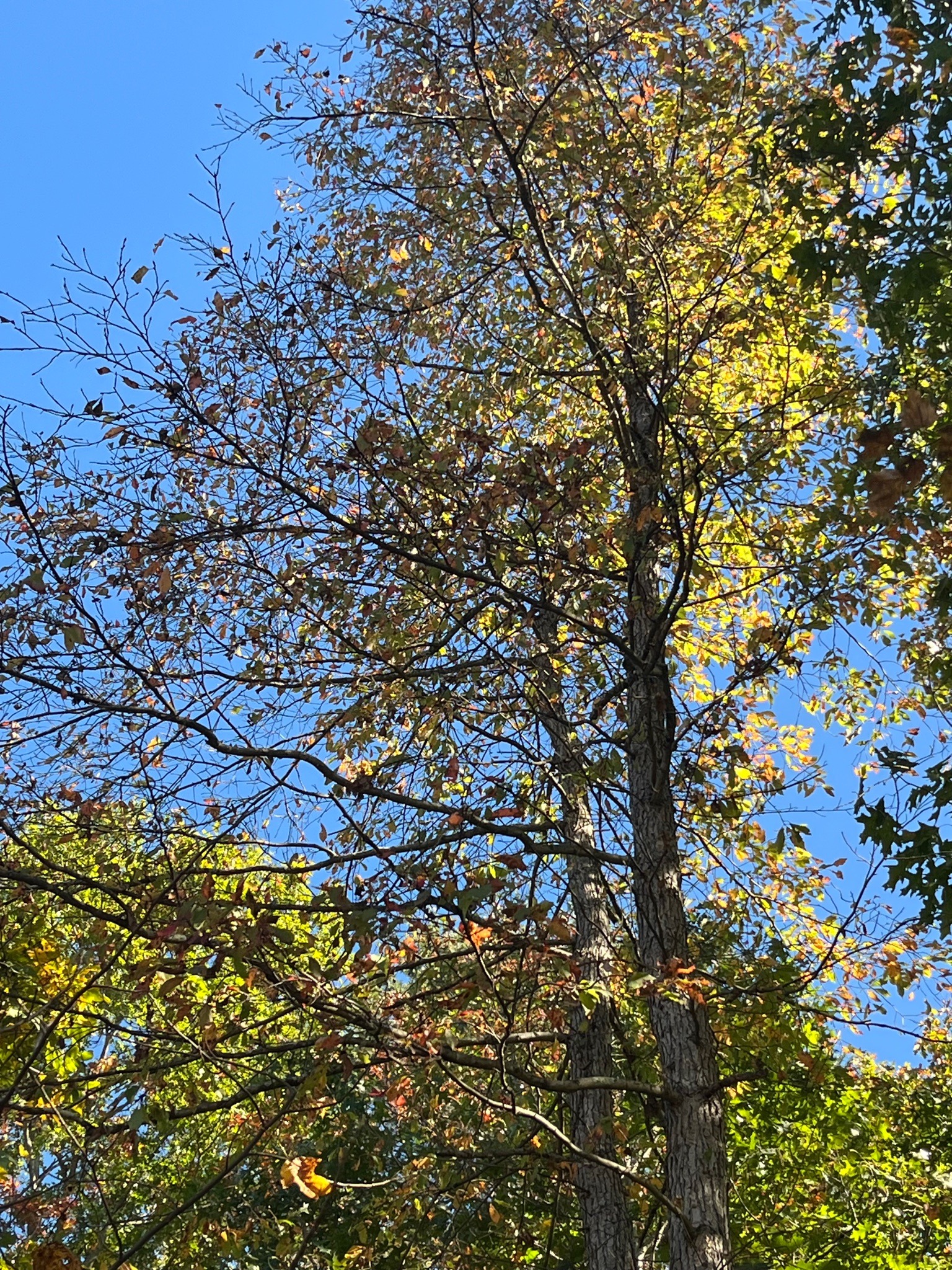
American Hornbeam
Carpinus caroliniana
A small to medium-sized understory tree known for its smooth, muscular-looking gray bark, slender zigzag twigs, and doubly serrated oval leaves that turn brilliant shades of orange and red in autumn.
- Light
- Full sun to full shade, performing best in partial shade with 4 to 6 hours of filtered sunlight daily.
- Water
- Requires regular moisture, especially when young. Prefers consistently damp soils and has low drought tolerance; water deeply during dry spells.
- Growth
- Perennial woody tree with a slow to moderate growth rate, reaching a mature height of 20 to 35 feet with a similar spread and a rounded, multi-stemmed form.
Care instructions
Provide full sun to full shade with consistent moisture in well-draining, organically rich soils. Apply a balanced fertilizer in early spring if growth is slow, and mulch annually to retain soil moisture.
Growing details
Sunlight
Full sun to full shade, performing best in partial shade with 4 to 6 hours of filtered sunlight daily.
Watering
Requires regular moisture, especially when young. Prefers consistently damp soils and has low drought tolerance; water deeply during dry spells.
Soil
Prefers rich, moist, loamy soils with good organic matter, but adapts to clay and sandy textures. Tolerates a slightly acidic to neutral pH range of 6.0 to 7.0.
Hardiness zone
USDA zones 3 through 9, exhibiting strong cold hardiness and moderate heat tolerance.
Growth habit
Perennial woody tree with a slow to moderate growth rate, reaching a mature height of 20 to 35 feet with a similar spread and a rounded, multi-stemmed form.
Bloom season
Spring, producing inconspicuous greenish catkins; flowers are unisexual with male and female catkins appearing on the same tree as the leaves emerge.
Propagation
Propagated primarily through stratified seeds sown in autumn or via softwood cuttings taken in early summer using rooting hormone.
Common pests & issues
Generally trouble-free, though occasionally susceptible to twig blight, leaf spots, and cankers. Pests such as aphids and scale insects may appear but rarely cause significant damage.
Similar species
American Beech (Fagus grandifolia), which can be distinguished by its smooth, light gray bark and longer, pointed cigar-shaped winter buds compared to the fluted bark and smaller buds of the American Hornbeam.