
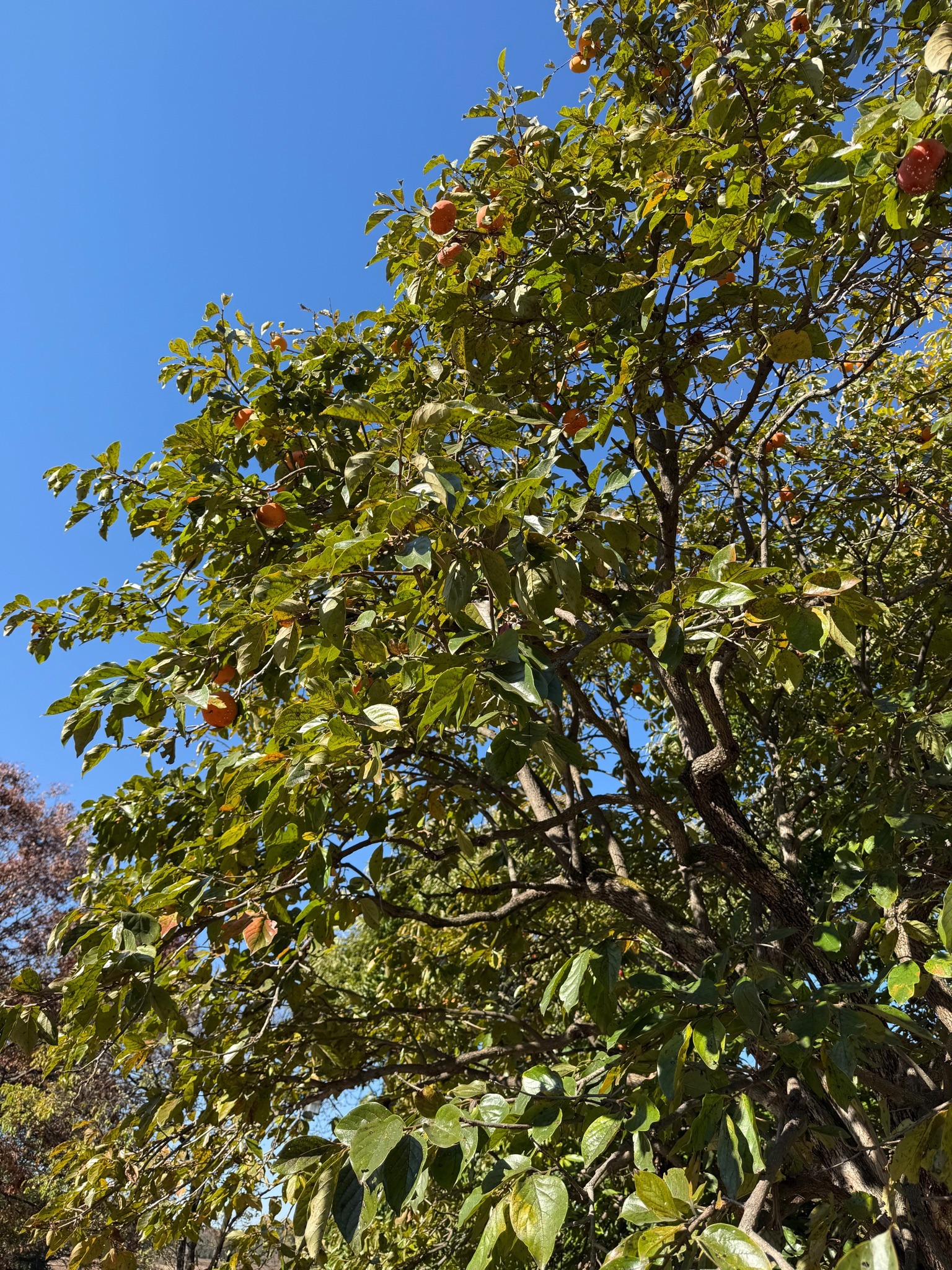
American Persimmon
Diospyros virginiana
A medium-sized deciduous tree featuring dark green, alternate, oval leaves, deeply furrowed dark bark, and bearing small, rounded yellow-orange to reddish-orange structures among the foliage.
- Light
- Full sun, requiring at least 6 to 8 hours of direct sunlight daily
- Water
- Moderate watering when young; mature trees tolerate periods of drought well. Water deeply during prolonged dry spells.
- Growth
- Perennial deciduous tree with a rounded to irregular crown, growing typically to 30 to 50 feet tall with a moderate growth rate.
Care instructions
Plant in a location with full sun and well-draining soil. Provide regular watering during the first growing season to establish a deep root system, after which it exhibits good drought tolerance. Apply a balanced, slow-release fertilizer in early spring if growth appears slow.
Growing details
Sunlight
Full sun, requiring at least 6 to 8 hours of direct sunlight daily
Watering
Moderate watering when young; mature trees tolerate periods of drought well. Water deeply during prolonged dry spells.
Soil
Adaptable to a wide range of soil types including clay, loam, and sandy soils, provided they are well-draining. Prefers a slightly acidic to neutral pH range of 6.0 to 7.0.
Hardiness zone
USDA Zones 4 through 9
Growth habit
Perennial deciduous tree with a rounded to irregular crown, growing typically to 30 to 50 feet tall with a moderate growth rate.
Bloom season
Late spring to early summer, producing small, inconspicuous, bell-shaped greenish-yellow flowers.
Propagation
Propagated primarily through seeds stratified in cold temperatures for 60 to 90 days, or through root cuttings and grafting for specific cultivars.
Common pests & issues
Generally resilient, but may occasionally be affected by leaf spots, twig girdlers, and scale insects, which can be managed with proper sanitation and appropriate horticultural oils if needed.
Similar species
Asian Persimmon (Diospyros kaki), which features larger leaves and larger fruit structures, and Black Persimmon (Diospyros texana), which has smaller leaves and smooth, peeling bark.