
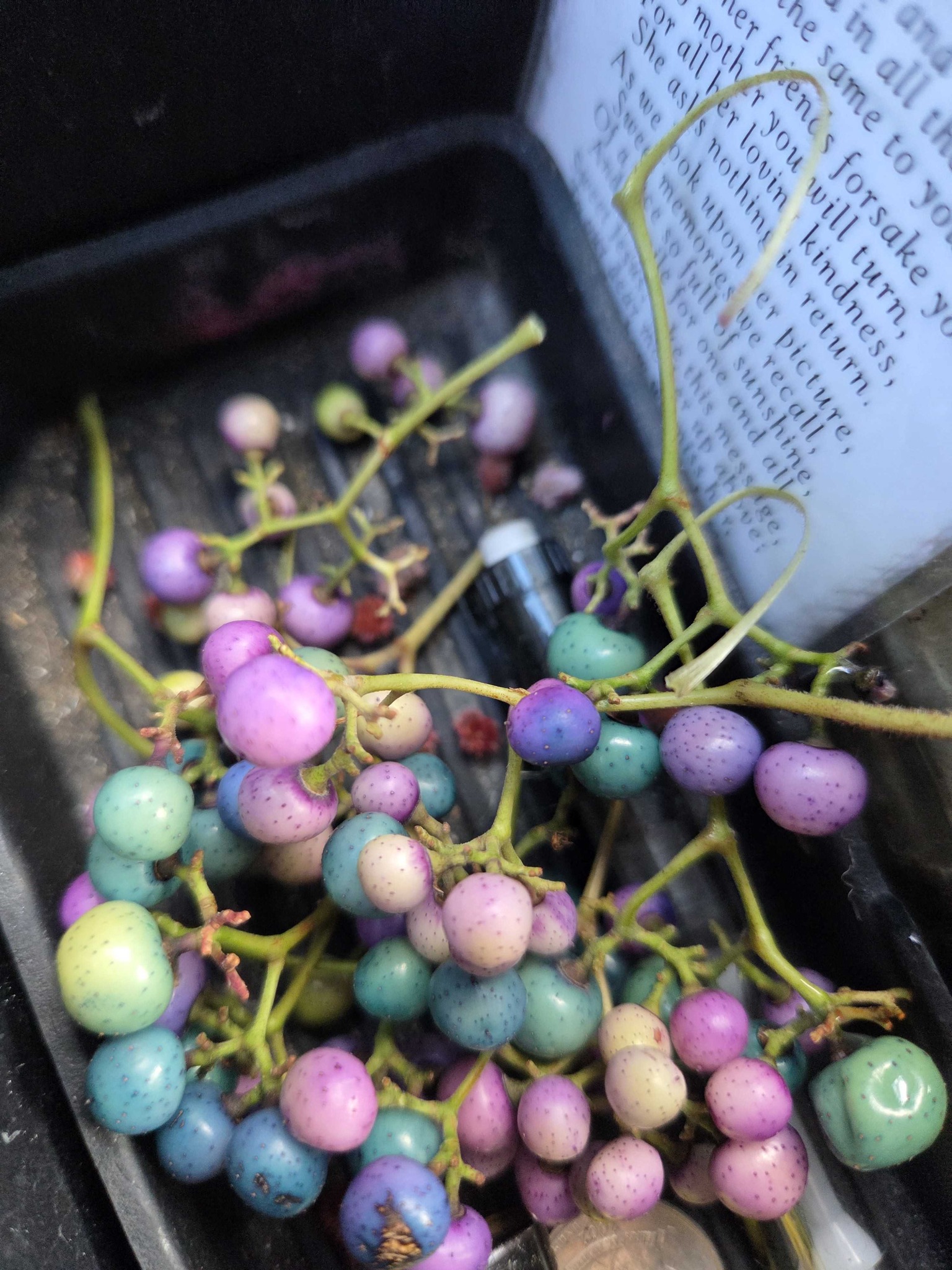
American Porcelain Berry
Ampelopsis glandulosa var. brevipedunculata
A deciduous woody vine known for its striking, multicolored clusters of glossy fruits that transition through shades of green, lilac, turquoise blue, and vibrant purple as they mature.
- Light
- Full sun to partial shade, ideally receiving at least six hours of direct sunlight daily for optimal fruit coloration.
- Water
- Requires regular watering during the first growing season to establish a deep root system. Once established, it is moderately drought-tolerant but performs best with consistent moisture.
- Growth
- A vigorous perennial deciduous climbing vine that uses tendrils to scale supports. Can reach lengths of 15 to 20 feet or more with a rapid growth rate.
Care instructions
Grow in a location with adequate space for climbing. Provide moderate, consistent moisture while establishing, and ensure soil drains well. Pruning can be performed in late winter or early spring to control vigor.
Growing details
Sunlight
Full sun to partial shade, ideally receiving at least six hours of direct sunlight daily for optimal fruit coloration.
Watering
Requires regular watering during the first growing season to establish a deep root system. Once established, it is moderately drought-tolerant but performs best with consistent moisture.
Soil
Adaptable to a wide range of soil types including clay, loam, or sand, provided the soil is well-drained. Prefers a neutral to slightly acidic pH range of 6.0 to 7.0.
Hardiness zone
USDA zones 4 through 8.
Growth habit
A vigorous perennial deciduous climbing vine that uses tendrils to scale supports. Can reach lengths of 15 to 20 feet or more with a rapid growth rate.
Bloom season
Inconspicuous greenish-yellow flowers appear in mid-summer, followed by the prominent multicolored fruit clusters in late summer and autumn.
Propagation
Propagated easily through hardwood or softwood stem cuttings taken during the growing season, or by seeds cleaned from the fruit.
Common pests & issues
Generally robust and resilient against most severe pests and diseases. Occasionally susceptible to fungal leaf spot or powdery mildew in humid, poorly ventilated conditions.
Similar species
Can be distinguished from native wild grape vines (Vitis species) by its speckled, multicolored metallic-looking fruits and pith that is white rather than brown.