
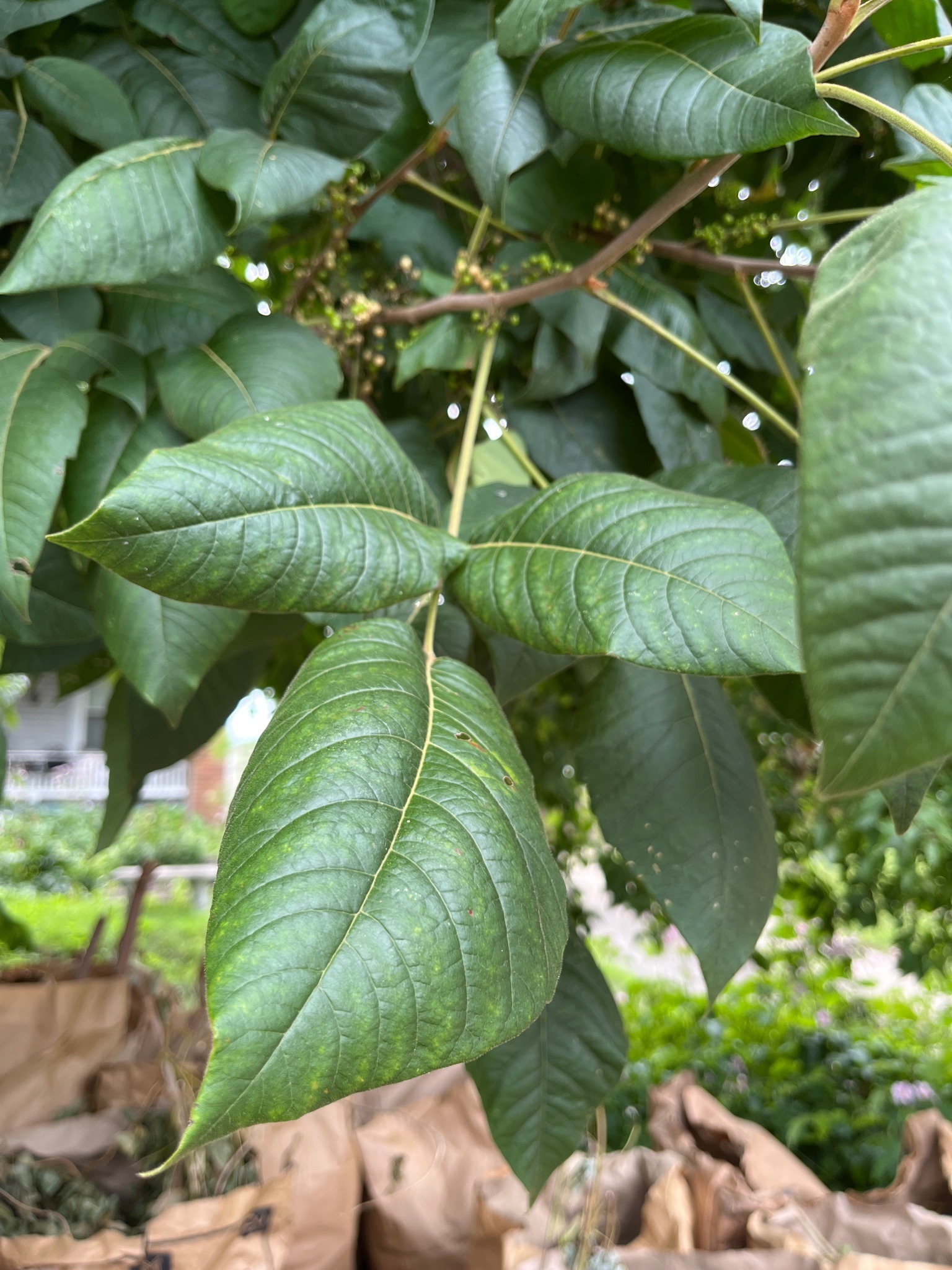
Amur Cork Tree
Phellodendron amurense
A medium-sized deciduous tree recognized by its deeply furrowed, corky bark, compound leaves arranged oppositely, and yellowish-green inner bark.
- Light
- Full sun, requiring at least six hours of direct sunlight daily for optimal growth.
- Water
- Prefers moderate moisture. Water deeply during dry spells, allowing the soil to dry slightly between watering sessions; mature trees exhibit good drought tolerance.
- Growth
- Deciduous tree with a broad, spreading crown and compound leaves. Typically reaches mature heights of 30 to 45 feet with a similar spread, growing at a moderate to fast rate.
Care instructions
Plant in a location with ample sunlight and well-draining soil. Water regularly during the establishment period to develop a deep root system, and apply a balanced fertilizer in early spring to support seasonal growth.
Growing details
Sunlight
Full sun, requiring at least six hours of direct sunlight daily for optimal growth.
Watering
Prefers moderate moisture. Water deeply during dry spells, allowing the soil to dry slightly between watering sessions; mature trees exhibit good drought tolerance.
Soil
Adaptable to various soil types including loam, clay, or sandy soils, provided they are well-draining. Prefers a neutral to slightly alkaline pH range between 6.0 and 7.5.
Hardiness zone
USDA Hardiness Zones 3 through 8, demonstrating strong cold tolerance.
Growth habit
Deciduous tree with a broad, spreading crown and compound leaves. Typically reaches mature heights of 30 to 45 feet with a similar spread, growing at a moderate to fast rate.
Bloom season
Blooms in late spring to early summer producing small, greenish-yellow flowers arranged in panicles. Non-fragrant.
Propagation
Propagated primarily from seeds sown in autumn or stratified for spring planting, as well as through hardwood cuttings taken in winter.
Common pests & issues
Generally resilient, but can occasionally be affected by leaf spots, scale insects, or cankers. Ensure proper spacing and good air circulation to minimize fungal issues.
Similar species
Can be confused with other deciduous shade trees featuring compound leaves, such as ash species (Fraxinus), but distinguished by its distinctively corky bark and opposite leaf arrangement.