
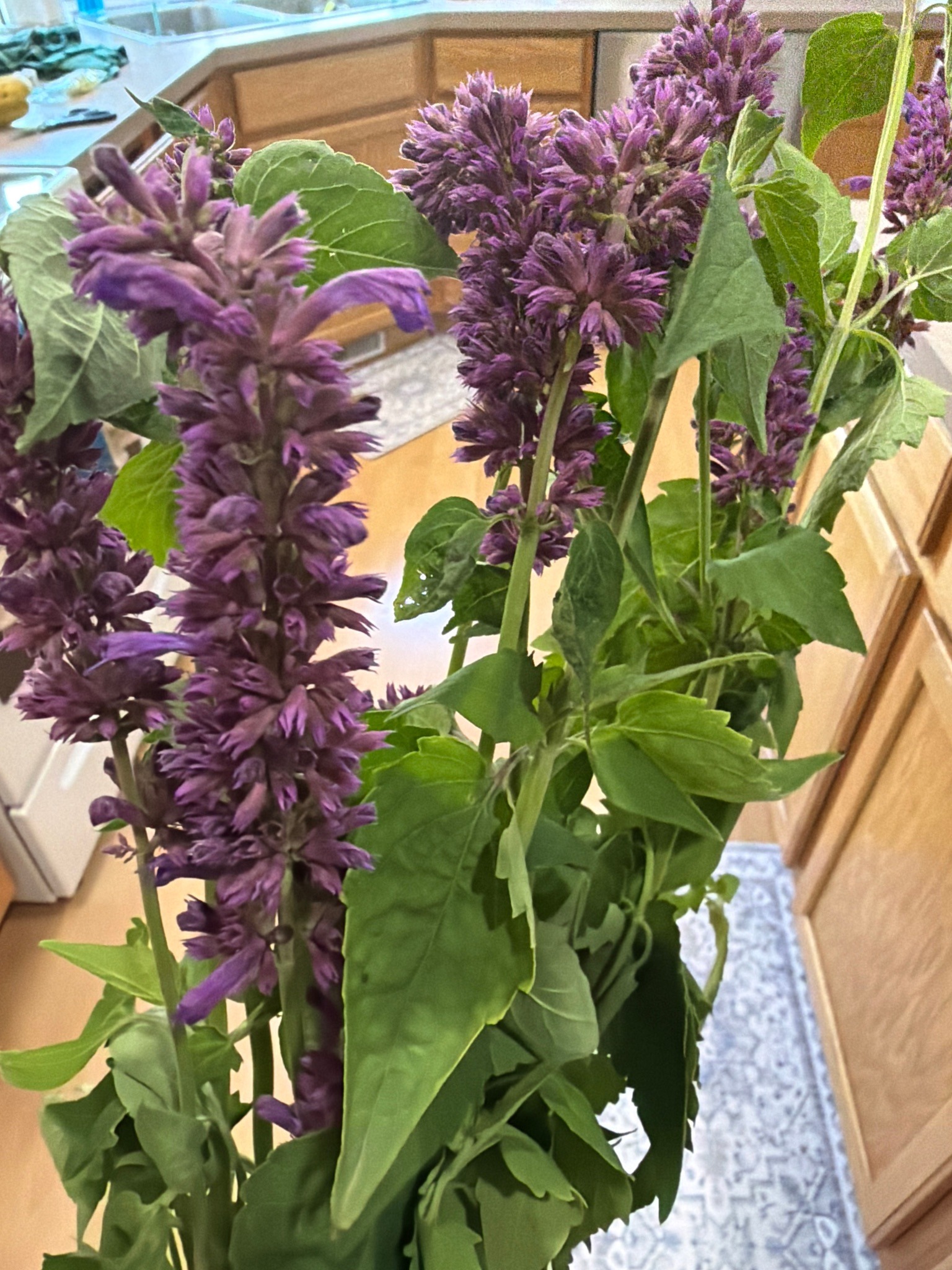
Anise Hyssop
Agastache foeniculum
Anise Hyssop is an herbaceous perennial plant characterized by upright, square stems, opposite ovate green leaves, and dense, terminal spike-like clusters of tubular purple to violet flowers.
- Light
- Full sun, requiring at least six hours of direct sunlight per day.
- Water
- Moderate watering needs. It exhibits good drought tolerance once established. Water deeply when the top few inches of soil are dry, and avoid waterlogging to prevent root issues.
- Growth
- Herbaceous perennial forming upright clumps with a mature height of 2 to 4 feet and a spread of 1 to 2 feet, featuring a moderate growth rate.
Care instructions
Provide full sun to partial shade in well-draining soil. Water moderately, allowing the soil to dry out between waterings. Apply a balanced, slow-release fertilizer in spring if soil nutrient levels are low.
Growing details
Sunlight
Full sun, requiring at least six hours of direct sunlight per day.
Watering
Moderate watering needs. It exhibits good drought tolerance once established. Water deeply when the top few inches of soil are dry, and avoid waterlogging to prevent root issues.
Soil
Prefers loose, well-draining sandy or loamy soils with a neutral to slightly alkaline pH ranging from 6.0 to 7.5. Excellent drainage is critical.
Hardiness zone
USDA zones 4 through 8, demonstrating strong cold tolerance in temperate regions.
Growth habit
Herbaceous perennial forming upright clumps with a mature height of 2 to 4 feet and a spread of 1 to 2 feet, featuring a moderate growth rate.
Bloom season
Blooms from mid-summer through early autumn, producing dense spikes of tubular violet-purple flowers.
Propagation
Propagated easily by seeds sown in spring, stem cuttings taken in late spring or summer, or by division of established root clumps in early spring.
Common pests & issues
Generally resilient, but susceptible to root rot in poorly draining soils. Pests such as aphids or spider mites can occasionally appear, and fungal issues like powdery mildew may occur in humid, crowded conditions.
Similar species
Can be distinguished from other mint family members by its distinctive growth form, square stems, and long, cylindrical spikes of purple flowers.