
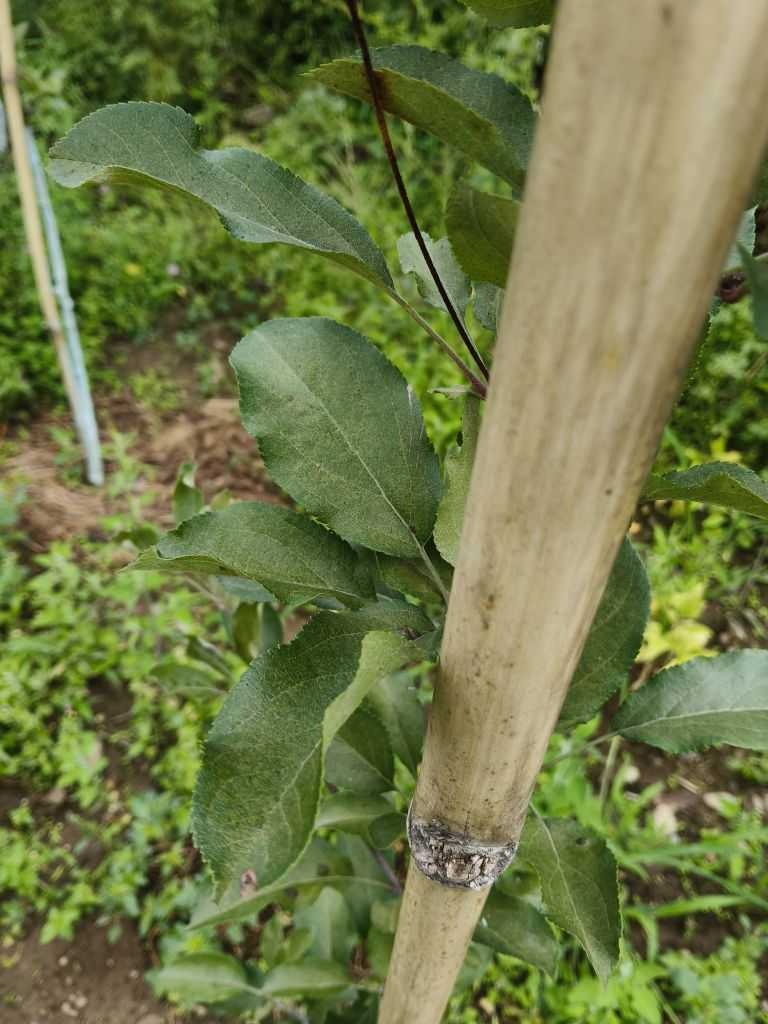
Apple tree
Malus domestica
A deciduous tree featuring simple, alternate, oval leaves with finely serrated margins and a pubescent underside, growing along woody stems supported here by a stake.
- Light
- Full sun, requiring at least 6 to 8 hours of direct sunlight daily
- Water
- Moderate watering needs; provide about an inch of water per week, increasing frequency during extended dry periods, and ensure good drainage to prevent root issues
- Growth
- Perennial deciduous tree with a woody, upright growth habit, reaching mature heights of 10 to 30 feet depending on the rootstock, with a moderate growth rate
Care instructions
Provide full sun exposure, a regular watering schedule to maintain evenly moist soil without waterlogging, well-draining loamy soil with a neutral pH, and balanced seasonal fertilization.
Growing details
Sunlight
Full sun, requiring at least 6 to 8 hours of direct sunlight daily
Watering
Moderate watering needs; provide about an inch of water per week, increasing frequency during extended dry periods, and ensure good drainage to prevent root issues
Soil
Well-draining loam, sandy loam, or clay loam soils with a pH ranging from 6.0 to 7.0
Hardiness zone
USDA Hardiness Zones 3 through 9
Growth habit
Perennial deciduous tree with a woody, upright growth habit, reaching mature heights of 10 to 30 feet depending on the rootstock, with a moderate growth rate
Bloom season
Spring, producing clusters of white or pale pink, five-petaled fragrant flowers
Propagation
Propagated primarily through grafting or budding onto specific rootstocks, or occasionally grown from seed for rootstock development
Common pests & issues
Susceptible to fungal infections like apple scab and powdery mildew, as well as insect pests such as aphids and codling moth; managed through proper spacing, sanitation, and targeted horticultural treatments
Similar species
Other members of the Rosaceae family such as crabapples (Malus spp.) and pears (Pyrus spp.), which can be distinguished by specific leaf morphology, flower structure, and growth characteristics