
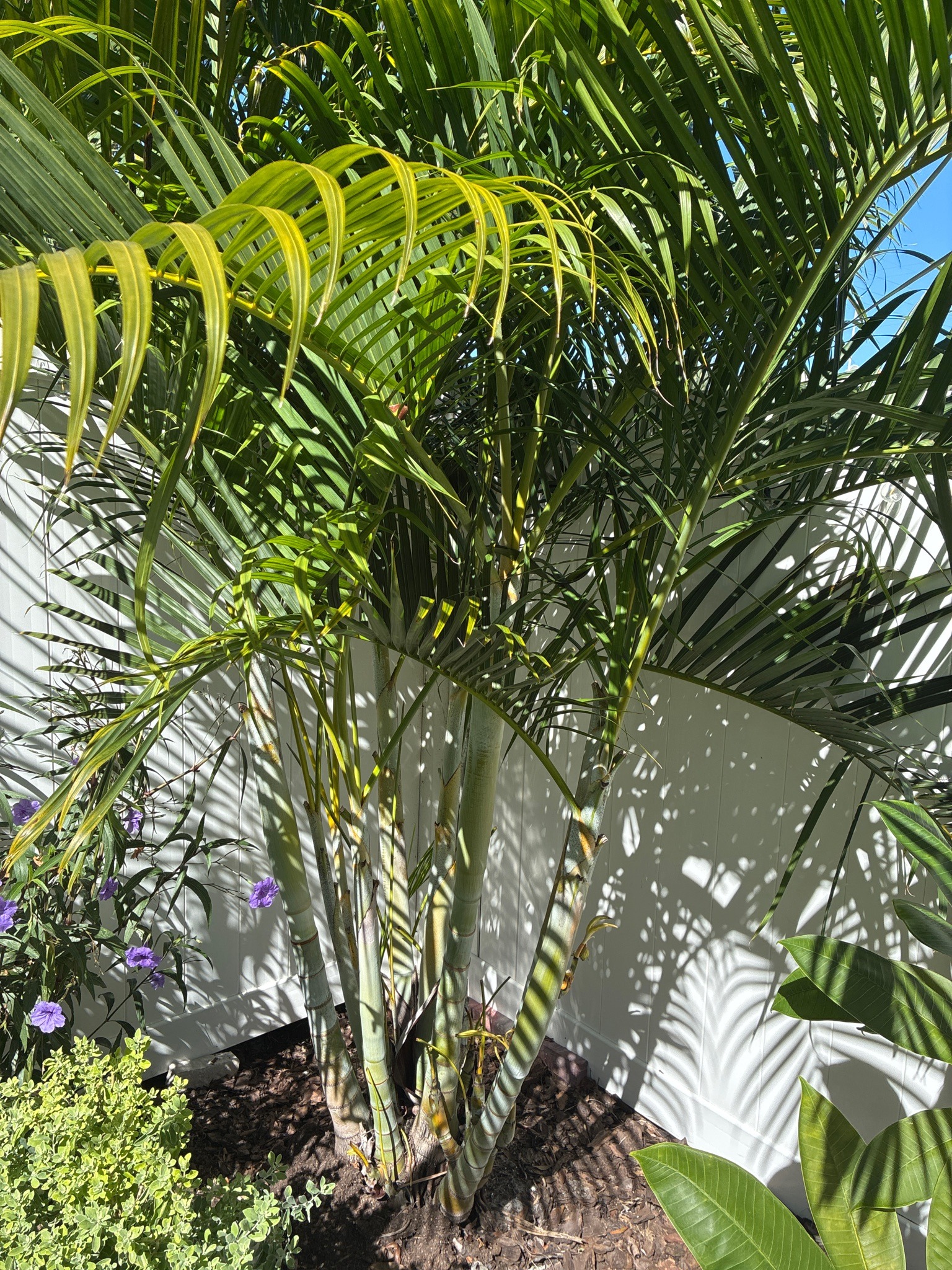
Areca Palm
Dypsis lutescens
A multi-stemmed palm with smooth, clustered green canes and arching, feathery fronds featuring numerous narrow leaflets.
- Light
- Bright, indirect light for 6 to 8 hours per day; protect from harsh direct midday sun to prevent leaf scorch.
- Water
- Water regularly to keep the soil consistently damp but never waterlogged. Allow the top inch of soil to dry slightly between waterings.
- Growth
- Perennial evergreen tree-like palm, growing in clumps with multiple stems, reaching mature heights of 6 to 12 feet indoors and up to 30 feet outdoors, with a moderate growth rate.
Care instructions
Provide bright, indirect sunlight, keeping the soil evenly moist during the growing season while ensuring excellent drainage. Feed with a balanced palm fertilizer containing micronutrients during spring and summer, and reduce watering frequency in winter.
Growing details
Sunlight
Bright, indirect light for 6 to 8 hours per day; protect from harsh direct midday sun to prevent leaf scorch.
Watering
Water regularly to keep the soil consistently damp but never waterlogged. Allow the top inch of soil to dry slightly between waterings.
Soil
Rich, loamy, fast-draining potting mix or sandy soil with a slightly acidic to neutral pH range of 6.0 to 6.5.
Hardiness zone
USDA Zones 10 to 11 outdoors; grown widely as an indoor container plant in cooler climates.
Growth habit
Perennial evergreen tree-like palm, growing in clumps with multiple stems, reaching mature heights of 6 to 12 feet indoors and up to 30 feet outdoors, with a moderate growth rate.
Bloom season
Inconspicuous yellow flowers emerge on branched inflorescences below the fronds, primarily in spring and summer, followed by small yellowish-to-purple fruits.
Propagation
Propagated primarily through seed or by carefully dividing established multi-stemmed clumps during the warm spring months.
Common pests & issues
Susceptible to spider mites, mealybugs, and scale insects, which can be managed with insecticidal soap. Overwatering frequently leads to root rot and tip browning.
Similar species
Kentia Palm (Howea forsteriana), which features darker green fronds and typically a single trunk rather than clustered canes.