
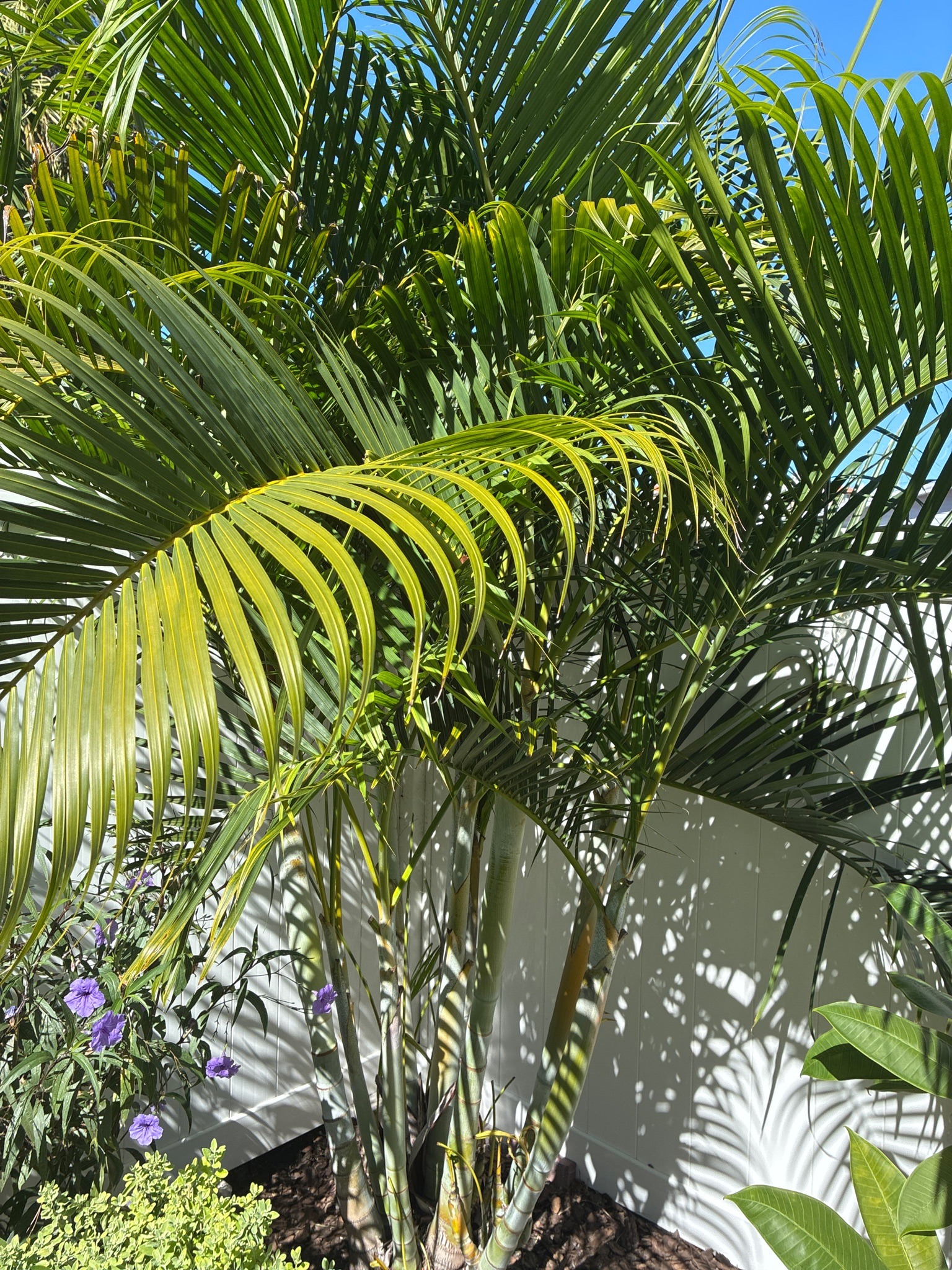
Areca Palm
Dypsis lutescens
A multi-stemmed palm with smooth, ringed trunks that resemble bamboo canes, featuring arching, pinnate fronds with yellowish-green leaf shafts and numerous narrow leaflets.
- Light
- Bright, indirect sunlight for 6 to 8 hours daily; can tolerate light morning sun but avoid harsh midday direct sun.
- Water
- Water deeply and regularly, allowing the top surface of the soil to dry slightly between waterings. Reduce watering frequency during cooler months.
- Growth
- Perennial evergreen tree-like palm, typically growing in multi-stemmed clumps reaching 6 to 12 meters in height with a spread of 3 to 5 meters, exhibiting a moderate growth rate.
Care instructions
Provide bright, indirect sunlight and maintain consistently moist, well-draining soil without letting it become waterlogged. Water thoroughly when the top inch of soil feels dry. Fertilize regularly during the growing season with a balanced palm fertilizer formulated with micronutrients to prevent nutrient deficiencies.
Growing details
Sunlight
Bright, indirect sunlight for 6 to 8 hours daily; can tolerate light morning sun but avoid harsh midday direct sun.
Watering
Water deeply and regularly, allowing the top surface of the soil to dry slightly between waterings. Reduce watering frequency during cooler months.
Soil
Rich, loamy, well-draining soil with a slightly acidic to neutral pH range of 6.0 to 6.5.
Hardiness zone
USDA Hardiness Zones 10 through 11; sensitive to frost and freezing temperatures.
Growth habit
Perennial evergreen tree-like palm, typically growing in multi-stemmed clumps reaching 6 to 12 meters in height with a spread of 3 to 5 meters, exhibiting a moderate growth rate.
Bloom season
Spring and summer, producing small, branching inflorescences of yellowish flowers emerging from beneath the fronds.
Propagation
Propagated primarily through seed germination or by carefully dividing mature multi-stemmed clumps during the warmer spring months.
Common pests & issues
Susceptible to spider mites, mealybugs, and scale insects, particularly in dry indoor environments. Overwatering can lead to root rot, while fluoride or salt buildup in the soil can cause tip burn on the fronds.
Similar species
Kentia Palm (Howea forsteriana) and Bamboo Palm (Chamaedorea seifrizii); distinguished by the prominent yellowish hue of the leaf shafts and clustered cane-like stems characteristic of Dypsis lutescens.