
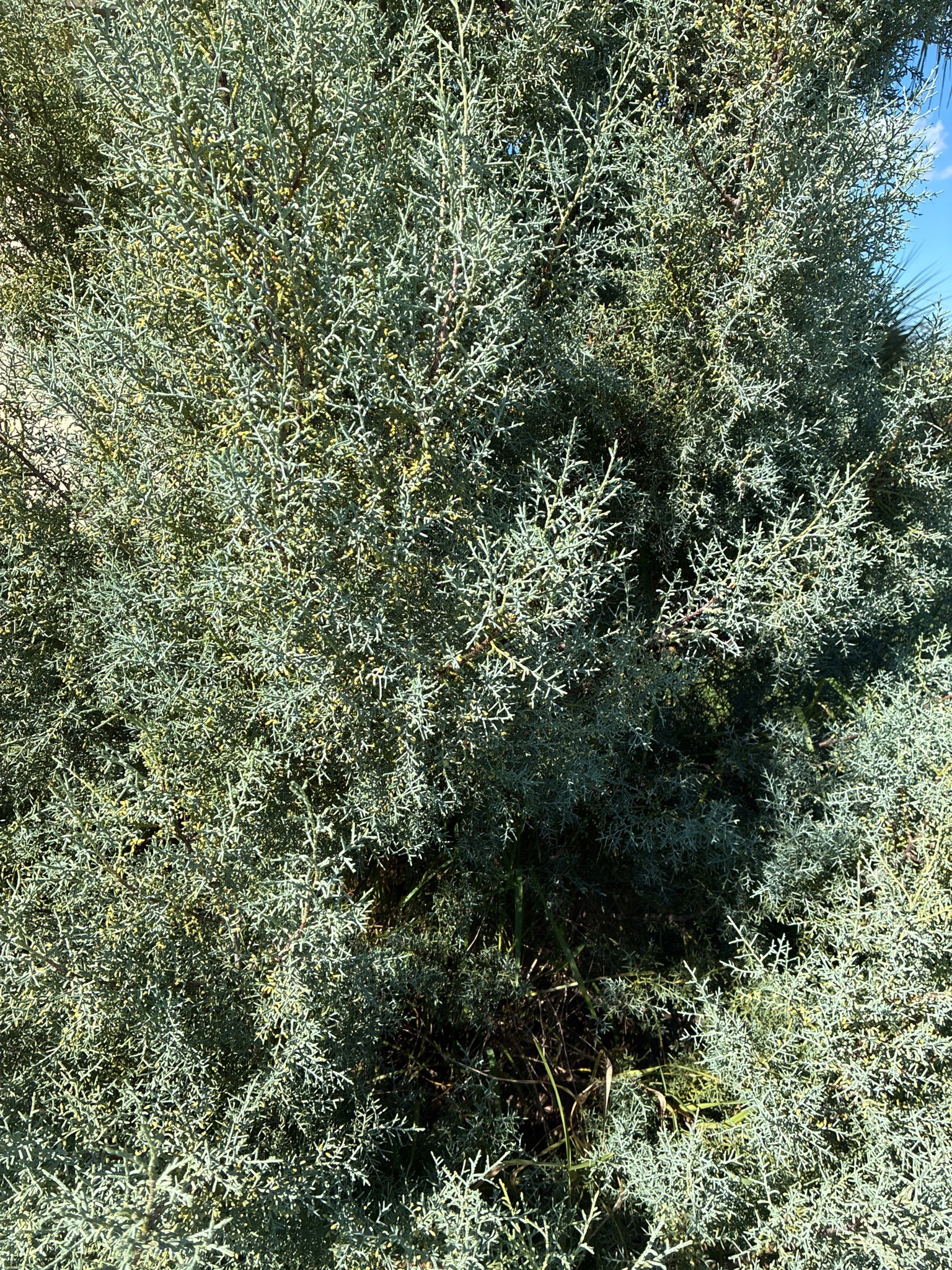
Arizona Cypress
Cupressus arizonica
An evergreen conifer featuring dense, scale-like foliage with a distinct bluish-green or silvery-gray coloration, and a conical to pyramidal growth form.
- Light
- Full sun, requiring at least 6 to 8 hours of direct sunlight daily
- Water
- Low water requirements once established, highly drought tolerant. Water young plants regularly to establish a deep root system. Signs of over-watering include root rot and yellowing foliage.
- Growth
- Evergreen tree with a conical to pyramidal growth habit, reaching heights of 30 to 50 feet and a spread of 15 to 25 feet at maturity, with a moderate growth rate.
Care instructions
Provide full sun exposure and well-draining soil. Water deeply but infrequently once established, allowing the soil to dry out between watering sessions. Avoid waterlogged conditions and apply a balanced, slow-release fertilizer in spring if growth is slow.
Growing details
Sunlight
Full sun, requiring at least 6 to 8 hours of direct sunlight daily
Watering
Low water requirements once established, highly drought tolerant. Water young plants regularly to establish a deep root system. Signs of over-watering include root rot and yellowing foliage.
Soil
Prefers sandy, loamy, or well-draining soils with excellent drainage. Tolerates neutral to slightly alkaline pH ranges.
Hardiness zone
USDA Hardiness Zones 7 through 9
Growth habit
Evergreen tree with a conical to pyramidal growth habit, reaching heights of 30 to 50 feet and a spread of 15 to 25 feet at maturity, with a moderate growth rate.
Bloom season
Non-flowering
Propagation
Propagated primarily from seeds sown in spring or through semi-hardwood cuttings taken in late summer or autumn.
Common pests & issues
Generally resilient, but susceptible to root rot in poorly draining soils, bagworms, and twig blight. Prevent by ensuring proper soil drainage and adequate spacing between trees for air circulation.
Similar species
Italian Cypress (Cupressus sempervirens), which has a much narrower, columnar shape, and Monterey Cypress (Cupressus macrocarpa), which typically has darker green foliage and a broader, more spreading crown.