
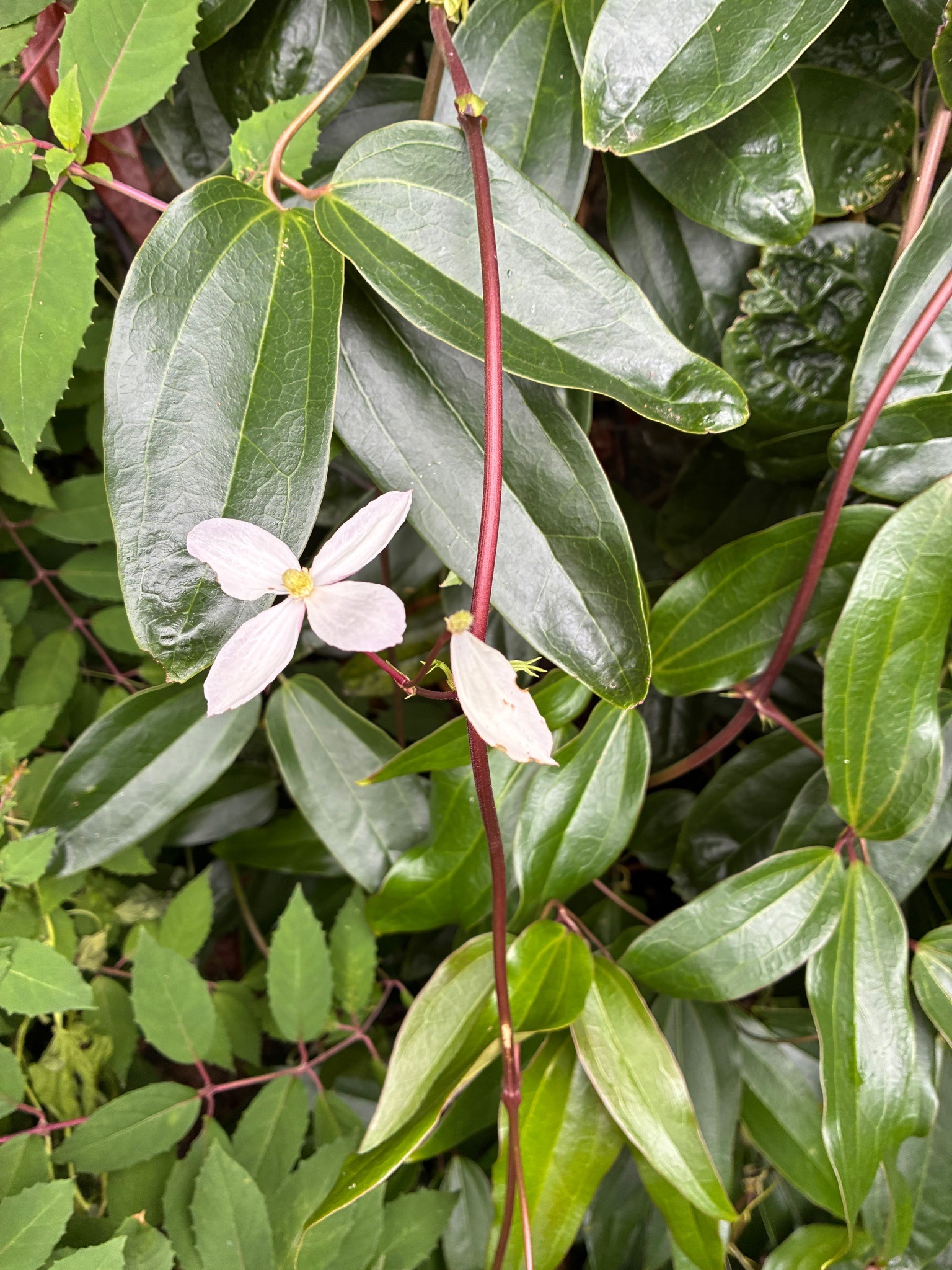
Armand Clematis
Clematis armandii
Clematis armandii is a vigorous, evergreen woody climber featuring glossy, dark green trifoliate leaves and thin reddish stems. It produces clusters of fragrant, star-shaped white or pale pink flowers in early spring.
- Light
- Full sun to partial shade, requiring at least 6 hours of direct sunlight daily for optimal flowering.
- Water
- Requires moderate and consistent watering. Keep the soil evenly moist but not waterlogged. Water deeply during dry spells, allowing the top inch to dry slightly between waterings.
- Growth
- A woody, evergreen climbing vine that uses twining leaf petioles to climb supports. It typically grows rapidly to a mature length of 15 to 20 feet (4.5 to 6 meters) or more.
Care instructions
Provide full sun to partial shade with roots kept cool and shaded while the upper vines receive direct sunlight. Water regularly during the growing season to maintain consistently moist, well-draining soil. Apply a balanced slow-release fertilizer in early spring as new growth begins.
Growing details
Sunlight
Full sun to partial shade, requiring at least 6 hours of direct sunlight daily for optimal flowering.
Watering
Requires moderate and consistent watering. Keep the soil evenly moist but not waterlogged. Water deeply during dry spells, allowing the top inch to dry slightly between waterings.
Soil
Prefers rich, humus-rich, well-draining loamy soils with a neutral to slightly alkaline pH range between 6.5 and 7.5.
Hardiness zone
USDA Hardiness Zones 7 through 9, requiring protection from harsh freezing winds.
Growth habit
A woody, evergreen climbing vine that uses twining leaf petioles to climb supports. It typically grows rapidly to a mature length of 15 to 20 feet (4.5 to 6 meters) or more.
Bloom season
Blooms in early to mid-spring. Flowers are typically white to pale pink, star-shaped with four sepals, and emit a sweet fragrance.
Propagation
Can be propagated through semi-hardwood cuttings taken in summer or by layering vines in spring. Seeds can also be sown, though cultivars are best propagated vegetatively to retain traits.
Common pests & issues
Susceptible to powdery mildew and wilt, especially in humid conditions with poor air circulation. Ensure proper spacing and good airflow to prevent fungal issues.
Similar species
Similar to other evergreen clematis species such as Clematis cirrhosa, but distinguished by its leathery, dark green trifoliate leaves and larger white blossoms.