
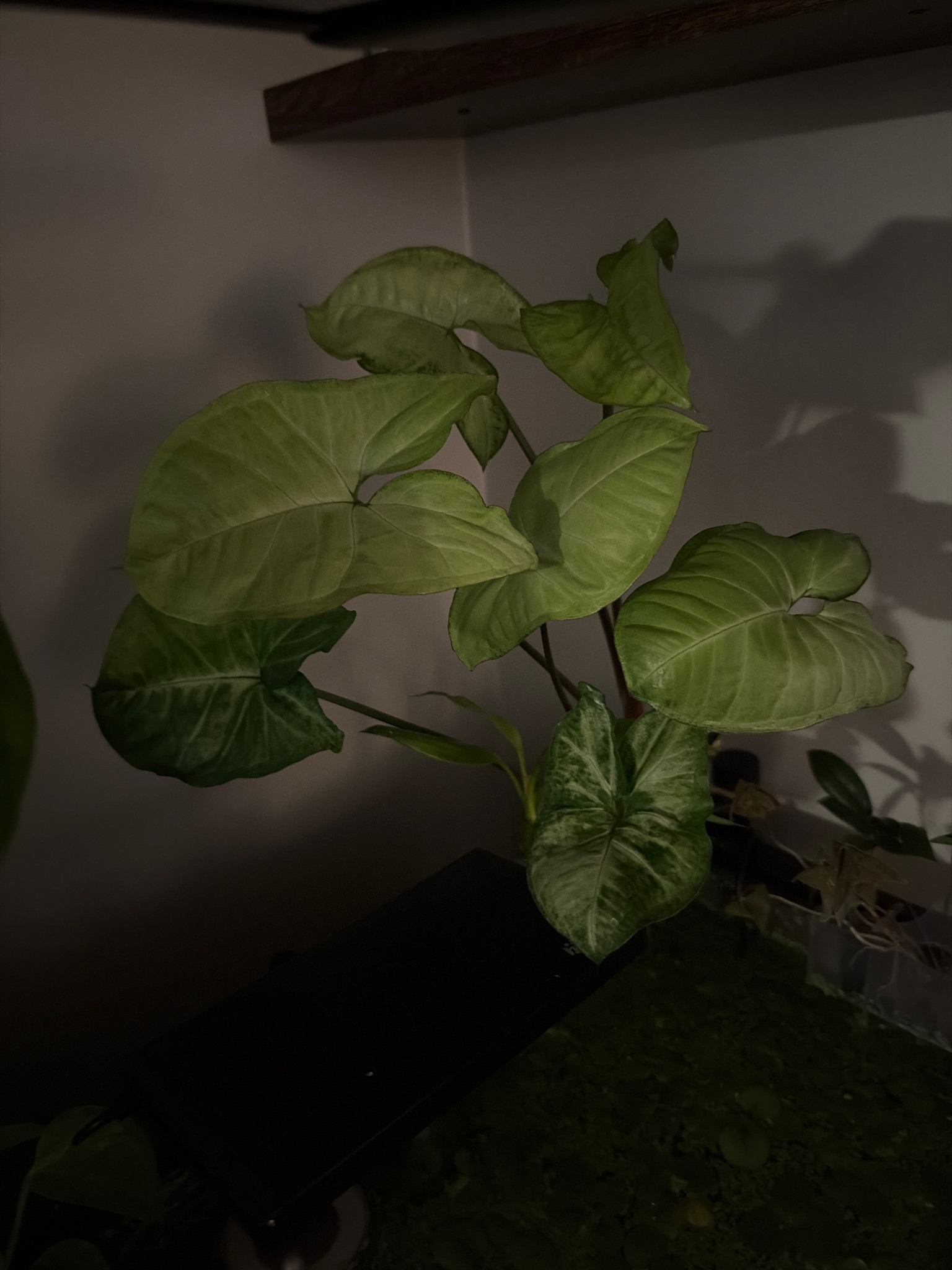
Arrowhead Plant
Syngonium podophyllum
An evergreen climbing vine featuring distinctive arrow-shaped leaves that transition from simple hastate shapes in juvenile plants to deeply lobed, multi-part leaves in mature specimens, often displaying variegated shades of green, white, and silver.
- Light
- Bright, indirect light for 6 to 8 hours daily; avoid direct sun to prevent leaf scorching, though lower light levels can be tolerated with slower growth.
- Water
- Water thoroughly when the top 1 to 2 inches of soil feel dry. Reduce watering frequency slightly during the cooler winter months. Drooping stems and dry leaf tips can indicate under-watering, while yellowing lower leaves often point to over-watering.
- Growth
- An herbaceous trailing or climbing perennial vine with a moderate growth rate, typically reaching indoor heights or vine lengths of 3 to 6 feet unless supported to climb higher.
Care instructions
Provide bright, indirect light and keep the soil moderately moist, allowing the top couple of inches to dry out between waterings. Use a well-draining, organic-rich potting mix and apply a balanced liquid fertilizer monthly during the active growing spring and summer seasons.
Growing details
Sunlight
Bright, indirect light for 6 to 8 hours daily; avoid direct sun to prevent leaf scorching, though lower light levels can be tolerated with slower growth.
Watering
Water thoroughly when the top 1 to 2 inches of soil feel dry. Reduce watering frequency slightly during the cooler winter months. Drooping stems and dry leaf tips can indicate under-watering, while yellowing lower leaves often point to over-watering.
Soil
A porous, well-draining potting mix containing peat moss, perlite, and orchid bark to ensure adequate aeration, with an ideal pH range of 5.5 to 6.5.
Hardiness zone
USDA zones 10 through 12; grown primarily as an indoor houseplant in cooler temperate regions.
Growth habit
An herbaceous trailing or climbing perennial vine with a moderate growth rate, typically reaching indoor heights or vine lengths of 3 to 6 feet unless supported to climb higher.
Bloom season
Non-flowering in typical indoor growing environments; mature outdoor specimens occasionally produce insignificant spadix inflorescences enclosed in a greenish spathe.
Propagation
Easily propagated through stem cuttings taken just below a node, which can be rooted in either water or a moist potting medium during the spring or summer months.
Common pests & issues
Prone to occasional infestations of spider mites, mealybugs, and scale insects, which can be managed with insecticidal soap. Root rot may occur if the plant sits in waterlogged soil.
Similar species
Philodendron species and Epipremnum aureum (Golden Pothos); Syngonium can be distinguished by its distinctly arrow-shaped leaves and milky sap, whereas pothos features cordate leaves without the characteristic lateral lobes.