
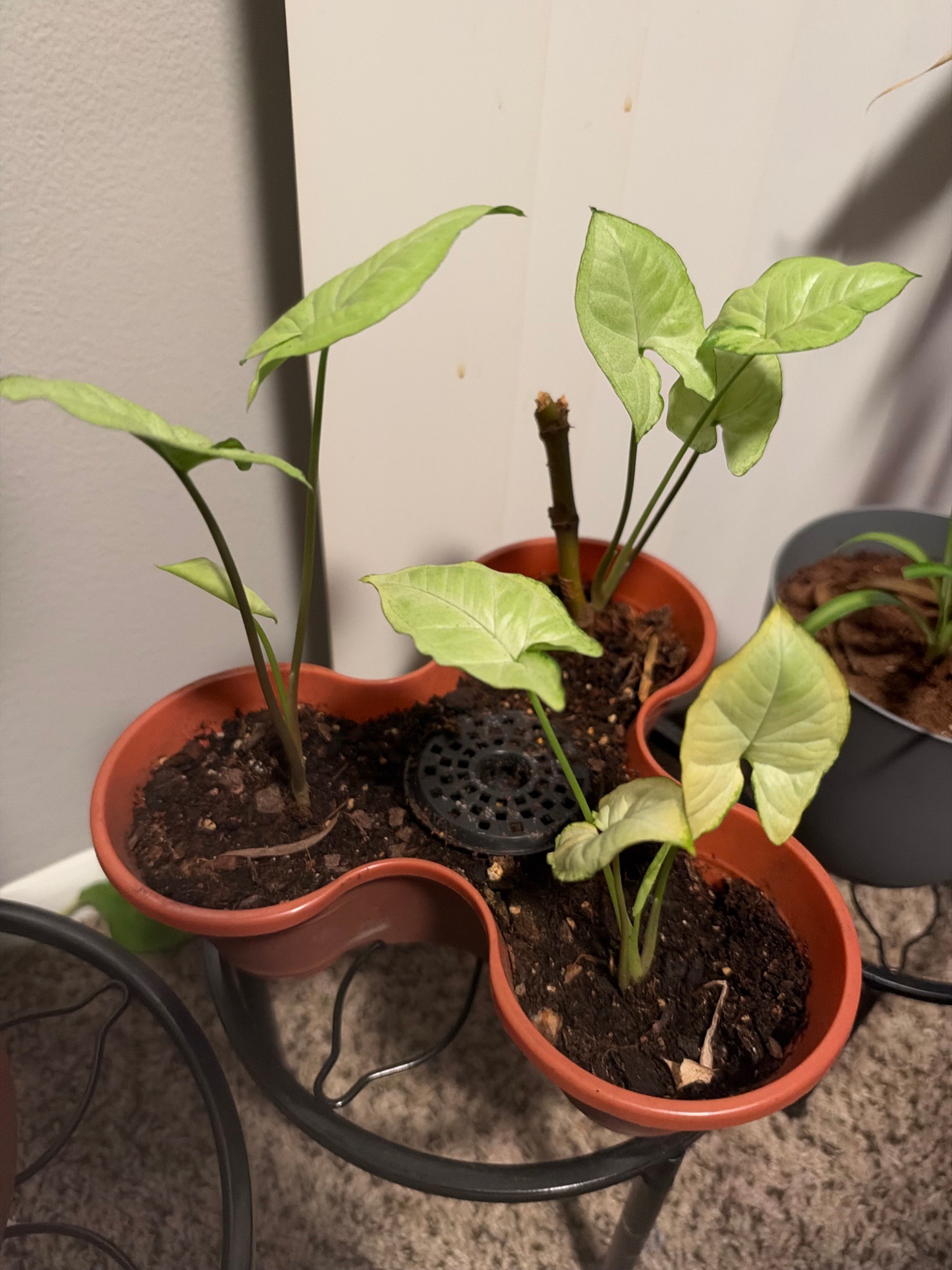
Arrowhead plant
Syngonium podophyllum
An evergreen climbing vine recognized by its distinct arrow-shaped or hastate leaves that often undergo developmental changes from juvenile to mature forms.
- Light
- Bright, indirect light for 6 to 8 hours daily; avoid direct scorching sun.
- Water
- Water thoroughly when the top 1-2 inches of soil feel dry. Reduce watering slightly in winter. Drooping leaves or dry crisp edges indicate improper moisture.
- Growth
- Climbing or trailing herbaceous perennial vine with a moderate growth rate, reaching indoor container lengths of 3 to 6 feet.
Care instructions
Provide bright, indirect sunlight, keeping the soil moderately moist by watering when the top inch dries out. Use a well-draining potting mix and feed monthly during the growing season with a balanced liquid fertilizer.
Growing details
Sunlight
Bright, indirect light for 6 to 8 hours daily; avoid direct scorching sun.
Watering
Water thoroughly when the top 1-2 inches of soil feel dry. Reduce watering slightly in winter. Drooping leaves or dry crisp edges indicate improper moisture.
Soil
Rich, loose, organically fertile, and exceptionally well-draining potting mix with a slightly acidic to neutral pH between 5.5 and 6.5.
Hardiness zone
USDA zones 10 through 12 when grown outdoors; generally cultivated indoors elsewhere.
Growth habit
Climbing or trailing herbaceous perennial vine with a moderate growth rate, reaching indoor container lengths of 3 to 6 feet.
Bloom season
Rarely blooms indoors; mature outdoor plants produce spathe-and-spadix inflorescences typically during the warm months.
Propagation
Propagated easily through stem cuttings placed in water or directly into moist potting mix, ideally including a node.
Common pests & issues
Susceptible to mealybugs, spider mites, and scale insects, which can be treated with insecticidal soap. Root rot may occur if soil remains waterlogged.
Similar species
Philodendron species and Epipremnum aureum share similar climbing habits, but Syngonium is distinguished by its specific sagittate leaf blade morphology and distinct vein patterns.