
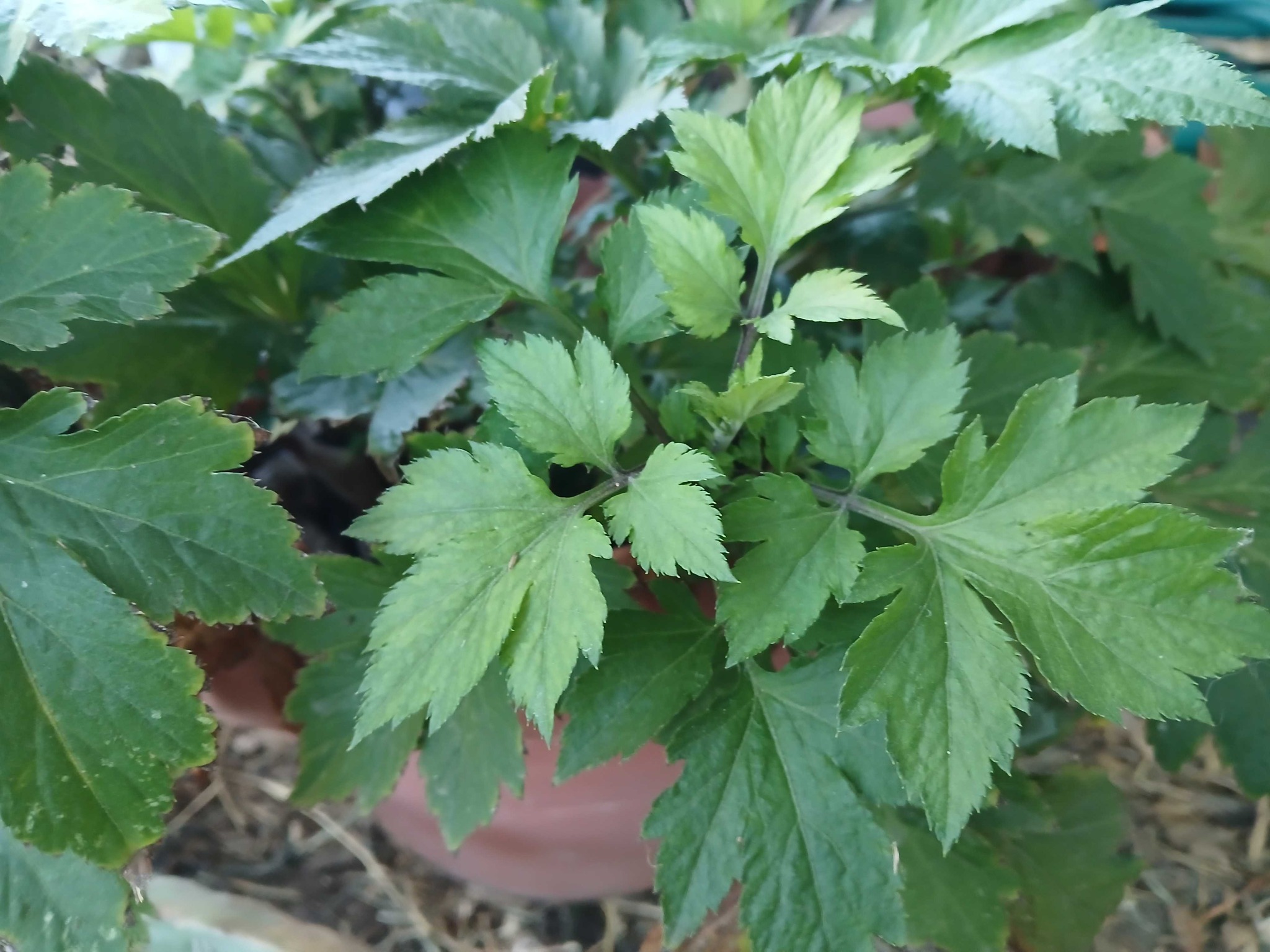
Ashitaba
Angelica keiskei
A robust perennial herbaceous plant featuring glossy, bright green compound leaves with deeply toothed leaflets and hollow, grooved stems.
- Light
- Partial shade to full sun, requiring about 4 to 6 hours of direct or filtered sunlight daily.
- Water
- Requires regular watering to keep the soil evenly moist but not waterlogged. Allow the top inch of soil to dry out slightly between waterings.
- Growth
- Perennial herbaceous plant with an upright, bushy growth habit, reaching mature heights of 3 to 4 feet with a similar spread, growing at a moderate rate.
Care instructions
Provide partial to full sunlight with consistent moisture in rich, well-draining soil. Apply a balanced, slow-release fertilizer during the active growing season.
Growing details
Sunlight
Partial shade to full sun, requiring about 4 to 6 hours of direct or filtered sunlight daily.
Watering
Requires regular watering to keep the soil evenly moist but not waterlogged. Allow the top inch of soil to dry out slightly between waterings.
Soil
Thrives in rich, loamy, organic-rich soils with excellent drainage and a slightly acidic to neutral pH range of 6.0 to 7.0.
Hardiness zone
USDA Hardiness Zones 7 through 10, tolerating mild frosts but needing protection in extreme cold winters.
Growth habit
Perennial herbaceous plant with an upright, bushy growth habit, reaching mature heights of 3 to 4 feet with a similar spread, growing at a moderate rate.
Bloom season
Blooms during summer with large, umbrella-shaped umbels composed of small, delicate white flowers.
Propagation
Propagated primarily through fresh seeds sown in autumn or spring, or by careful root division in early spring.
Common pests & issues
Susceptible to aphids, spider mites, and fungal leaf spot diseases in overly damp conditions; prevent with proper air circulation and spacing.
Similar species
Other Angelica species, but distinguished by its glossy, vibrant green foliage, distinct coastal origin, and bright yellow sap visible when stems are cut.