
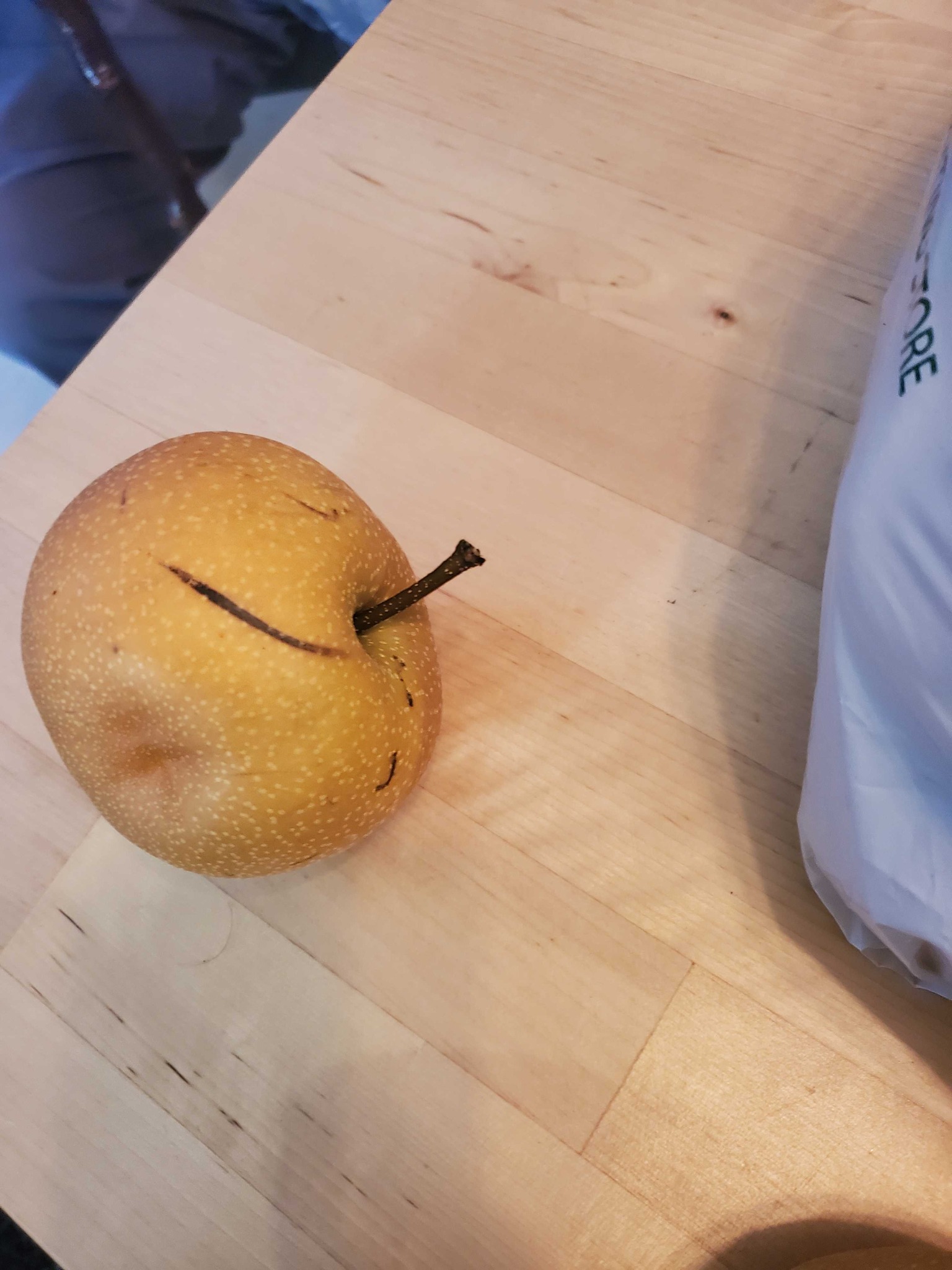
Asian Pear
Pyrus pyrifolia
A deciduous tree producing round, russet-brown to yellow fruits with prominent lenticels and a crisp texture.
- Light
- Full sun, requiring at least 6 to 8 hours of direct sunlight per day.
- Water
- Moderate watering, approximately 1 inch of water per week through rainfall or irrigation; allow soil to dry slightly between waterings.
- Growth
- Deciduous tree with an upright to spreading canopy, reaching mature heights of 25 to 35 feet with a similar spread.
Care instructions
Provide full sun, well-draining loamy soil, regular moderate watering, and balanced fertilizer in early spring.
Growing details
Sunlight
Full sun, requiring at least 6 to 8 hours of direct sunlight per day.
Watering
Moderate watering, approximately 1 inch of water per week through rainfall or irrigation; allow soil to dry slightly between waterings.
Soil
Prefers well-draining, fertile, loamy soils with a neutral pH range between 6.0 and 7.0.
Hardiness zone
USDA Hardiness Zones 5 through 9.
Growth habit
Deciduous tree with an upright to spreading canopy, reaching mature heights of 25 to 35 feet with a similar spread.
Bloom season
Spring, producing clusters of white to pale pink five-petaled flowers.
Propagation
Typically propagated by grafting desired cultivars onto compatible rootstocks during late winter.
Common pests & issues
Susceptible to common orchard pests like aphids and codling moth, as well as fungal issues such as fire blight and powdery mildew; manage with proper sanitation and appropriate horticultural treatments.
Similar species
European pear (Pyrus communis), which typically features a more traditional pyriform shape rather than the rounded shape of the Asian pear.