
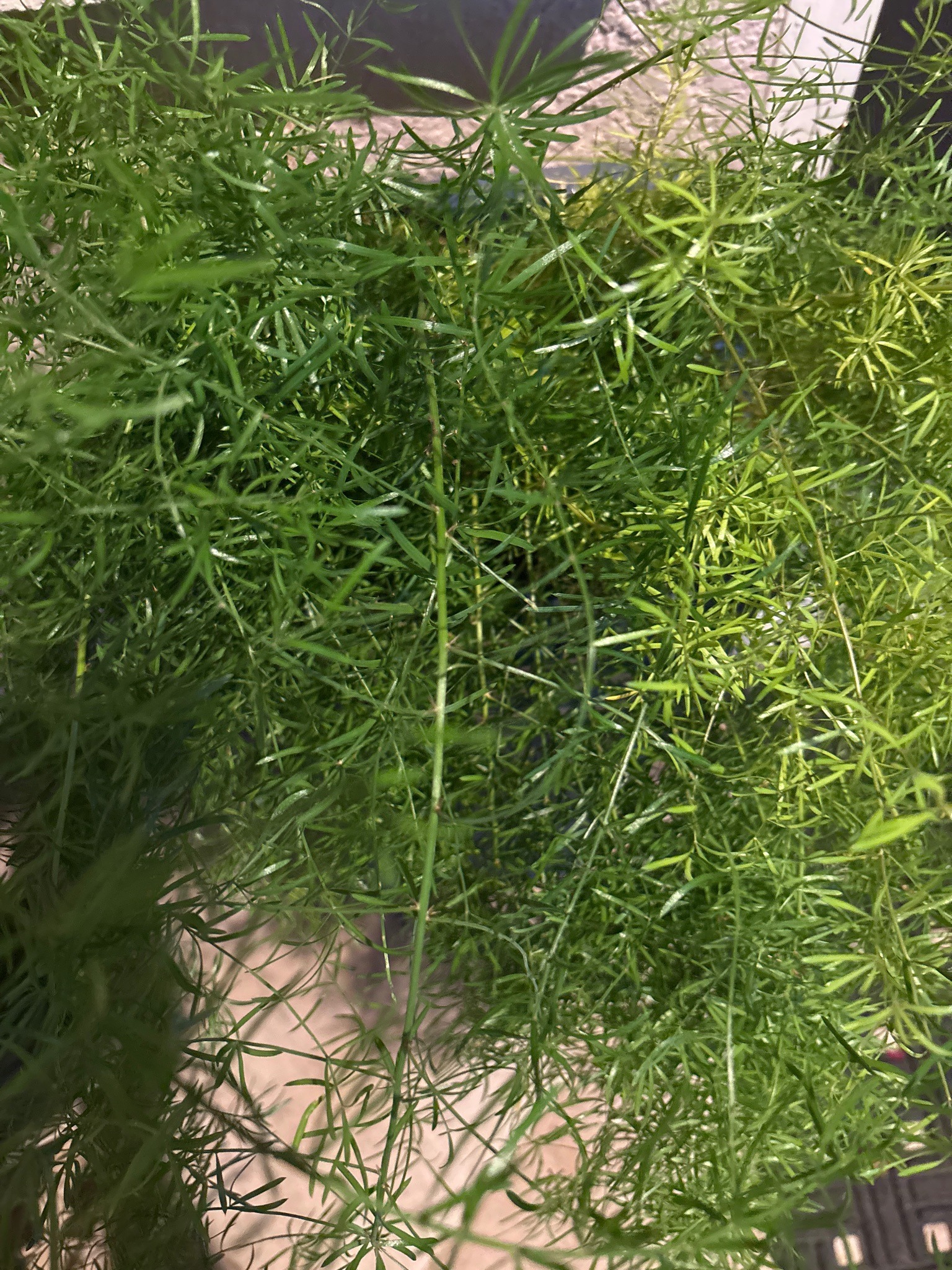
Asparagus Fern
Asparagus setaceus
A perennial climber with fine, needle-like cladodes that give it a soft, feathery, fern-like appearance despite not being a true fern.
- Light
- Bright, indirect light, approximately 4 to 6 hours a day; avoid direct harsh sunlight which can scorch the foliage.
- Water
- Water when the top inch of soil becomes slightly dry. Maintain even moisture and never allow the root system to dry out completely, though waterlogging must be avoided.
- Growth
- Perennial climbing or trailing vine-like subshrub with a rapid growth rate, reaching lengths or heights of 2 to 6 feet.
Care instructions
Provide bright, indirect sunlight, keep the soil consistently moist but well-draining, and maintain high humidity with regular misting. Feed monthly during the spring and summer growing season with a balanced liquid fertilizer.
Growing details
Sunlight
Bright, indirect light, approximately 4 to 6 hours a day; avoid direct harsh sunlight which can scorch the foliage.
Watering
Water when the top inch of soil becomes slightly dry. Maintain even moisture and never allow the root system to dry out completely, though waterlogging must be avoided.
Soil
Well-draining, rich loam or peat-based potting mix with a neutral to slightly acidic pH range between 6.0 and 6.8.
Hardiness zone
USDA zones 9 through 11 when grown outdoors; primarily grown as a houseplant in cooler regions.
Growth habit
Perennial climbing or trailing vine-like subshrub with a rapid growth rate, reaching lengths or heights of 2 to 6 feet.
Bloom season
Produces small, inconspicuous white or greenish-white flowers during the summer months, followed by small round berries.
Propagation
Propagated by division of mature root clumps during repotting or by sowing seeds extracted from ripe berries.
Common pests & issues
Prone to spider mites and scale insects, especially in dry indoor air. Yellowing foliage can indicate overwatering, while dropping needles usually points to underwatering or low humidity.
Similar species
Asparagus densiflorus (Sprengeri fern), which has thicker, more arching stems and coarser foliage.