
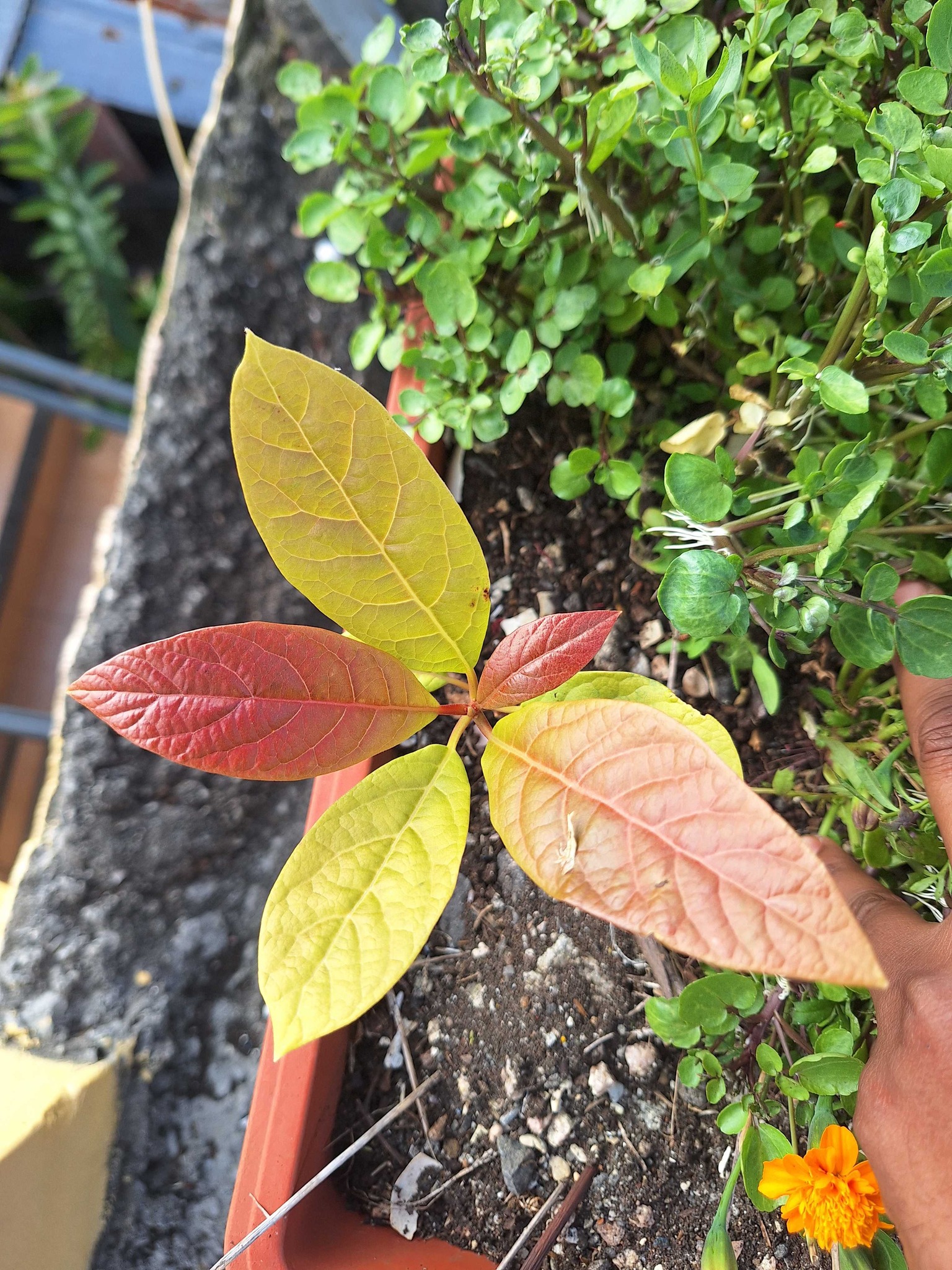
Avocado seedling
Persea americana
A young tree seedling featuring a distinctive whorl of large, elliptical to lanceolate leaves transitioning in color from vibrant red and pink hues during new growth to bright green and yellowish shades as they mature.
- Light
- Full sun to bright indirect light, requiring at least six hours of direct sunlight daily once established.
- Water
- Moderate water requirements. Allow the top surface of the soil to dry out between watering sessions. Avoid prolonged waterlogging, which can cause root rot.
- Growth
- Evergreen tree with a single upright trunk when mature, capable of reaching significant heights in optimal natural habitats, though typically kept smaller in container cultivation.
Care instructions
Provide bright, indirect sunlight to full sun exposure. Water deeply when the top few inches of soil become dry, ensuring excellent drainage to prevent moisture buildup around the roots. Utilize a well-draining potting medium and apply a balanced liquid fertilizer periodically during the active growing season.
Growing details
Sunlight
Full sun to bright indirect light, requiring at least six hours of direct sunlight daily once established.
Watering
Moderate water requirements. Allow the top surface of the soil to dry out between watering sessions. Avoid prolonged waterlogging, which can cause root rot.
Soil
Rich, loamy to sandy soil with exceptional drainage and a slightly acidic to neutral pH range of 6.0 to 6.5.
Hardiness zone
USDA hardiness zones 10 through 11, sensitive to frost and freezing temperatures.
Growth habit
Evergreen tree with a single upright trunk when mature, capable of reaching significant heights in optimal natural habitats, though typically kept smaller in container cultivation.
Bloom season
Spring, producing small, inconspicuous yellowish-green panicles of flowers.
Propagation
Propagated primarily through seeds or via grafting onto established rootstocks to maintain specific cultivar traits.
Common pests & issues
Susceptible to root rot fungi caused by overwatering and poor drainage. May occasionally attract pests such as spider mites and scale insects in indoor environments.
Similar species
Other members of the Lauraceae family, though the distinctive seed-derived whorl and colorful flush of new foliage help differentiate young Persea americana specimens.