
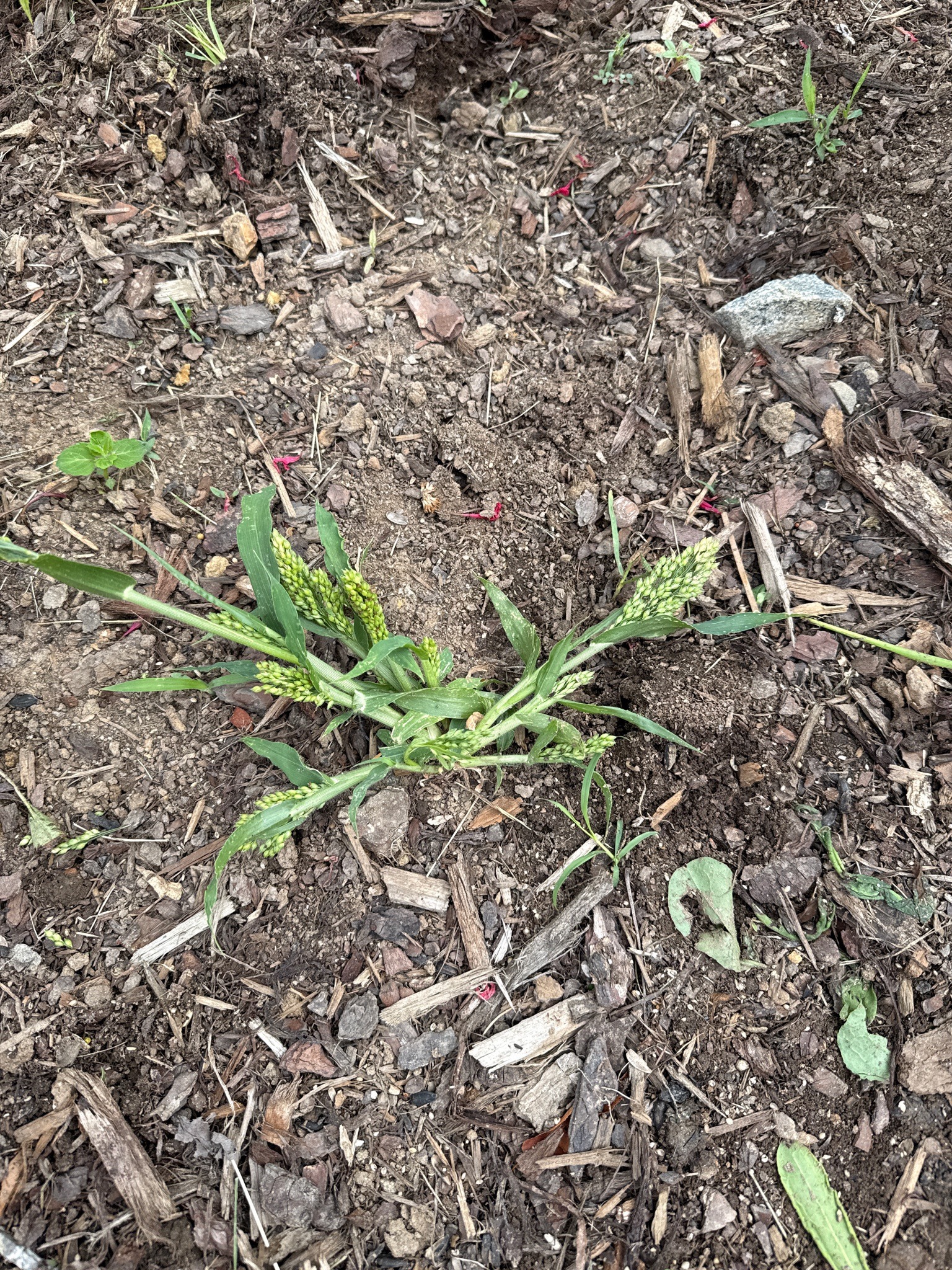
Barnyard Grass
Echinochloa crus-galli
A coarse, summer annual grass that grows in tufts. It features flat, hairless leaf blades and distinctive terminal panicles with spikelets that are often awned or bristly.
- Light
- Full sun, preferring 6 to 8 hours of direct light per day.
- Water
- High; thrives in moist, poorly drained areas, ditches, and irrigated fields. It is moderately drought-tolerant once established but prefers wet conditions.
- Growth
- Summer annual grass; can reach 1 to 5 feet in height with a sprawling or upright clump-forming habit.
Care instructions
Typically considered a weed, it requires little to no care. It thrives in full sun and moist to wet soils. To control it, pull by hand before seeds drop or use a pre-emergent herbicide in spring.
Growing details
Sunlight
Full sun, preferring 6 to 8 hours of direct light per day.
Watering
High; thrives in moist, poorly drained areas, ditches, and irrigated fields. It is moderately drought-tolerant once established but prefers wet conditions.
Soil
Adaptable to various soils but prefers fertile, heavy clay or loamy soils with a neutral to slightly acidic pH.
Hardiness zone
Zones 3-11 (grown as a summer annual).
Growth habit
Summer annual grass; can reach 1 to 5 feet in height with a sprawling or upright clump-forming habit.
Bloom season
Mid-summer to early autumn (July to October); produces green to purplish, bristly seed heads.
Propagation
Propagates exclusively by seed; a single plant can produce thousands of seeds that remain viable for several years.
Common pests & issues
Highly invasive in agricultural crops (especially rice and corn). Susceptible to various smuts and leaf spots, though these rarely kill the plant.
Similar species
Crabgrass (Digitaria spp.) has finger-like spikes, whereas Barnyard Grass has a more branched panicle. Junglerice (Echinochloa colona) is smaller and usually lacks the bristles (awns) on the seeds.