
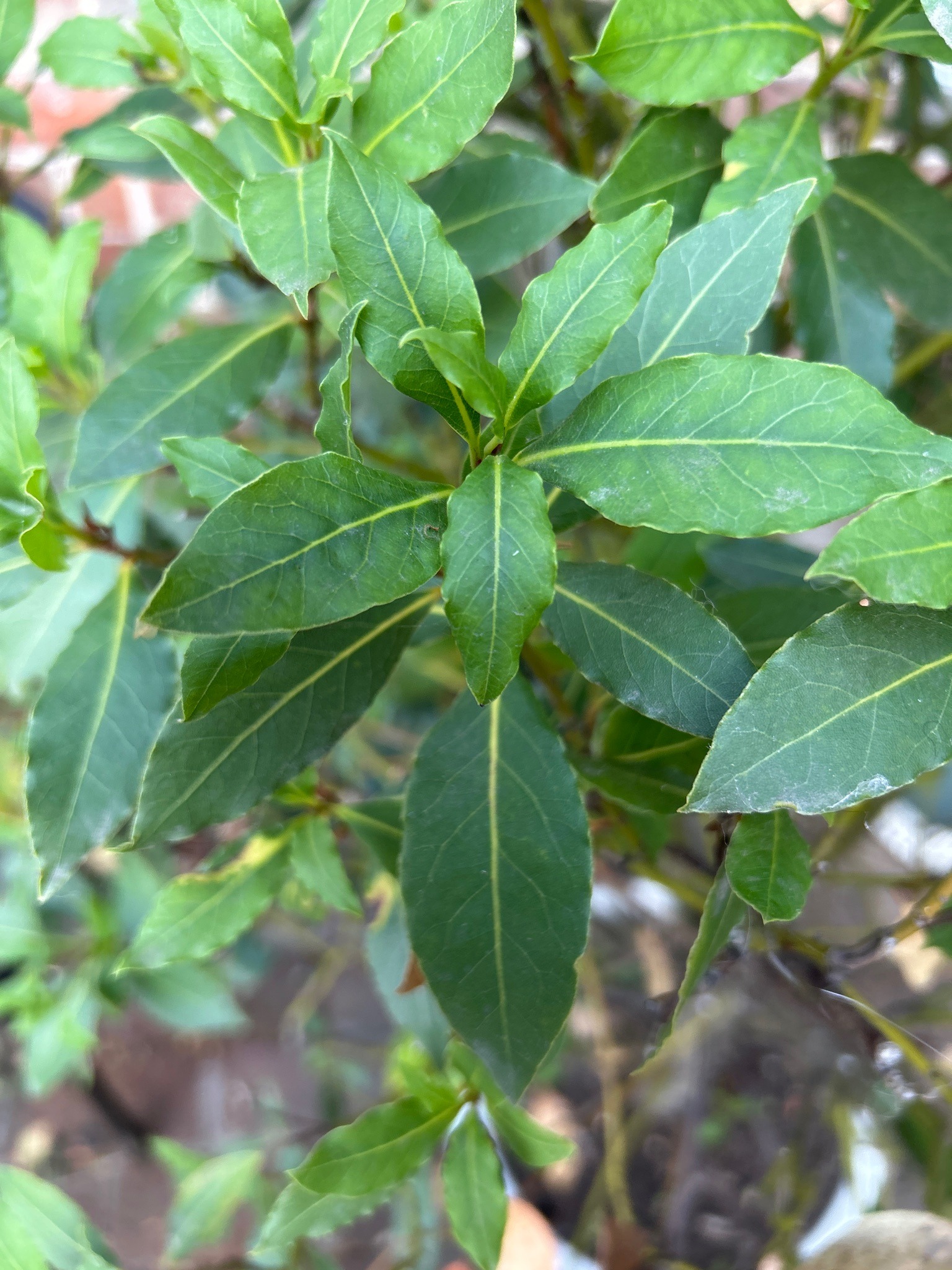
Bay Laurel
Laurus nobilis
An evergreen shrub or small tree with stiff, glossy, dark green, lance-shaped leaves that have wavy margins and a prominent midrib.
- Light
- Full sun to partial shade, requiring at least 6 hours of bright light daily.
- Water
- Water deeply when the top few inches of soil feel dry. Allow soil to dry out between waterings to prevent root rot, as the plant is moderately drought-tolerant once established.
- Growth
- Perennial evergreen woody shrub or small tree, typically growing 15 to 30 feet tall and 10 to 20 feet wide in the landscape, with a slow to moderate growth rate and upright habit.
Care instructions
Provide full sun to partial shade, well-draining soil, and allow the soil to dry slightly between waterings. Feed during the growing season with a balanced, water-soluble fertilizer.
Growing details
Sunlight
Full sun to partial shade, requiring at least 6 hours of bright light daily.
Watering
Water deeply when the top few inches of soil feel dry. Allow soil to dry out between waterings to prevent root rot, as the plant is moderately drought-tolerant once established.
Soil
Well-draining, loamy or sandy soil with a neutral to slightly alkaline pH range of 6.0 to 7.5.
Hardiness zone
USDA zones 8 through 11; protect from freezing temperatures.
Growth habit
Perennial evergreen woody shrub or small tree, typically growing 15 to 30 feet tall and 10 to 20 feet wide in the landscape, with a slow to moderate growth rate and upright habit.
Bloom season
Blooms in spring with small, inconspicuous greenish-yellow flowers arranged in cluster-like umbels along the branches.
Propagation
Propagated via semi-hardwood cuttings taken in late summer or through layering and seeds.
Common pests & issues
Generally resilient, but susceptible to scale insects, psyllids, and root rot if overwatered or planted in poorly draining soil.
Similar species
Prunus laurocerasus (Cherry Laurel), which has broader leaves with tiny glands on the underside, and Nerium oleander (Oleander), which features narrower, rigid leaves arranged in whorls.