
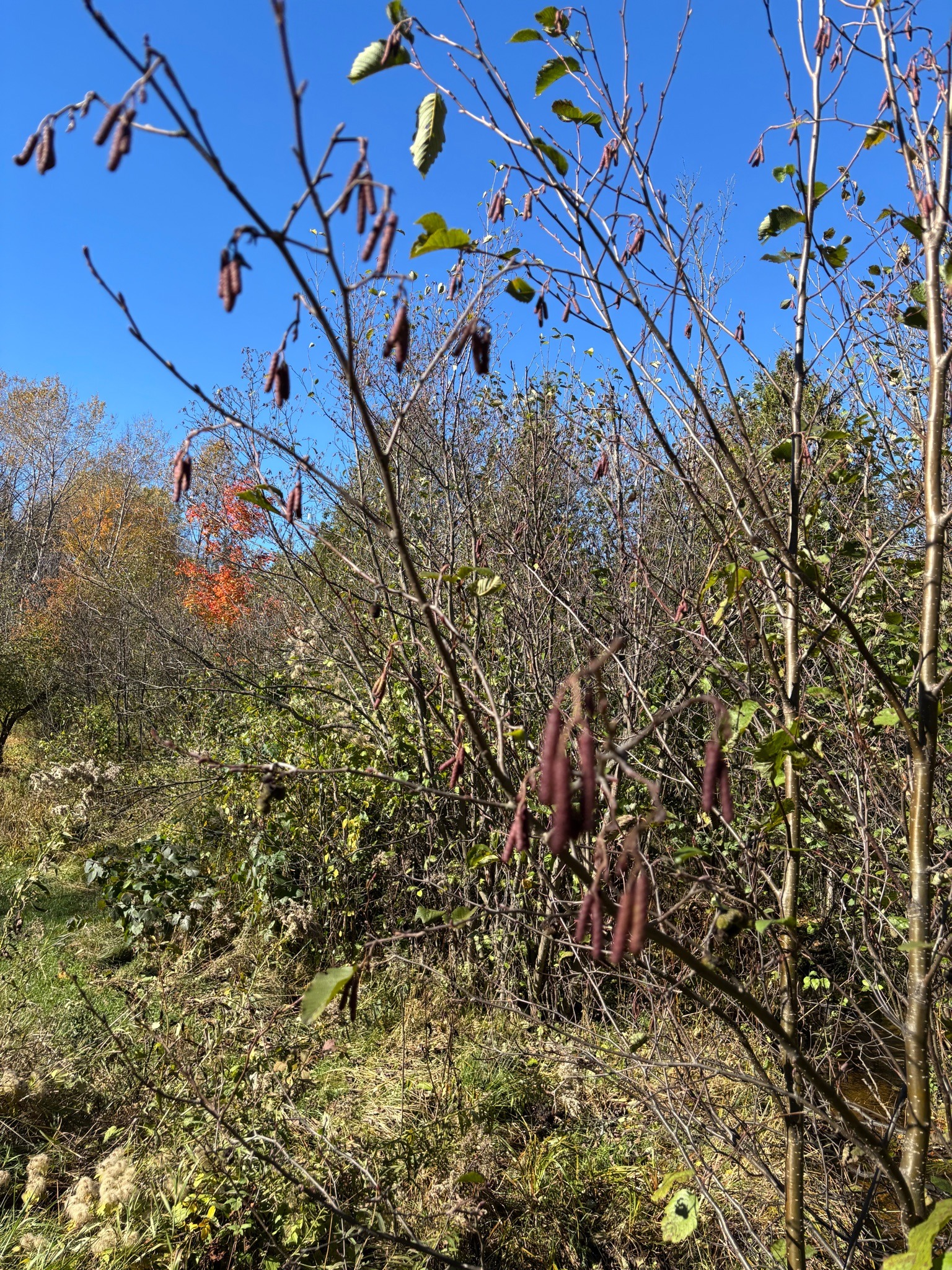
Beaked Hazelnut
Corylus cornuta
A deciduous shrub featuring slender stems, serrated alternate leaves, and distinct elongated tubular structures enclosing the developing structures, accompanied by dangling catkins.
- Light
- Full sun to partial shade, requiring at least 4 to 6 hours of direct sunlight daily for optimal growth.
- Water
- Water regularly during the first growing season to establish a deep root system. Once established, it has moderate drought tolerance but prefers evenly moist soils.
- Growth
- A multi-stemmed deciduous shrub growing in a rounded or spreading form, reaching mature heights of 4 to 10 feet with a similar spread.
Care instructions
Provide full sun to partial shade with consistently moist, well-draining soil. Minimal pruning is required other than removing dead or damaged branches during the dormant season.
Growing details
Sunlight
Full sun to partial shade, requiring at least 4 to 6 hours of direct sunlight daily for optimal growth.
Watering
Water regularly during the first growing season to establish a deep root system. Once established, it has moderate drought tolerance but prefers evenly moist soils.
Soil
Adaptable to a variety of well-drained loam, clay, or sandy soils with a slightly acidic to neutral pH range of 6.0 to 7.0.
Hardiness zone
USDA Zones 4 through 8
Growth habit
A multi-stemmed deciduous shrub growing in a rounded or spreading form, reaching mature heights of 4 to 10 feet with a similar spread.
Bloom season
Flowers in early spring before the leaves emerge, producing inconspicuous female flowers and prominent brownish male catkins.
Propagation
Propagated via seed, root suckers, or hardwood cuttings taken during the dormant winter months.
Common pests & issues
Generally resilient, though occasionally affected by twig blight, powdery mildew, and standard wood-boring insects.
Similar species
American Hazelnut (Corylus americana), which can be distinguished by the shorter, more flared husk enclosing the structure rather than the elongated beak of Corylus cornuta.