
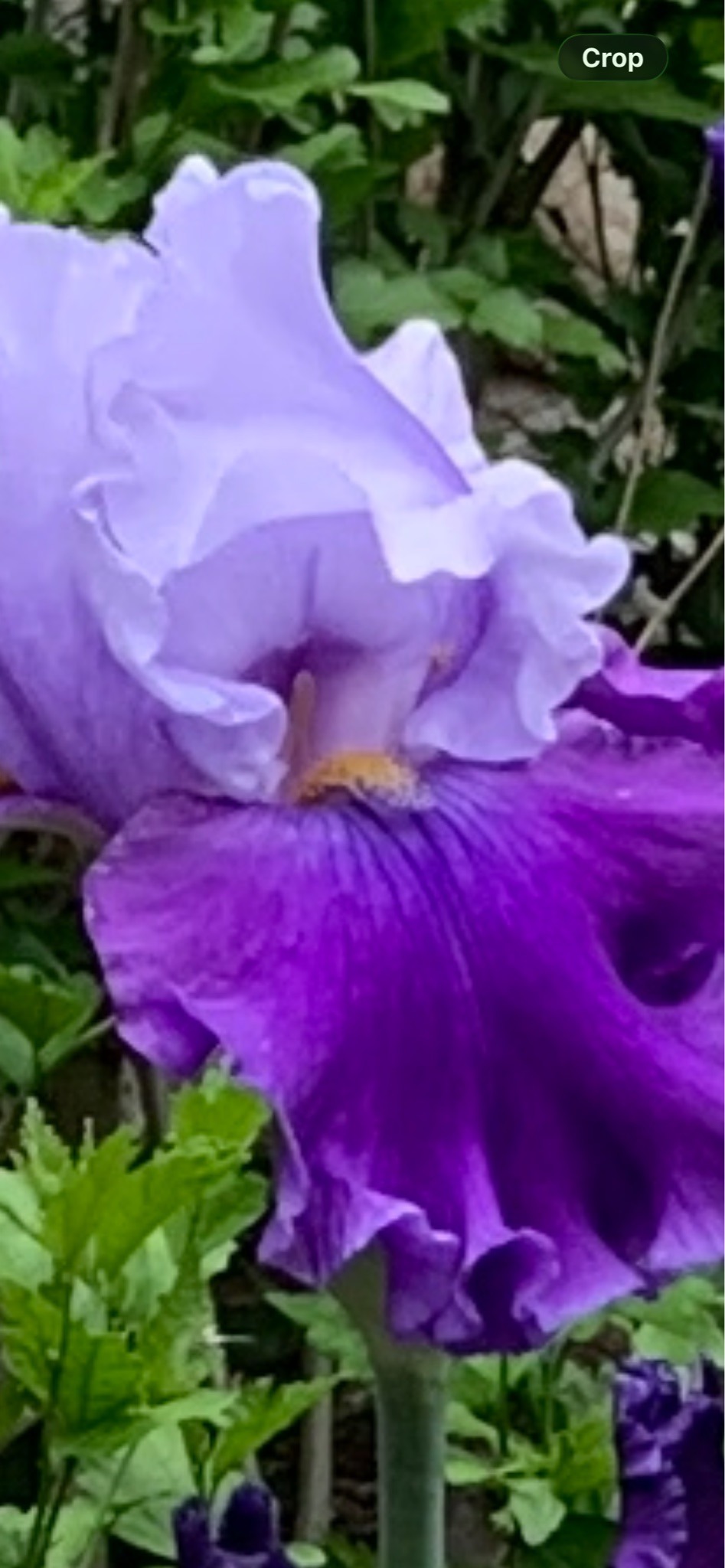
Bearded Iris
Iris germanica
A perennial flowering plant featuring sword-shaped, fan-like green foliage and large, showy blooms with characteristic 'beards' on the lower petals.
- Light
- Full sun, requiring six to eight hours of direct sunlight daily
- Water
- Moderate drought tolerance once established; water deeply but infrequently, allowing soil to dry out completely between waterings to prevent root and rhizome rot
- Growth
- Herbaceous perennial growing from underground rhizomes, reaching a mature height of 24 to 36 inches with a spread of 12 to 24 inches, exhibiting a moderate growth rate
Care instructions
Provide full sun exposure for at least six to eight hours daily. Water deeply when the surrounding soil is completely dry, keeping the rhizome slightly exposed above the soil surface to prevent rot. Apply a balanced, low-nitrogen fertilizer in early spring.
Growing details
Sunlight
Full sun, requiring six to eight hours of direct sunlight daily
Watering
Moderate drought tolerance once established; water deeply but infrequently, allowing soil to dry out completely between waterings to prevent root and rhizome rot
Soil
Well-draining, fertile loam or sandy soil with a neutral to slightly alkaline pH range between 6.8 and 7.5
Hardiness zone
USDA zones 3 through 9
Growth habit
Herbaceous perennial growing from underground rhizomes, reaching a mature height of 24 to 36 inches with a spread of 12 to 24 inches, exhibiting a moderate growth rate
Bloom season
Late spring to early summer, producing large, ruffled flowers in shades of purple, violet, blue, and white with prominent fuzzy beards
Propagation
Propagated by dividing mature rhizomes in mid-to-late summer after blooming concludes, discarding older central sections and replanting firm outer fans
Common pests & issues
Susceptible to iris borer insects, soft rot, and fungal leaf spot, which can be managed by removing debris, ensuring proper spacing for air circulation, and avoiding excess moisture
Similar species
Siberian Iris (Iris sibirica), which features narrower, grass-like foliage and smaller flowers lacking the distinctive fuzzy beard found on bearded irises