
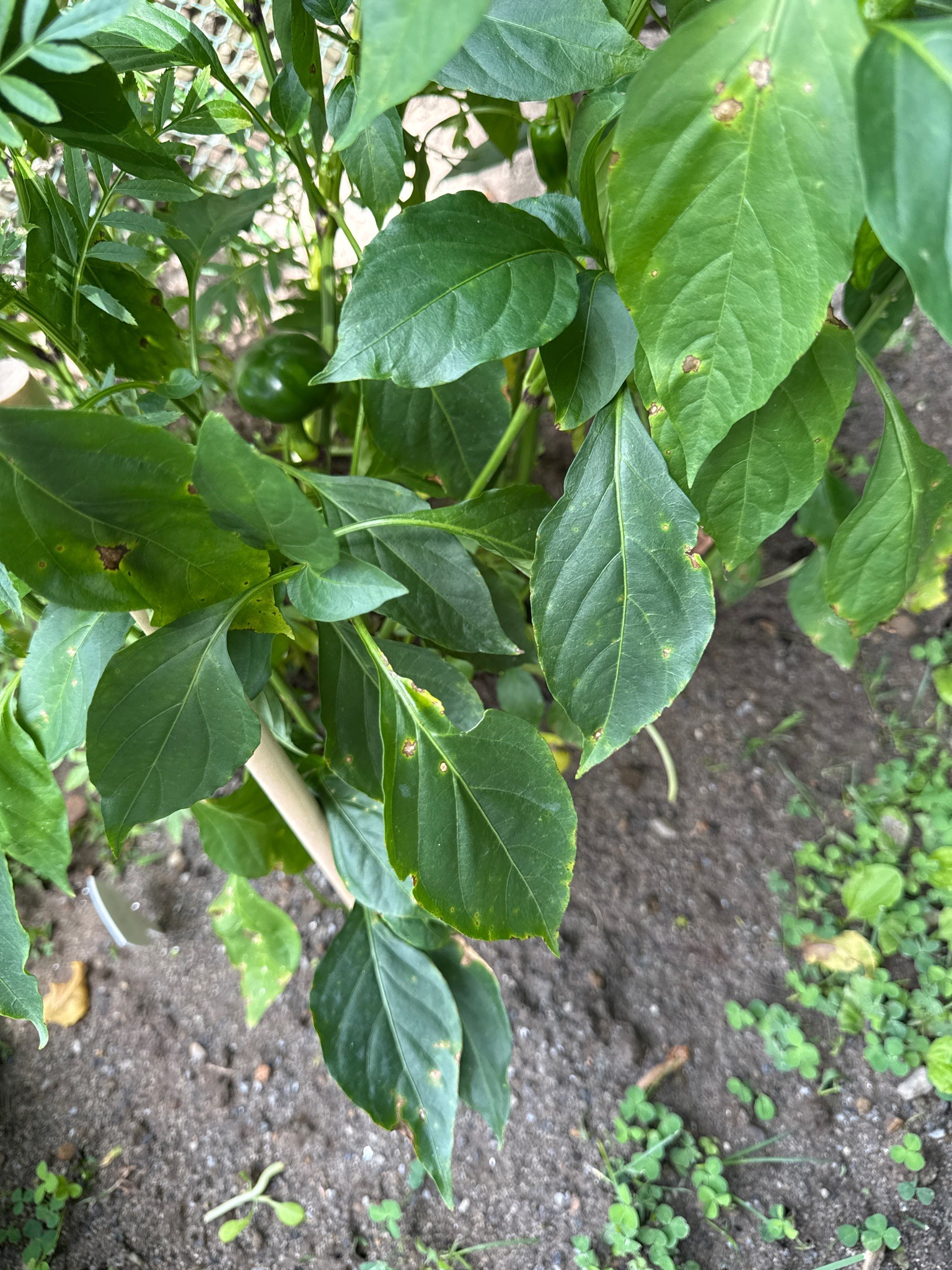
Bell Pepper
Capsicum annuum
A bushy herbaceous plant with simple oval-to-lanceolate smooth green leaves, small white star-shaped flowers, and distinct glossy lobed green fruits developing on woody stems.
- Light
- Full sun, requiring at least 6 to 8 hours of direct light daily.
- Water
- Requires regular, deep watering (1 to 2 inches per week). Soil should remain consistently moist but not waterlogged to prevent blossom end rot.
- Growth
- Upright, branching herbaceous annual/short-lived perennial growing 1.5 to 3 feet tall and 1.5 to 2 feet wide.
Care instructions
Provide full sun and warm temperatures. Water deeply when the top inch of soil feels dry, and maintain rich, well-draining soil. Apply a balanced fertilizer monthly once flowering begins.
Growing details
Sunlight
Full sun, requiring at least 6 to 8 hours of direct light daily.
Watering
Requires regular, deep watering (1 to 2 inches per week). Soil should remain consistently moist but not waterlogged to prevent blossom end rot.
Soil
Fertile, loamy, well-draining soil rich in organic matter with a pH between 6.0 and 6.8.
Hardiness zone
USDA zones 9 to 11 as a perennial; grown as a warm-season annual in cooler zones.
Growth habit
Upright, branching herbaceous annual/short-lived perennial growing 1.5 to 3 feet tall and 1.5 to 2 feet wide.
Bloom season
Late spring through summer; produces small, star-shaped off-white flowers followed by large lobed berries.
Propagation
Propagated primarily by seed indoors 8-10 weeks before the last spring frost date.
Common pests & issues
Susceptible to aphids, flea beetles, blossom end rot (calcium deficiency/uneven watering), and fungal leaf spots such as cercospora.
Similar species
Jalapeño pepper (Capsicum annuum) features narrower foliage and elongated, smaller conical fruits, while eggplants (Solanum melongena) have larger, velvety leaves.