
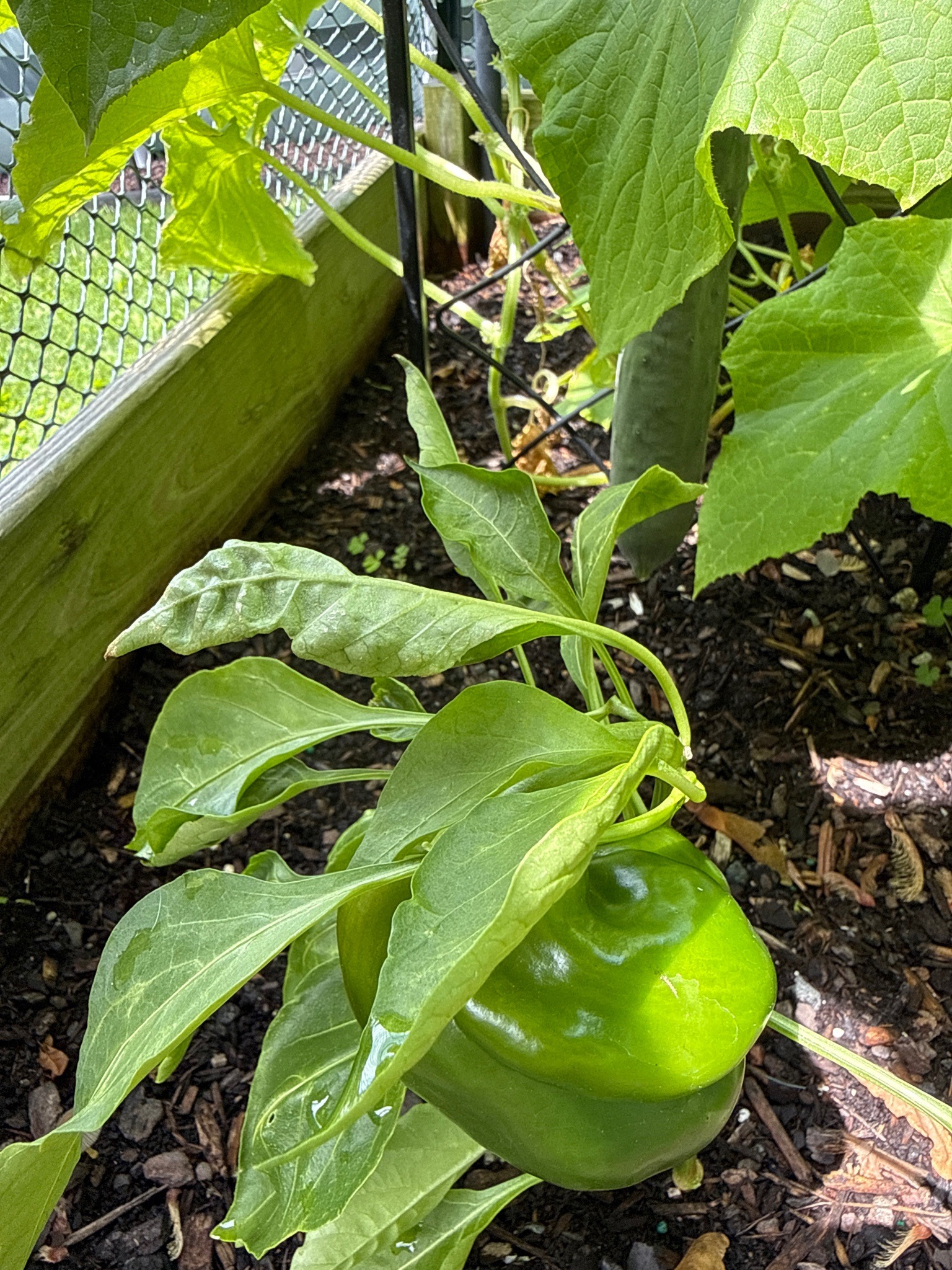
Bell Pepper
Capsicum annuum
A warm-season tender perennial (usually grown as an annual) featuring glossy, lanceolate leaves, small star-shaped white flowers, and large, smooth, lobed glossy green or colored fruits.
- Light
- Full sun, requiring 6 to 8 hours of direct sunlight daily.
- Water
- Requires regular, deep watering to keep the soil consistently moist but not waterlogged. Water around 1 to 2 inches per week, adjusting during periods of heat.
- Growth
- Herbaceous perennial grown as an annual. Features an upright, bushy growth habit, typically reaching 1 to 3 feet in height and 1 to 2 feet in spread.
Care instructions
Provide full sun and well-draining soil rich in organic matter. Maintain consistent soil moisture, especially during fruit development, and feed with a balanced or high-phosphorus fertilizer to support blooming and fruit growth.
Growing details
Sunlight
Full sun, requiring 6 to 8 hours of direct sunlight daily.
Watering
Requires regular, deep watering to keep the soil consistently moist but not waterlogged. Water around 1 to 2 inches per week, adjusting during periods of heat.
Soil
Prefers rich, loamy, well-draining soil with a pH between 6.0 and 6.8.
Hardiness zone
USDA Zones 9-11 as a perennial, but commonly grown as a summer annual in Zones 2-8.
Growth habit
Herbaceous perennial grown as an annual. Features an upright, bushy growth habit, typically reaching 1 to 3 feet in height and 1 to 2 feet in spread.
Bloom season
Late spring to summer, producing small, white, five-petaled starry blossoms followed by large fleshy fruits.
Propagation
Propagated mainly by seed indoors 6 to 8 weeks before the last spring frost, transplanting outdoors after temperatures reliably exceed 60°F (15°C).
Common pests & issues
Susceptible to aphids, flea beetles, hornworms, blossom end rot (caused by inconsistent moisture or calcium deficiency), and fungal leaf spot diseases.
Similar species
Other Capsicum species like Capsicum frutescens or Capsicum chinense, which often have smaller leaves and different fruit structures, as well as eggplants (Solanum melongena) before fruiting.