
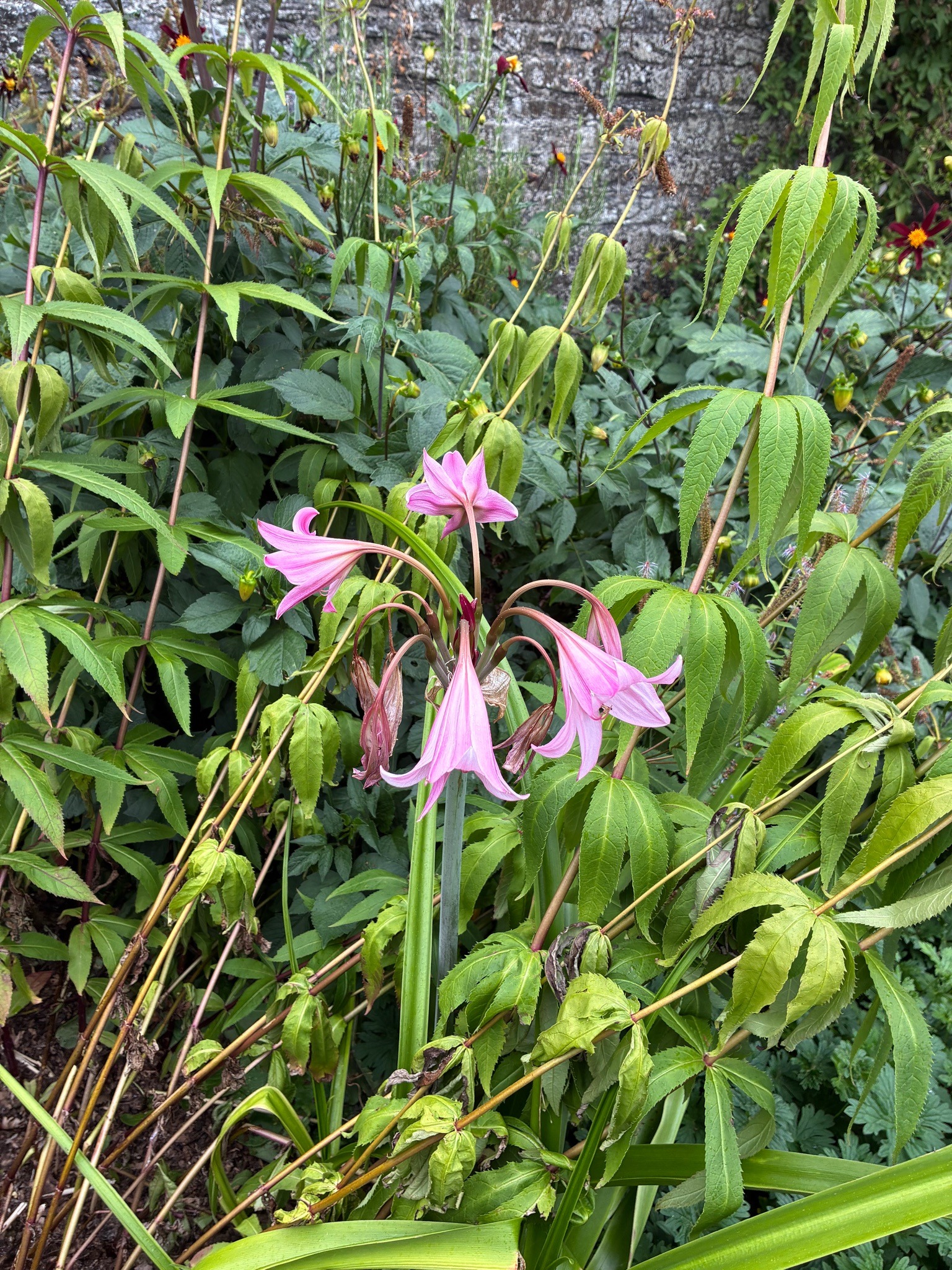
Belladonna Lily
Amaryllis belladonna
A bulbous perennial featuring strap-shaped, dark green leaves that typically die back before the leafless, upright flowering stems emerge, producing clusters of fragrant, funnel-shaped pink flowers.
- Light
- Full sun, requiring at least 6 hours of direct sunlight daily
- Water
- Water regularly when foliage is actively growing in autumn through spring, allowing the soil to dry out between waterings. Reduce watering significantly when foliage dies down in summer.
- Growth
- Perennial bulbous plant growing up to 2 feet tall with a spread of about 1 foot, featuring rapid upright floral scapes arising from dormant bulbs.
Care instructions
Provide full sun and well-draining soil. Water moderately during the growing season while leaves are present, and keep the soil dry during its summer dormancy. Apply a balanced fertilizer in spring when new growth appears.
Growing details
Sunlight
Full sun, requiring at least 6 hours of direct sunlight daily
Watering
Water regularly when foliage is actively growing in autumn through spring, allowing the soil to dry out between waterings. Reduce watering significantly when foliage dies down in summer.
Soil
Well-draining, sandy or loamy soils with a neutral to slightly alkaline pH range of 6.0 to 7.5.
Hardiness zone
USDA Hardiness Zones 7 through 10
Growth habit
Perennial bulbous plant growing up to 2 feet tall with a spread of about 1 foot, featuring rapid upright floral scapes arising from dormant bulbs.
Bloom season
Late summer to early autumn, producing clusters of trumpet-shaped pink flowers on tall, bare stems.
Propagation
Propagated by separating offsets or daughter bulbs from the main bulb during the summer dormancy period, ensuring minimal root disturbance.
Common pests & issues
Susceptible to bulb rot if planted in poorly draining soils, and occasional infestations of mealybugs or slugs on emerging foliage.
Similar species
Nerine bowdenii (Cape flower), which features similar pink umbels but typically retains its leaves during flowering and has crisped perianth segments.