
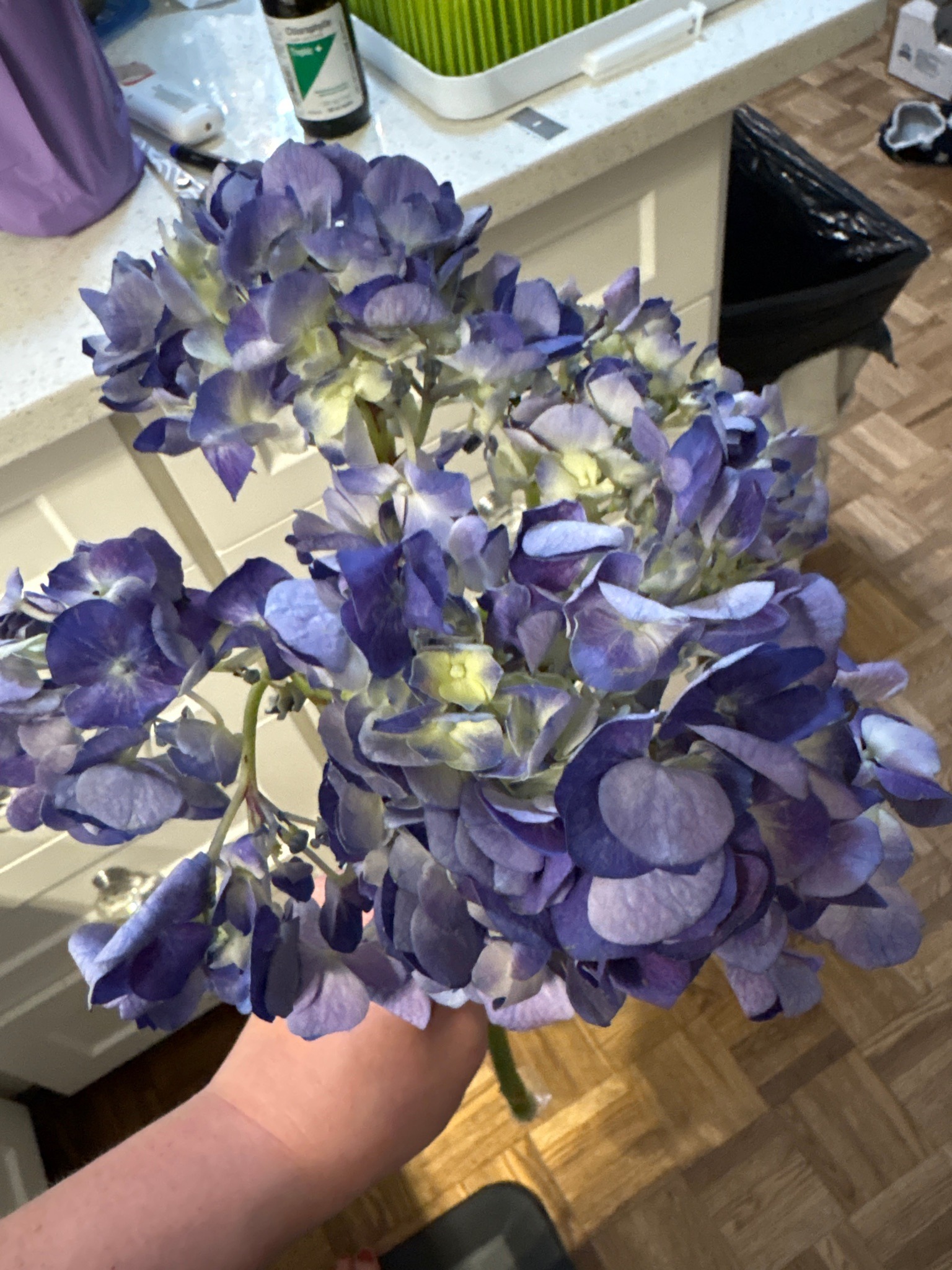
Bigleaf Hydrangea
Hydrangea macrophylla
A popular deciduous shrub recognized for its large, rounded mophead or flattened lacecap flower heads in shades of blue, purple, pink, or white, accompanied by broad, dark green serrated leaves.
- Light
- Partial shade to partial sun (around 3 to 6 hours of morning sunlight). Protect from harsh afternoon sun.
- Water
- Requires regular deep watering to keep the root system evenly moist. Needs extra water during summer heat waves or when grown in containers.
- Growth
- Deciduous multi-stemmed shrub growing 3 to 6 feet tall and wide with a rounded, bushy form.
Care instructions
Provide morning sun with afternoon shade to prevent flower and foliage wilting. Keep soil consistently moist, especially during hot summer periods, but avoid soggy soil. Fertilize in spring with a balanced slow-release fertilizer.
Growing details
Sunlight
Partial shade to partial sun (around 3 to 6 hours of morning sunlight). Protect from harsh afternoon sun.
Watering
Requires regular deep watering to keep the root system evenly moist. Needs extra water during summer heat waves or when grown in containers.
Soil
Rich, fertile, organic, well-draining soil. Acidic soils (pH below 6.0) produce blue to purple blooms, while neutral to alkaline soils yield pink flowers.
Hardiness zone
USDA Zones 5 through 9
Growth habit
Deciduous multi-stemmed shrub growing 3 to 6 feet tall and wide with a rounded, bushy form.
Bloom season
Summer to early autumn, producing large flower clusters that can last for weeks.
Propagation
Propagated via softwood cuttings taken in late spring or summer, or by soil layering.
Common pests & issues
Susceptible to powdery mildew, leaf spot, aphids, spider mites, and flower wilting during hot, dry spells.
Similar species
Smooth Hydrangea (Hydrangea arborescens), which produces creamy white blooms and is less sensitive to soil pH, and Mountain Hydrangea (Hydrangea serrata), which has smaller leaves and more compact flower heads.